What You Need to Know About Roof Replacement Cost in 2026
Roof replacement is one of the largest home improvement investments most homeowners will ever face — and one of the most important ones to get right.
Here is a quick summary of what most homeowners want to know:
| Question | Quick Answer |
|---|---|
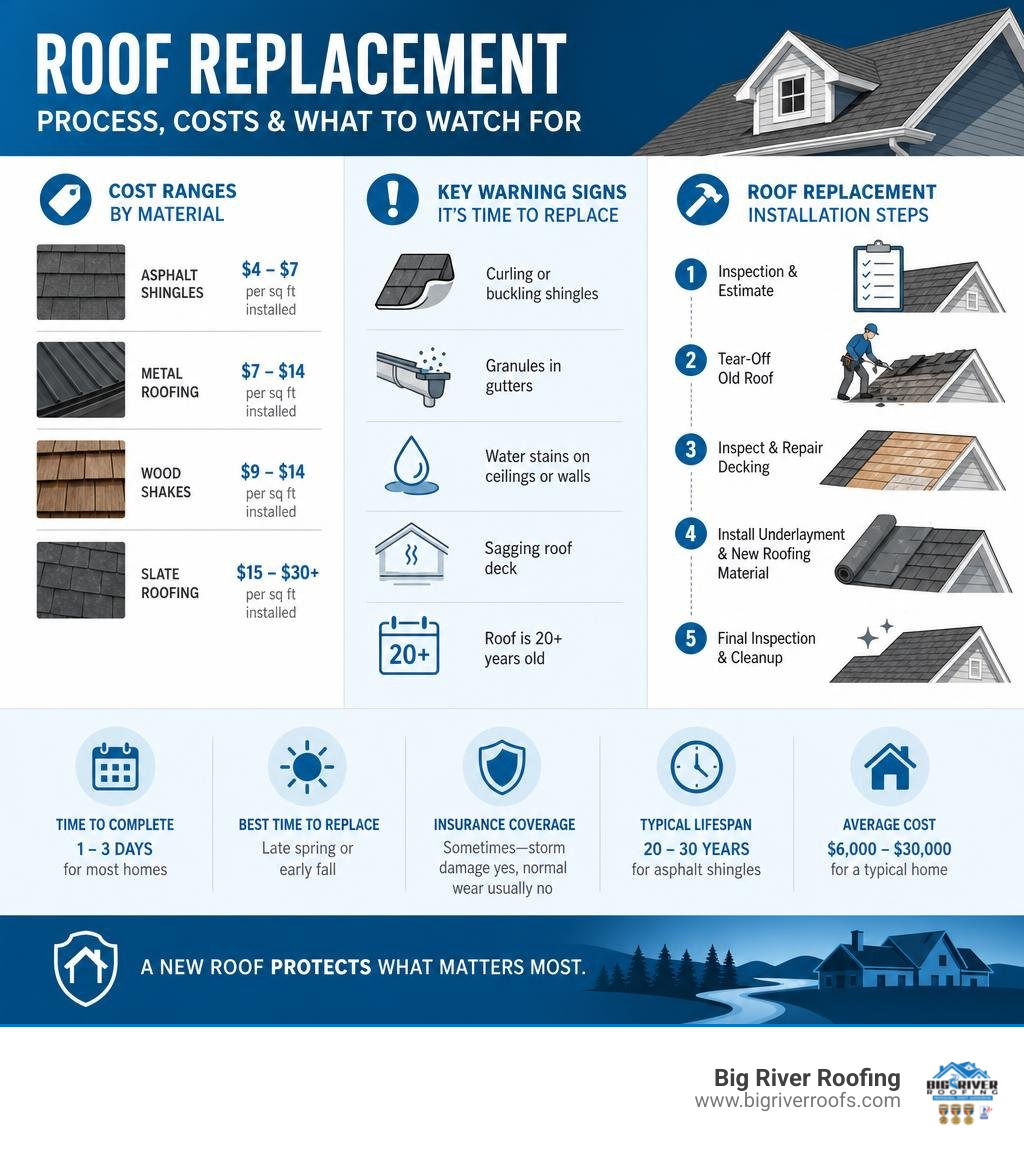
| Average cost | $6,000 – $30,000 for a typical home |
| National average | ~$9,600 – $11,000 |
| Most affordable material | Asphalt shingles ($4–$7/sq ft installed) |
| Longest-lasting material | Slate (75–200 years) |
| Typical lifespan | 20–30 years for asphalt shingles |
| Time to complete | 1–3 days for most homes |
| Best time to replace | Late spring or early fall |
| Does insurance cover it? | Sometimes — storm damage yes, normal wear usually no |
Your final cost depends on several things: roof size, pitch, material choice, local labor rates, and whether any decking needs repair. Two homes on the same street can differ by tens of thousands of dollars based on material alone.
If your roof is showing curling shingles, granule loss in the gutters, water stains on your ceiling, or it is simply pushing 20-plus years old, you are likely already in replacement territory — not repair territory.
I’m Don Kovac, owner of Big River Roofing, and I’ve spent years helping Western Pennsylvania homeowners navigate the full roof replacement process — from spotting early warning signs to working through insurance claims and choosing materials that hold up against our region’s harsh winters and storm seasons. In this guide, I’ll walk you through everything you need to make a confident, informed decision.
Key Factors That Drive Roof Replacement Cost
When you start gathering quotes for a new roof, you might wonder why the numbers can vary so dramatically. The truth is, roofing isn’t a one-size-fits-all product. Several critical factors dictate the final price of your project, and understanding them can help you make sense of your contractor’s estimate.
For a complete breakdown of national pricing benchmarks, the Geometry of Molecules 2026 Price Guide highlights that professional roof replacement costs $9,601 on average, with overall project costs ranging from an average low of $5,900 to a high of $46,000.

How Roof Size and Pitch Affect Pricing
The physical characteristics of your roof are the primary drivers of material and labor costs. Here is how they break down:
- The Roofing Square: In the roofing industry, we don’t just talk in simple square feet; we measure in “squares.” One roofing square equals 100 square feet. If your home has a 2,000-square-foot roof surface, that translates to 20 squares.
- Roof Pitch (Slope): The pitch of your roof refers to its angle or steepness. A flat or low-slope roof is easy to walk on and work on, which keeps labor costs down. However, a steep-slope roof requires specialized safety equipment, harness setups, and significantly more labor hours because our crews must move slower and more carefully. A steep pitch can add $1,000 to $3,000 or more to your total labor costs.
- Complexity: A simple gable roof with two flat planes is much cheaper to replace than a complex roof with multiple valleys, dormers, chimneys, skylights, and intersecting rooflines. Every valley requires extra flashing and underlayment, and every angle increases the “waste factor” of the materials, meaning we have to order more shingles to account for custom cuts.
Regional Cost Variations Across the US
Where you live plays a massive role in what you will pay. Nationally, replacing a typical roof using asphalt shingles costs between $3 and $6 per square foot, with the national average for all roof replacements ranging from $4 to $11 per square foot.
However, state-level averages show extreme differences:
- Lowest Cost States: Arkansas has some of the lowest roof replacement costs in the country, typically ranging from $2,500 to $9,000.
- Highest Cost States: California and Arizona sit at the top of the scale, with average replacement costs spanning from $10,000 to $28,000. In California, the average cost per square foot in 2026 ranges from $4.50 to $10, driven by higher labor rates, strict local building codes, and environmental regulations.
- Western Pennsylvania Market: Here in Western Pennsylvania — including communities like Hermitage, Butler, and Wexford — we fall right in the stable middle of the national average. However, our local climate requires specific considerations. Our cold winters, freeze-thaw cycles, lake-effect snow, and severe spring storms mean we must install heavy-duty ice and water barriers, robust drip edges, and high-quality underlayment to prevent ice damming and leaks.
Comparing Roofing Materials: Cost, Lifespan, and Performance
Choosing the right material is the most impactful decision you will make regarding both the upfront cost and the long-term durability of your home’s defense system.
| Material Type | Average Cost per Square Foot (Installed) | Expected Lifespan | Best Suited For |
|---|---|---|---|
| 3-Tab Asphalt Shingles | $3.50 – $5.50 | 15 – 20 Years | Budget-conscious projects, rental properties |
| Architectural Shingles | $4.50 – $7.50 | 25 – 30 Years | Standard residential homes, high wind resistance |
| Luxury Asphalt Shingles | $7.00 – $11.00 | 30 – 50 Years | Premium homes wanting a slate or shake look |
| Metal Roofing (Standing Seam) | $8.00 – $18.00 | 40 – 70 Years | Long-term durability, shedding heavy snow |
| Synthetic/Composite Tile | $8.00 – $15.00 | 50+ Years | Premium aesthetics without the weight of slate |
| Natural Slate | $20.00 – $35.00 | 75 – 200 Years | Historic homes, ultimate longevity |
Asphalt Shingles: The Most Popular Option
For the vast majority of homeowners in Mercer County, Lawrence County, and Beaver County, asphalt shingle roofing offers the perfect balance of affordability, performance, and aesthetic appeal.
We break these down into three main categories:
- 3-Tab Shingles: This is the traditional, flat, single-layer shingle. While it is the most budget-friendly option to install upfront, it has a shorter lifespan (15 to 20 years) and lower wind resistance (usually rated up to 60 mph). For a deeper look at why this option is fading in popularity, check out Under One Roof: Why Most Americans Choose Asphalt.
- Architectural Shingles: Also known as dimensional shingles, these are laminated with multiple layers of fiberglass and asphalt to create a textured, three-dimensional look. They are thicker, heavier, and offer outstanding wind resistance (up to 110–130 mph). They typically last 25 to 30 years and represent the best value-per-dollar investment for homes in Cranberry Township or Slippery Rock.
- Luxury Shingles: These are premium laminated shingles designed to mimic the thick, rustic look of natural wood shakes or slate tiles. They offer maximum durability, extreme weather protection, and can last up to 50 years when properly maintained. For a full comparison of these styles, read our guide on The Definitive Guide to Asphalt Roofing Options.
Metal Roofing and Alternative Materials
If you are looking for a material that outlasts asphalt, you have several excellent modern options:
- Metal Roofing: Increasingly popular in Butler County and across Western Pennsylvania, metal roofs are lightweight, fire-resistant, and highly efficient at shedding heavy snow. Standing seam systems, which feature concealed fasteners, offer a sleek, modern look and can easily last 40 to 70 years with virtually zero maintenance.
- Synthetic Slate and Brava Tile: Natural slate is gorgeous but incredibly heavy and expensive. Synthetic composite shingles made from recycled polymers offer the exact look of historic slate or Spanish clay tile at a fraction of the weight and half the cost. These materials are virtually indestructible, boasting Class 4 impact ratings (the highest rating for hail resistance).
Roof Repair vs. Full Tear-Off
How do you know when it is time to throw in the towel on patches and invest in a brand-new roof? Many homeowners struggle with this decision, hoping to squeeze a few more years out of their current system.
On average, a simple roof repair will cost between $382 and $1,829, while a full replacement ranges from $5,848 to $12,879 (and up to $25,000+ for premium materials or larger homes). If you find yourself paying for repairs year after year, those costs quickly compound and exceed the price of a new, worry-free installation.

Signs You Need a Full Roof Replacement
We recommend keeping a close eye on your roof and attic. If you notice any of the following warning signs, it is time to schedule a professional assessment:
- Curling or Cupping Shingles: As asphalt shingles age, they lose their flexibility. The edges will begin to curl upward (curling) or the middle will start to sink (cupping), leaving your roof deck vulnerable to water infiltration.
- Widespread Granule Loss: Check your gutters. If you see piles of dark, sand-like granules, your shingles are losing their protective UV coating. Once the granules are gone, the underlying asphalt will degrade rapidly under the sun.
- Sagging Roof Deck: This is a structural emergency. If you notice sagging or drooping along the ridge or in the valleys, it indicates long-term water damage has rotted the wooden decking underneath.
- Daylight in the Attic: Head up to your attic on a sunny day with the lights off. If you can see pinpricks of daylight coming through the roof boards, water is definitely getting in.
- Recurring Leaks: If you’ve had multiple visits for leak detection and continue to find water stains on your drywall, the system has reached the end of its functional life.
If you only have a few shingles damaged by a fallen branch or a localized wind storm, a simple missing shingle replacement is usually all you need. However, if the damage covers more than 25% to 30% of your roof, a full shingle roof replacement is the safest and most cost-effective long-term choice.
Re-Roofing vs. Complete Tear-Off
Some homeowners ask if they can save money by installing a second layer of shingles directly over their existing roof (often called an overlay or re-roofing). While this is legally allowed by building codes in many areas (up to a two-layer limit), we rarely recommend it for several reasons:
- Hides Underlying Damage: An overlay prevents us from inspecting the wooden roof deck. If there is rotted wood or structural damage underneath, we will be nailing new shingles into a failing foundation.
- Adds Massive Weight: A second layer of shingles adds thousands of pounds of extra weight to your home’s structure, which can cause sagging over time.
- Reduces Lifespan: The second layer traps heat, causing the new shingles to degrade up to 10% to 20% faster than they would on a clean, ventilated deck.
- Voids Warranties: Many major shingle manufacturers limit or completely void their enhanced system warranties if the shingles are installed over an existing layer.
The Step-by-Step Installation Process
A professional roof installation is a highly coordinated construction project. For a typical single-family home in Western Pennsylvania, the entire process takes just 1 to 3 days.
To help you prepare, the ShinglesCalculator Complete Roof Replacement Guide outlines the standard phase-by-phase professional process. Here is exactly what we do on installation day to ensure your home is fully protected:
What to Expect on Roof Replacement Day
- Step 1: Property Protection: Before a single shingle is touched, we lay heavy-duty tarps over your landscaping, decks, and siding. We also place protective barriers over your driveway to safeguard against falling debris.
- Step 2: Complete Tear-Off: We strip away all old roofing down to the bare wood decking. This is noisy and messy, but it is the only way to do the job right.
- Step 3: Decking Inspection & Repair: We inspect every square inch of the wooden deck. Any soft, rotted, or water-damaged plywood sheets are removed and replaced to ensure a solid foundation.
- Step 4: Drip Edge and Ice & Water Shield: We install a metal drip edge along the eaves to direct water into your gutters. Next, we apply a self-adhering ice and water barrier along the eaves, valleys, and around chimneys to protect against ice dams during Pennsylvania winters.
- Step 5: Synthetic Underlayment: We roll out a high-performance synthetic underlayment over the rest of the roof deck. This acts as a secondary water barrier beneath your shingles.
- Step 6: Shingle Installation: We lay down the starter shingles, followed by your chosen shingles, nailing them securely using manufacturer-specified patterns.
- Step 7: Flashing and Ventilation: We install new metal flashing around chimneys, vents, and walls. We also optimize your attic ventilation by cutting in a ridge vent or installing box vents to prevent moisture buildup.
- Step 8: Meticulous Cleanup & Final Inspection: We run high-powered magnetic sweeps across your yard and driveway to collect every stray nail. We then perform a thorough walk-through to ensure everything meets our strict quality standards.
Warranties, Insurance, and Saving Money
Replacing a roof is a significant financial undertaking, but there are smart ways to navigate the costs, protect your investment, and potentially get your insurance carrier to pay for the project.
Does Homeowners Insurance Cover a New Roof?
The short answer is: it depends on why your roof needs to be replaced.
- Covered Perils (Storm Damage): If your roof was damaged by an act of nature, such as hail, severe winds, or a fallen tree, your homeowners insurance policy should cover the cost of replacement (minus your deductible). If you suspect storm damage, we can provide comprehensive insurance claims assistance by documenting the damage, meeting with your adjuster, and ensuring you receive fair compensation. We specialize in identifying storm damage roofing issues, including hail damage roof repair and wind damage roof repair.
- Wear and Tear (Age): Insurance will not cover a roof that has simply reached the end of its natural lifespan. If your 25-year-old shingle roof is leaking due to old age and lack of maintenance, that is considered the homeowner’s responsibility.
- ACV vs. RCV Policies: Check your policy. An Actual Cash Value (ACV) policy only pays for what your roof is worth at its current age (which depreciates over time). A Replacement Cost Value (RCV) policy pays the actual cost to install a brand-new roof today, making it a much more valuable policy to hold.
Smart Ways to Save on Your Project
If you are paying out of pocket, you don’t have to sacrifice quality to keep costs manageable:
- Seasonal Timing: Late spring and early fall are peak roofing seasons. If you can schedule your replacement during late fall (October–November) or early spring (March–April), you may find contractors offering off-season discounts of 5% to 15%.
- Upgrade Your Gutters and Siding Simultaneously: Combining your project with siding upgrades or gutter protection can save you thousands in combined labor and setup fees. If you are looking to protect your new gutters, check out The Ultimate Guide to Gutter Guards, Guarding Your Savings: What Is the Average Cost of Leaf Guard?, and Stop the Clog with the Best Micro-Mesh Gutter Guards.
- Ask for Financing Options: Many reputable contractors offer flexible financing plans, allowing you to break a large upfront cost into affordable monthly payments.
- Get a Written Quote: Always request a detailed, itemized estimate. You can easily request a free roof quote from us to see exactly where every dollar of your investment is going.
Frequently Asked Questions About Roofing Costs
How long does a typical roof replacement take?
For most standard-sized homes (under 2,500 square feet), a full asphalt shingle replacement takes just 1 to 2 days. Larger, highly complex roofs or standing seam metal installations can take 3 to 5 days. Weather is the biggest variable; we will never tear off your roof if there is rain in the local forecast.
What questions should I ask a roofing contractor before hiring?
Before signing any contract, make sure to ask:
- Are you fully licensed and insured in Pennsylvania?
- Do you use subcontractors, or do you have your own dedicated, trained crews?
- Are you manufacturer-certified? (This is crucial because only certified contractors can offer extended system warranties).
- Does your quote include complete tear-off, disposal fees, and cleanup?
- Can you provide local references in our area?
To help you research, you can check directories like Yelp’s list of THE BEST 10 ROOFING IN BEAVER COUNTY, PA or search for certified professionals through the Top Pennsylvania Roofing Contractors | Certified by GAF directory. Always ensure the specific contractor you choose holds active certifications and specialized local expertise.
Does a new roof increase home resale value?
Absolutely. A new asphalt shingle roof is one of the most reliable ways to boost your home’s curb appeal and market value, typically returning 60% to 70% of its cost in increased home value at resale. More importantly, it gives prospective buyers absolute confidence that they won’t face a massive, unexpected home repair immediately after moving in.
Conclusion
A roof replacement is a major milestone in protecting your home and family. While the upfront cost can feel intimidating, investing in a high-quality, professionally installed roof provides invaluable peace of mind, improved energy efficiency, and decades of reliable protection against the unpredictable Western Pennsylvania weather.
At Big River Roofing, we specialize in manufacturer-certified installations using premium materials from industry leaders like IKO, Owens Corning, and CertainTeed. We are proud to serve homeowners across Western Pennsylvania, including Hermitage, Cranberry Township, Ellwood City, Beaver Falls, Grove City, Mercer, Beaver, New Castle, West Middlesex, Warrendale, Sharon, Neshannock, and Harmony.
If you are ready to discuss your project, learn more about our services, or read what our neighbors say on our testimonials page, we are here to help. Contact us today to schedule your free, no-obligation inspection and take the first step toward a beautiful, long-lasting roof replacement.