

Why Gutter Guards Are Worth Understanding Before You Buy
Gutter guards are protective covers or inserts that fit over or inside your gutters to stop leaves, debris, and pests from causing clogs — while still letting rainwater flow through freely.
Quick answer — what you need to know:
| Question | Short Answer |
|---|---|
| What do they do? | Block debris from entering gutters while allowing water to drain |
| Main types | Micro-mesh screens, reverse-curve hoods, foam inserts, brush inserts |
| Do they need maintenance? | Yes — less often, but not zero |
| Can I install them myself? | Many types yes, some require a pro |
| Typical cost (materials) | $0.50 – $7.00 per linear foot |
| Do they work in heavy rain? | Yes, most quality guards handle high-volume rainfall |
Here’s the reality for most Western PA homeowners: your gutters take a beating. Heavy rains, falling leaves, pine needles, and freeze-thaw cycles through the winter months put constant stress on your drainage system. A clogged gutter isn’t just an inconvenience — it can push water back under your roof, rot your fascia boards, erode your foundation, and invite pests to nest right against your home.
Gutter guards don’t solve every problem. But the right system, properly installed, can dramatically cut down how often you need to climb a ladder — and reduce the risk of water damage to your home.
I’m Don Kovac, owner of Big River Roofing in Hermitage, Pennsylvania, and over the years I’ve installed and inspected dozens of gutter guard systems across Western PA homes. I’ve seen which products hold up through our storms and which ones fail after a single hard winter.
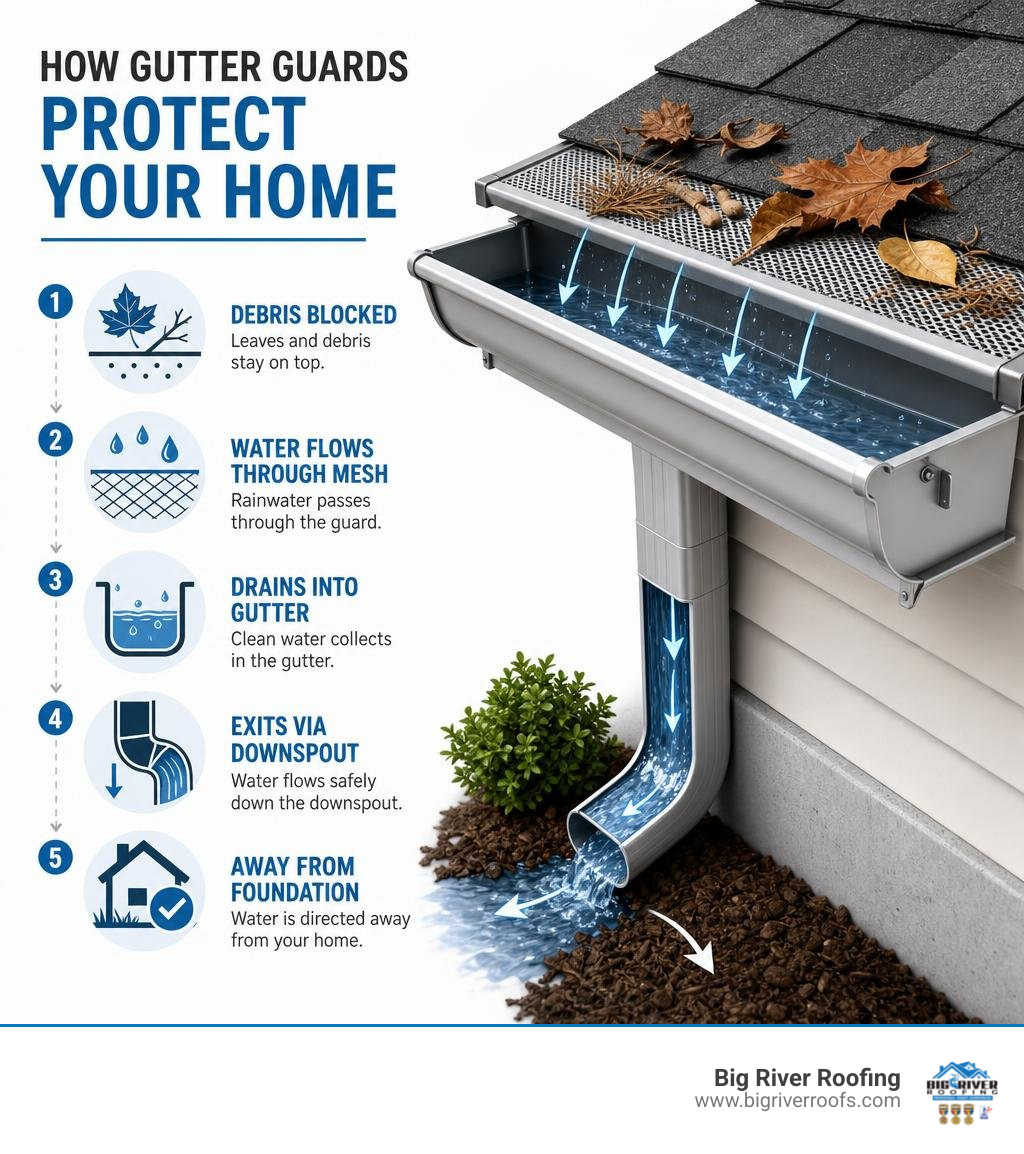
What Are Gutter Guards and How Do They Work?
At their core, gutter guards act as physical filtration barriers. When storm runoff flows down your roof pitch, it carries whatever debris has accumulated on your shingles—leaves, twigs, seed pods, pine needles, and even abrasive asphalt shingle grit.
Without protection, this organic matter settles in the bottom of your gutter channels, creating dense, water-logged dams. Over time, these dams clog your downspouts, leading to standing water that rots your wood fascia and overflows directly onto your home’s foundation.
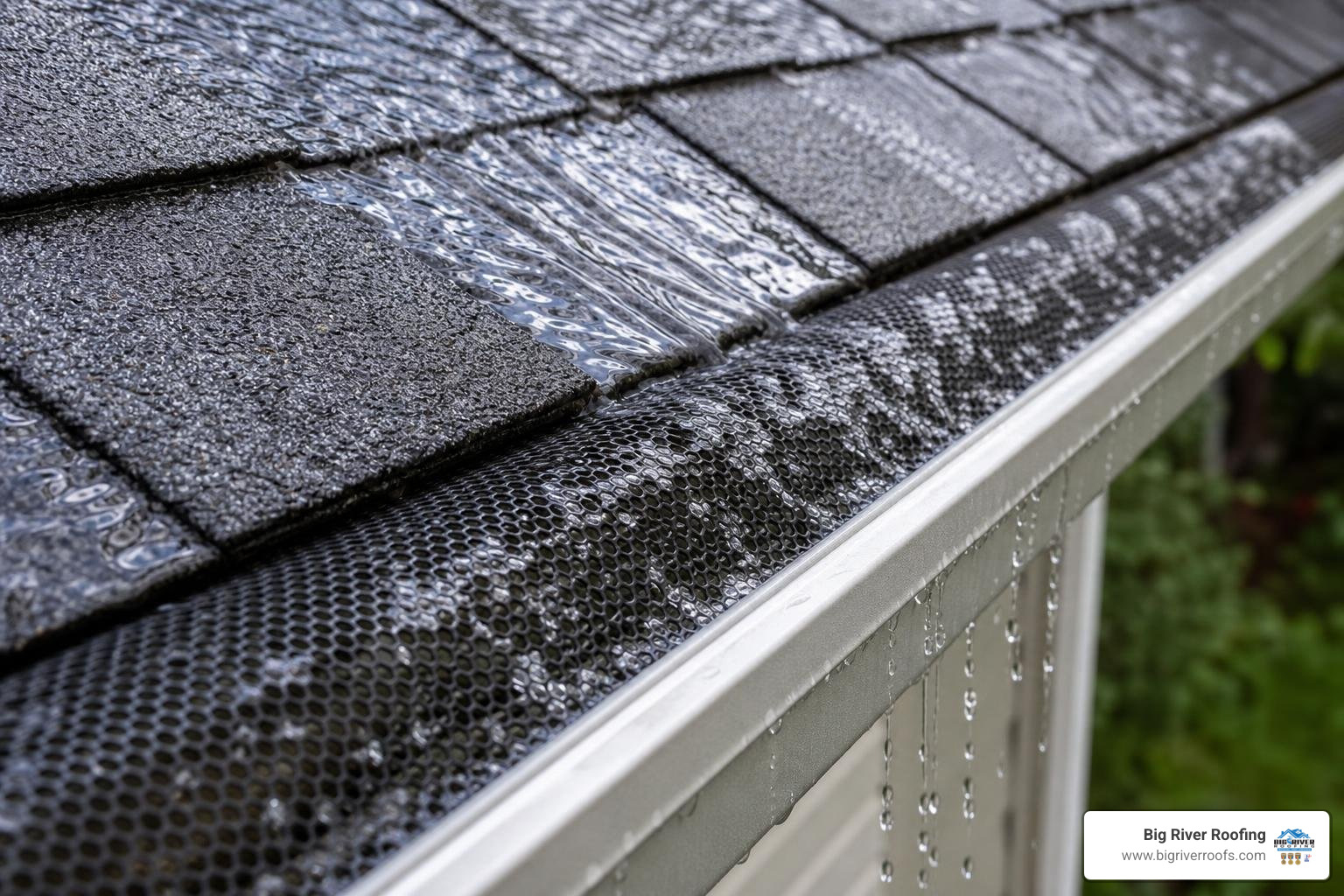
Gutter protection systems work by separating the debris from the water before it ever enters the gutter channel:
- Physical Blocking: Sieve-like screens and micro-meshes let water drop straight down through tiny perforations while keeping solid debris suspended on top, where wind can eventually blow it away.
- Surface Tension (Cohesion): Solid-hood or “reverse-curve” guards utilize the natural physical property of water to cling to a curved surface. As rain flows over the curved metal edge, it wraps around the nose and drops into the gutter, while leaves and debris (which cannot cling to the curve) shoot right over the edge to the ground.
By utilizing these principles, our professional gutter services ensure that rainwater is directed safely through your downspouts and away from your home, keeping the internal channels clear of major blockages.
The Main Types of Gutter Protection Systems
No single gutter guard is a perfect fit for every home. The trees surrounding your property, your roof’s pitch, and your budget all play a role in determining which system is right for you.
| Gutter Guard Type | Average Material Cost (per linear ft.) | Durability | Best For | Debris Effectiveness |
|---|---|---|---|---|
| Micro-Mesh | $3.00 – $7.00 | Excellent | Fine debris, pine needles, shingle grit | High |
| Metal Screen | $1.50 – $4.00 | Good | Large leaves, maple seeds, twigs | Moderate |
| Reverse-Curve / Hood | $4.00 – $8.00+ | Very High | Large leaves, heavy rain areas | Moderate to High |
| Brush Inserts | $1.00 – $3.00 | Moderate | DIY installations, large leaves | Low to Moderate |
| Foam Inserts | $0.50 – $2.00 | Low | Temporary DIY, budget-friendly | Low |
Metal Screen and Mesh Gutter Guards
Metal screens and micro-mesh guards represent the gold standard of modern gutter protection. Micro-mesh guards utilize surgical-grade stainless steel wire mesh mechanically bonded to a heavy-gauge aluminum frame. The openings in these meshes are incredibly fine—often less than 100 microns—which is small enough to block even fine shingle grit, pine needles, and pollen while still allowing massive volumes of water to pass through.
For homeowners looking for reliable, long-term filtration, we highly recommend looking into high-quality micro-mesh options. Industry-leading DIY and professional kits, such as the Gutter Guard by Gutterglove, Viking Gutter Guard, and Total Gutter Guard, utilize stainless steel mesh to prevent rust and warping. These systems are designed to lay flat or slightly pitched over your gutters, ensuring that fine debris is kept completely out of your water collection systems.
Reverse-Curve and Hooded Gutter Guards
Reverse-curve systems, often called hooded or helmet guards, feature a solid piece of curved aluminum or PVC that covers the top of the gutter entirely. These systems do not use screens; instead, they rely on surface tension to draw water around a curved nose and into a narrow slot, while leaves simply slide off onto the ground.
These systems are incredibly durable and are built to handle heavy rain. However, they must be precisely installed at the correct angle to work properly. If they are installed too flat, water will overshoot the gutter entirely.
To combat this, modern innovations have introduced drip-edge louvered systems. For example, the Waterlock Pro Gutter Guards combine heavy-duty 0.027″ thick aluminum with louvered technology and bottom intake holes. This drip-edge design stops water from tracking down the face of your gutters, which prevents unsightly “tiger striping” (dirt streaking) on your home’s exterior.
Foam and Brush Gutter Inserts
If you are looking for a quick, budget-friendly DIY project, inserts are a popular alternative to metal covers.
- Brush Inserts: These look like giant, heavy-duty pipe cleaners. You simply slide the brush sections directly into your gutters. The stiff, UV-protected bristles keep leaves and twigs suspended high on the brush while water flows freely through the bottom of the gutter. Debris trapped on top eventually dries out and blows away.
- Foam Inserts: Made from porous polyurethane foam, these inserts fill the gutter channel completely. Water flows straight through the foam, while leaves stay on top.
While incredibly easy to install, inserts have a major limitation: they do not prevent debris from decaying. Over time, organic matter, pollen, and silt can settle deep inside the foam or bristles, creating a muddy compost that is difficult to clean without pulling the entire system out and washing it section by section.
Benefits and Performance in Extreme Weather
Western Pennsylvania is famous for its unpredictable weather. From sudden summer downpours in Butler County to heavy winter snows in Mercer and Lawrence counties, your gutter system must be engineered to perform under pressure.
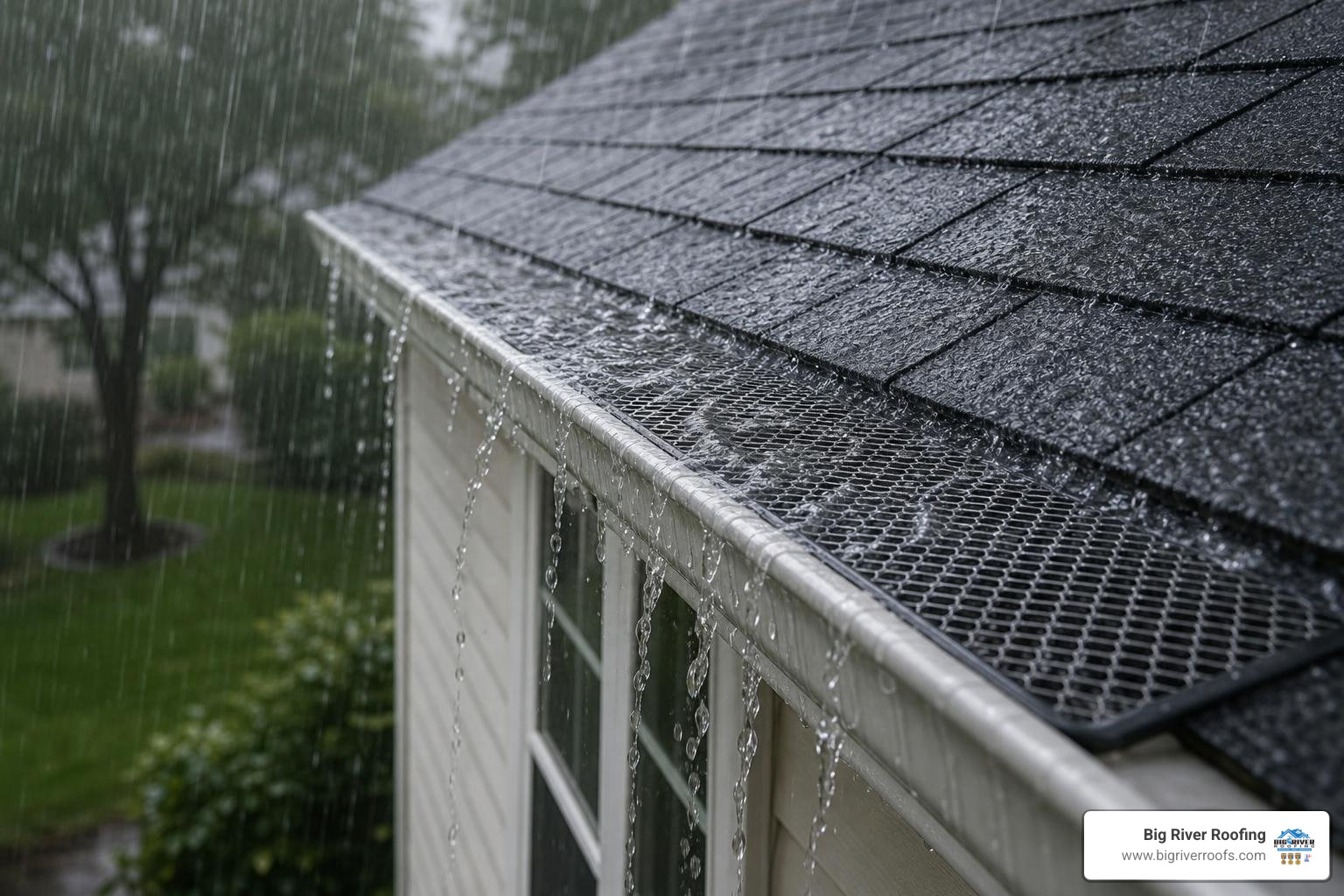
When severe storms roll through our region, high-quality gutter guards keep your drainage system fully operational. Heavy-duty micro-mesh and louvered systems are tested to handle incredible volumes of water—often in excess of 20 inches of rainfall per hour. This rapid drainage prevents water from backing up, protecting your home from roof leaks and foundation washouts. If your home has suffered from severe weather in the past, combining gutter protection with professional storm damage restoration is the best way to safeguard your property.
The Truth About Winter Performance and Ice Dams
A common concern among local homeowners is how gutter guards handle freezing temperatures. It is important to understand that gutter guards do not cause or prevent ice dams. Ice dams are caused by poor attic insulation and inadequate ventilation, which allows heat to escape, melt the snow on your roof, and cause it to re-freeze at your cold roof eave.
However, during freeze-thaw cycles, gutter guards can sometimes lead to icicle formation along the front edge of the gutter. This is normal, as snow melting off the warm roof hits the cold metal guard and freezes. On the plus side, heavy-duty aluminum guards protect your gutter seams from splitting under the weight of heavy snow and ice, ensuring your system remains structurally sound when spring arrives.
Maintenance, Clogging, and Potential Limitations
Let’s bust a common industry myth: there is no such thing as a 100% maintenance-free gutter guard.
Even if you install the most expensive, professional-grade micro-mesh system, your guards will still require periodic attention. Fine particles like shingle grit, pine pollen, dust, and tree sap will eventually accumulate on top of the mesh. In damp conditions, this fine sediment can form a thin, cement-like crust that blocks the mesh pores, causing water to overshoot the gutter.
Fortunately, maintaining gutter guards is significantly easier than scooping handfuls of wet, rotting muck out of open gutters. A simple rinse with a high-pressure garden hose nozzle once or twice a year is usually all it takes to keep them clear.
Roof Warranty Considerations
Another critical factor to keep in mind is how the guards are installed. Some systems require sliding the back edge of the guard deep under your first row of roof shingles. If done incorrectly, this can pry up shingles, break their sealant strips, and potentially void your manufacturer roof warranty.
If you are experiencing issues with improper gutter guard installation or notice water backing up under your shingles, it is vital to address these roof repair needs immediately to prevent rot in your decking and fascia boards.
How to Choose and Install the Right System
Choosing the right gutter guard depends heavily on your local environment and your existing gutter setup.
- Assess Your Trees: If you are surrounded by mature oaks and maples, standard slotted screens are fine. If you have pine trees or hemlocks, you absolutely need a stainless steel micro-mesh to block the needles.
- Identify Gutter Size and Style: Standard residential gutters are 5-inch or 6-inch K-style gutters, though some historic homes feature half-round gutters. Ensure the guard you purchase is compatible with your specific style and size.
- Evaluate Roof Pitch: Steep roofs shed water incredibly fast. A flat screen can act like a ski jump, causing heavy rain to shoot right over the edge. Steep roofs require guards with built-in louvers or a slight downward pitch to capture fast-moving runoff.
DIY vs. Professional Installation
While brush and snap-in plastic screens are great DIY weekend projects, installing permanent, screw-down aluminum guards can be highly hazardous. Climbing up and down extension ladders with 5-foot metal panels is physically demanding and presents a real fall risk.
For maximum safety and performance, we highly recommend hiring a local professional. Professional installation ensures the guards are pitched correctly, which is crucial for handling heavy rainfall and preventing water from overshooting the gutters.
Working with an experienced local contractor guarantees that your system is secured with self-tapping screws and integrated seamlessly with your roofline. This prevents damage to your shingles and ensures your gutter system functions flawlessly for years to come.
For homeowners in our immediate service area, you can access reliable, expert-level local gutter protection in Beaver County to ensure your home is fully protected before the next storm rolls through.
Frequently Asked Questions About Gutter Protection
Do gutter guards work in heavy rain?
Yes, high-quality gutter guards are engineered to handle extreme downpours. Premium micro-mesh and louvered systems can manage water flow rates equivalent to over 20 inches of rain per hour. However, if the guards are dirty or installed at an incorrect angle, water may overshoot the edge.
Can gutter guards still get clogged?
Yes. While they prevent leaves and twigs from clogging the inside of your gutters, fine debris like pollen, dust, and shingle grit can accumulate on top of the guards over time. This top-level debris must be brushed or rinsed off periodically to maintain optimal water flow.
Do gutter guards prevent ice dams?
No. Ice dams are caused by heat escaping from your attic due to poor insulation and ventilation, not by your gutters. Gutter guards will not prevent or cause ice dams, though they can help protect your gutters from warping or pulling away from your home under heavy snow loads.
Conclusion
Investing in gutter guards is one of the smartest ways to protect your home’s foundation, siding, and roof from water damage, while significantly reducing your weekend chore list. However, the key to a system that lasts for decades lies in choosing the right materials and ensuring a flawless, professional installation.
At Big River Roofing, we provide Western Pennsylvania homeowners with honest communication, manufacturer-certified installations, and free, comprehensive inspections. We serve communities across Hermitage, Mercer County, Lawrence County, Butler County, Beaver County, and Allegheny County, delivering gutter and roofing solutions tailored to our local climate.
Ready to protect your home with a system built to last? Schedule a free estimate with our team today, or Explore our professional gutter solutions to find the perfect fit for your property!