How Structural Roof Damage Connects to Other Issues
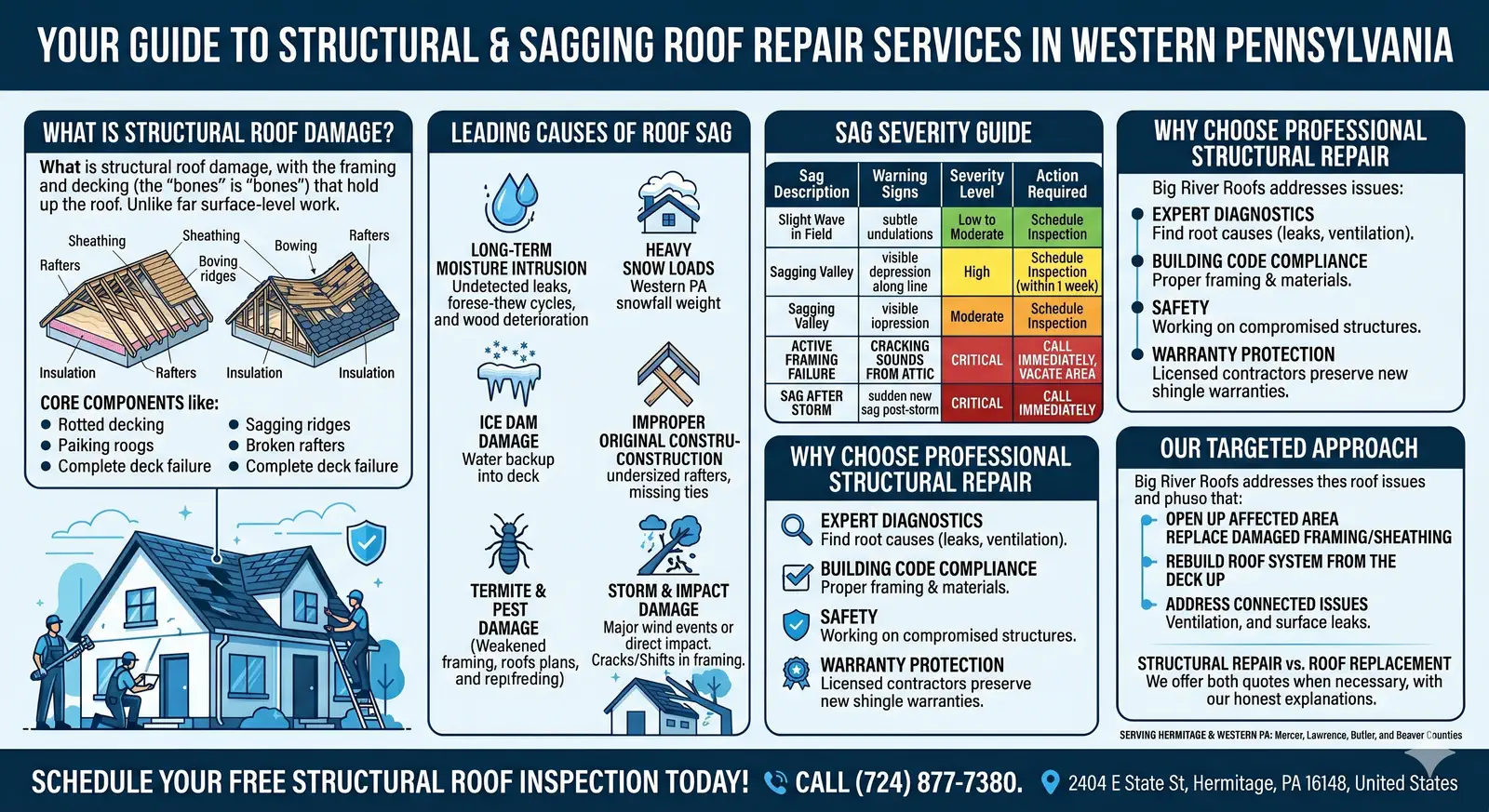
Structural roof problems almost always tie back to other issues that need to be addressed at the same time, or the structural repair will fail again within a few years. Our inspection looks at the connected systems and addresses them as part of the scope.
A slow leak that caused the original deck damage needs to be traced and fixed. Our leak detection service finds the source of the water intrusion, and the repair includes whatever flashing, pipe boot, or underlayment work is needed to keep water out going forward.
Surface damage that contributed to the structural problem (missing shingles, failed flashing, worn underlayment) gets addressed as part of the broader roof repair service. Repairing the deck without fixing the surface that allowed water in is a short-term fix at best.
Storm-related structural damage from wind, hail, or impact is documented as part of our storm damage roofing service, and we coordinate with the homeowner’s insurance carrier to support the claim. Most standard Pennsylvania homeowner policies cover sudden structural damage from a storm event but exclude long-term moisture damage, so the documentation matters.
Inadequate attic ventilation is a frequent contributor to ice dams and the structural damage they cause. When we find it, we recommend ventilation improvements as part of the structural repair so the underlying cause does not produce the same problem again next winter.
Why Structural Roof Repair Is Not a DIY Project
Surface roof repairs (a missing shingle, a cracked pipe boot) are sometimes within a homeowner’s ability if they have the experience and the safety equipment. Structural roof repair is not. Working on compromised framing means working on a roof system whose load capacity is unknown, and a misstep can cause additional collapse, serious injury, or both. Cutting into a rafter or removing a section of decking without understanding the load path can shift the structural integrity of the entire roof.
Structural repair also requires knowledge of building codes, framing techniques, and the right materials for the application. Sister rafters need to be sized and fastened correctly. Replacement sheathing needs to span properly across the rafter spacing. Ice and water shields need to cover the right area to keep the same problem from recurring. Each of these is a skill that takes years to develop, and the consequences of getting it wrong are much higher than on a surface repair.
Insurance carriers also typically require a licensed contractor to perform structural repairs covered under a claim, and a DIY repair will void the manufacturer warranty on any new shingles installed afterward. The cost of professional structural repair is small compared to the cost of getting it wrong.