The Most Popular Roofing Material in America — And Why It Dominates
Asphalt roofing is the most widely used roofing system in the United States, covering roughly four out of five American homes. If you’re trying to understand your options, here’s the short version:
- What it is: Roofing products made from asphalt-coated fiberglass or organic felt, surfaced with mineral granules
- Main types: Asphalt shingles (3-tab, architectural, luxury), roll roofing, and commercial systems (BUR and modified bitumen)
- Typical lifespan: 15–30 years depending on shingle grade and local conditions
- Average material cost: $1.50–$5 per square foot for residential shingles
- Why homeowners choose it: Affordable, widely available, fire-resistant, and easy to install and repair
From humble beginnings — roll roofing was first marketed in 1893 — asphalt roofing has grown into a roughly $12 billion industry. That growth didn’t happen by accident. Asphalt shingles hit the sweet spot between cost, durability, and looks that most homeowners need, especially in climates like Western Pennsylvania where roofs take a beating from ice, wind, and summer heat.
If your roof is 20 years old or showing signs of storm damage, understanding your asphalt options is the first step toward making a smart, confident decision — not just picking whatever’s cheapest or whatever a contractor pushes on you.
I’m Don Kovac, owner of Big River Roofing in Hermitage, PA, and I’ve spent years helping homeowners across Mercer, Lawrence, Butler, and Beaver Counties navigate asphalt roofing decisions — from basic repairs to full replacements after major storms. This guide covers everything you need to know to make the right call for your home.
What is Asphalt Roofing? Composition, Grades, and Manufacturing
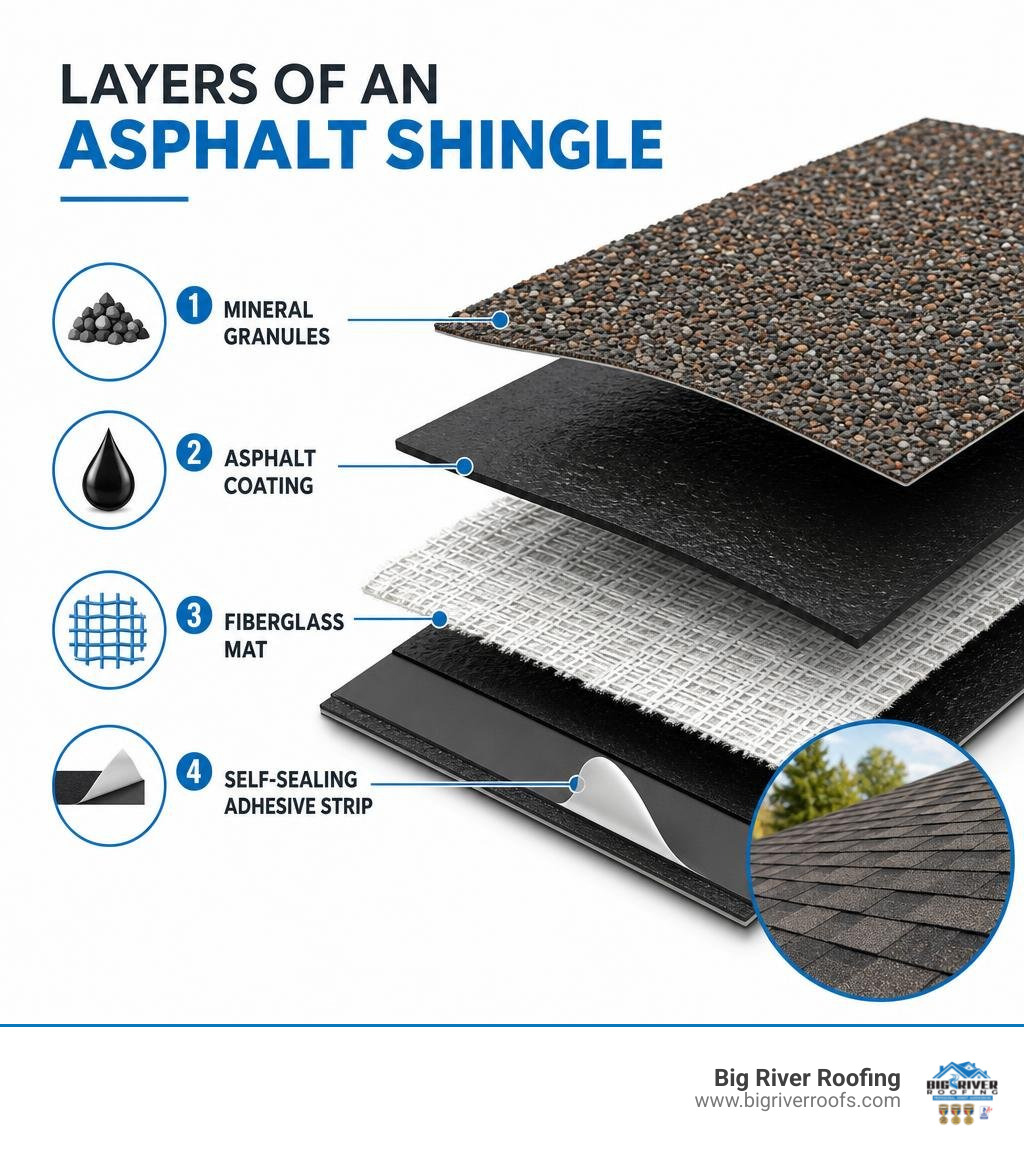
To truly understand how asphalt roofing protects your home, it helps to look at how it is made. At its core, an asphalt shingle is a multi-layered sandwich engineered to block water, resist wind, and survive decades of baking under the sun.
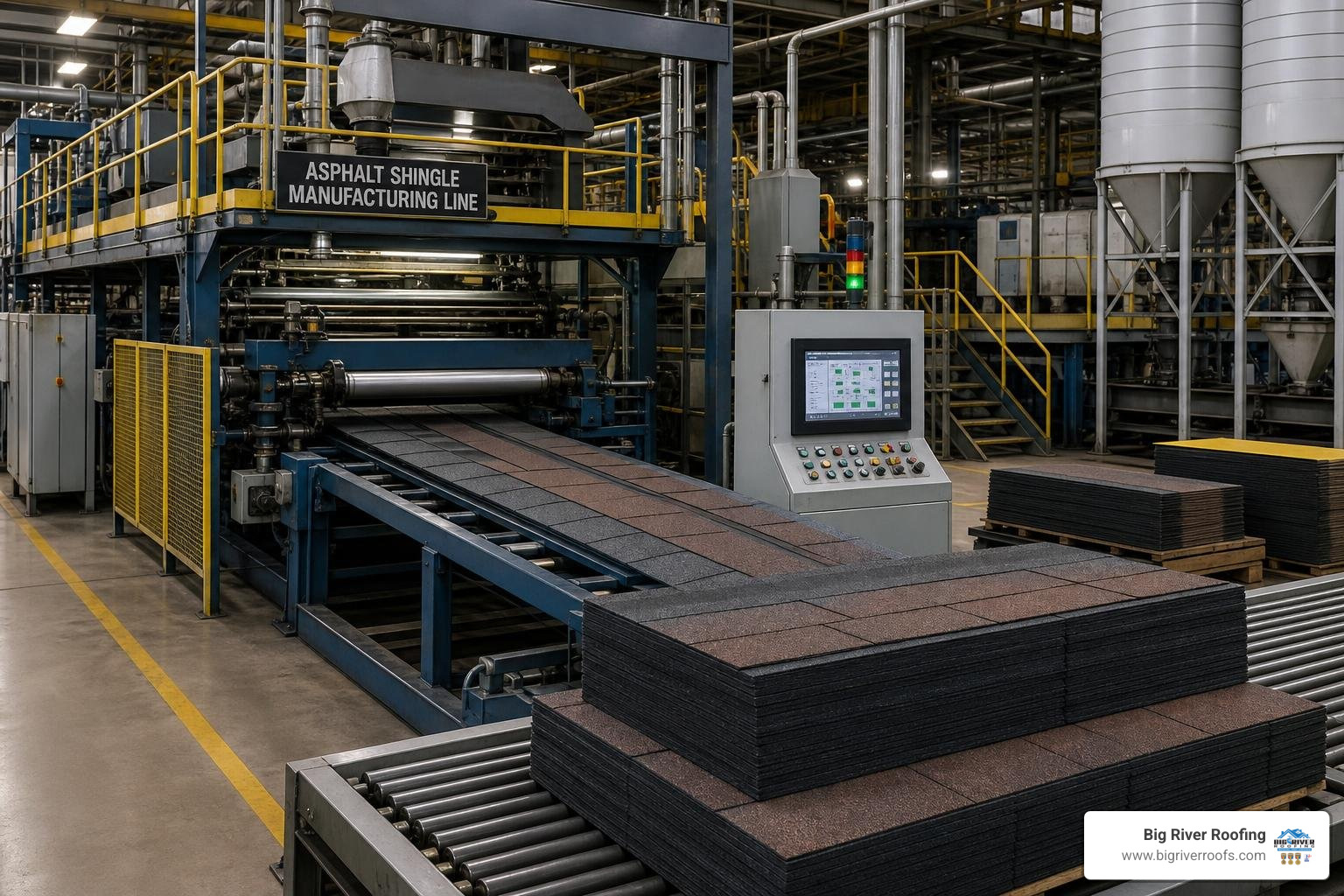
The manufacturing of modern asphalt shingles is a highly controlled, continuous process. It begins with a base material, or substrate, which is fed into a massive roofing machine. Today, the vast majority of shingles use a thin, flexible fiberglass mat as this substrate. This glass fiber reinforcing mat provides high tear resistance and dimensional stability. Historically, manufacturers used organic felt (made from cellulose, wood fibers, or waste paper), but fiberglass overtook organic felt by 1982 because it offers significantly better fire resistance and uses less asphalt during manufacturing.
Once the fiberglass mat is ready, it is coated with hot, liquefied asphalt. But raw asphalt (known as asphalt flux) is too soft and fluid to survive on a roof. To make it suitable for weather protection, it must undergo a process called “blowing.” During the asphalt blowing process, the liquid asphalt flux is heated to approximately 260°C (500°F) while air is bubbled through it for 1 to 10 hours. This oxidation process hardens the asphalt, raising its softening point and giving it the proper viscosity to withstand extreme summer temperatures without melting or sliding off your roof.
Depending on the final product, manufacturers use different grades of asphalt:
- Saturant-grade asphalt: A softer, highly absorbent asphalt used to fully saturate organic felt cores.
- Coating-grade asphalt: A harder, oxidized asphalt mixed with mineral stabilizers (like limestone) that is applied to both sides of the fiberglass mat to provide the primary waterproofing layer.
- Mopping-grade asphalt: A specialized asphalt designed to be melted in kettles on-site and mopped onto flat roofs during the installation of commercial built-up systems.
After the coating-grade asphalt is applied to the mat, the top surface is immediately covered with mineral granules. These granules are made of crushed stone or ceramic particles. They are not just there for looks! While they do provide a wide range of colors, their primary job is to shield the asphalt coating from destructive ultraviolet (UV) rays, moisture, and ozone. Without granules, the sun would degrade the asphalt in a matter of months. Additionally, many modern granules are treated with copper or zinc to prevent the growth of dark, unsightly algae.
Finally, the manufacturing line applies a strip of thermoplastic self-sealing adhesive to the shingles. Once installed on your roof, the heat of the sun activates this adhesive, bonding the shingles together to resist wind uplift. To learn more about how these components came to be, you can read about the Asphalt shingle history and composition.
Key Advantages of Asphalt Roofing Systems
When we consult with homeowners in Western Pennsylvania looking for a Residential Roofing solution, we always highlight the practical benefits of asphalt. There is a reason this material remains the undisputed king of residential roofs:
- Affordability: Compared to slate, metal, or tile, asphalt shingles offer the lowest upfront installation cost. This makes them highly accessible for almost any budget.
- Weather Resistance: Modern asphalt shingles are engineered to survive the freeze-thaw cycles, heavy snows, and humid summers common in our region.
- Excellent Fire Ratings: Fiberglass-based shingles naturally resist fire. Most carry a Class A fire rating (the highest available), providing peace of mind and, in many cases, lowering home insurance premiums.
- Wind Resistance: Thanks to advanced self-sealing adhesives and heavy-duty mats, high-quality shingles carry wind ratings up to 110 mph or 130 mph (Class H), protecting your home from severe storm damage.
- Ease of Installation and Repair: Asphalt is straightforward to install, meaning lower labor costs and faster project completion times. If a single shingle is damaged by a fallen branch, it can easily be replaced without tearing up the entire roof.
Environmental and Regulatory Standards for Asphalt Roofing
As with any petroleum-based manufacturing process, the production of asphalt roofing is subject to strict environmental regulations. The primary emissions from manufacturing facilities include particulate matter (PM) and volatile organic compounds (VOCs).
To protect air quality, the US Environmental Protection Agency (EPA) enforces the National Emission Standards for Hazardous Air Pollutants (NESHAP) under 40 CFR Part 63 Subpart LLLLL. These rules target major sources of air toxics—defined as facilities emitting 10 tons per year or more of a single toxic air pollutant, or 25 tons per year of a combination of pollutants. Modern manufacturing plants utilize advanced control devices, such as electrostatic precipitators (ESPs), high-efficiency air filters (HEAFs), and afterburners to safely capture and neutralize these emissions before they leave the factory. You can review the technical details of these standards in the EPA AP-42 Asphalt Roofing Manufacturing Emissions documentation.
On the consumer side, the industry has made great strides in recycling. Historically, most old shingles ended up in landfills. Today, post-consumer recycled asphalt shingles (RAS) are increasingly being diverted from landfills to asphalt paving plants. Because shingles contain high-quality asphalt binder and aggregate, they can be ground up and mixed into hot-mix asphalt for roads, highways, and parking lots. In fact, about 87 percent of the asphalt used in the United States goes toward paving, and recycling old roofs directly supports this supply chain.
Types of Asphalt Roofing Products and Applications
While most people immediately picture residential shingles, the term asphalt roofing actually covers a broad family of products designed for different roof slopes, building types, and budgets.
To help you understand where each product fits, let’s look at a quick comparison of the three primary asphalt systems we install across our Services portfolio:
| Feature / Metric | Asphalt Shingles | Asphalt Roll Roofing | Built-Up Roofing (BUR) |
|---|---|---|---|
| Primary Application | Steep-slope residential homes | Low-slope outbuildings, sheds, porches | Low-slope commercial & industrial buildings |
| Minimum Roof Slope | 2:12 (with special underlayment) | 1:12 (with lap cement) | 1/4:12 (flat roofs) |
| Typical Lifespan | 15 to 30+ years | 5 to 10 years | 20 to 30+ years |
| Installation Method | Nailed over underlayment | Nailed or glued with cold adhesive | Hot-mopped asphalt with felt plies |
| Aesthetics | High (many colors, profiles, textures) | Low (basic utility look) | Low (usually covered with gravel or cap sheet) |
Asphalt Shingles: 3-Tab, Architectural, and Luxury
If you are replacing a residential roof, you will be choosing from three main categories of asphalt shingles. Each has its own design, performance profile, and price point.
1. Strip Shingles (3-Tab)
Often referred to simply as 3-Tab Shingles, these are the most basic and traditional asphalt shingles. They are manufactured as a single layer of asphalt-coated fiberglass cut into a strip with three tabs along the lower edge. When installed, they lie completely flat, giving the roof a uniform, brick-like pattern.
- Lifespan: Typically 15 to 20 years.
- Best for: Budget-conscious homeowners, rental properties, or low-complexity roof lines.
2. Dimensional Shingles (Architectural)
Also known as Architectural Shingles, these are the most popular shingles on the market today. Unlike 3-tab shingles, architectural shingles are constructed with two or more layers of fiberglass mat laminated together. This multi-layer design creates a rich, three-dimensional look that mimics the shadow lines of natural wood shakes.
- Lifespan: Typically 24 to 30+ years.
- Best for: Standard residential homes, homeowners looking for superior wind resistance, and those wanting to maximize curb appeal and home resale value.
3. Luxury Shingles
For homeowners seeking the absolute pinnacle of performance and aesthetics, Luxury Shingles are the premier choice. These shingles are significantly thicker and heavier than standard architectural shingles. They are designed to realistically replicate historical roofing materials like natural slate or hand-split wood shakes.
- Lifespan: Often 30 to 50 years.
- Best for: High-end homes, historic properties, and homeowners who want maximum impact resistance against severe hail storms.
Asphalt Roll Roofing and Underlayments
Asphalt roll roofing is a utility-grade material that comes in rolls (typically 36 inches wide by 33 feet long). It is made of the same basic materials as shingles but is designed for quick, low-cost coverage on low-slope structures like sheds, detached garages, or agricultural barns. Because it is thin and prone to thermal expansion, it should never be used as the primary roofing material on a high-value residential home.
However, asphalt-based roll products play an incredibly vital role underneath your shingles as underlayment. The underlayment acts as your roof’s secondary line of defense against water infiltration. There are three main types:
- Asphalt-Saturated Felt: The traditional “tar paper” that has been used for over a century. It is affordable and provides decent temporary protection, but it can tear easily and degrade over time.
- Synthetic Underlayment: The modern industry standard. Made from woven polypropylene, it is incredibly tough, slip-resistant, and can withstand UV exposure for months during construction.
- Rubberized Asphalt (Ice & Water Shield): A premium, self-adhering membrane. When nailed through, the rubberized asphalt self-seals around the fastener shaft to prevent leaks. This is critical for valleys and eaves where ice dams form.
For comprehensive guidelines on how these materials should be integrated into a complete residential roof system, professionals refer to the Residential Asphalt Roofing Manual .
Commercial Asphalt Systems: BUR and Modified Bitumen
Low-slope or flat commercial roofs require entirely different engineering than steep residential roofs. Water does not shed quickly off a flat roof, so the roofing material must form a continuous, seamless waterproof sealed envelope.
Built-Up Roofing (BUR)
BUR is one of the oldest and most reliable commercial roofing systems. It consists of alternating layers of asphalt-saturated ply felts and hot-mopped liquid asphalt, topped off with a mineral-surfaced cap sheet or gravel. This multi-ply construction means that if the top layer is punctured, the lower layers still prevent water from entering the building. You can read the official material specifications in this Product Definition .
Modified Bitumen (Mod-Bit)
Modified bitumen systems are the modern evolution of BUR. Manufacturers add polymers to the asphalt to give it rubber-like (SBS) or plastic-like (APP) qualities, vastly improving its flexibility, impact resistance, and lifespan.
- SBS (Styrene-Butadiene-Styrene): Highly flexible, especially in cold winter climates. It is typically installed using self-adhering sheets or cold adhesives.
- APP (Atactic Polypropylene): Highly resistant to UV rays and heat. It is typically installed using a torch-down method where the underside is melted to fuse the seams.
Many advanced low-slope roofs utilize a hybrid system, combining a self-adhered SBS base sheet with a torch-applied APP cap sheet for ultimate protection. The technical breakdown of this hybrid system is detailed in this Product Definition .
Selection Guide: Choosing the Right Asphalt Shingles
Choosing the right shingle for your home is about finding the perfect intersection of aesthetics, local weather protection, and budget. When we sit down with homeowners in Hermitage, PA, or Butler, PA, we guide them through a few key decisions:
- Color and Curb Appeal: Your roof represents up to 40% of your home’s visible exterior. It is best to choose a color that complements your siding, brickwork, and trim. Darker colors look classic and can help melt snow faster in the winter, while lighter, highly reflective colors can help lower your cooling bills during hot July afternoons.
- Algae Resistance: Western Pennsylvania’s humid summers are prime breeding grounds for Gloeocapsa magma, the airborne algae responsible for those ugly black streaks on older roofs. Look for shingles featuring advanced copper-infused granules, such as those manufactured by Atlas Roofing, which slowly release copper ions over time to prevent algae growth and keep your roof looking clean.
- Wind and Storm Ratings: If your home sits on an open ridge in Beaver County or Butler County where high winds sweep through, look for shingles with a Class H wind rating and enhanced starter strips to prevent blow-offs.
- Impact Resistance: If you want to protect your investment from hail damage (and potentially score a discount on your homeowner’s insurance), consider upgrading to Class 4 impact-rated shingles, which are engineered to withstand the impact of heavy falling debris.
Cost and Installation Considerations
When planning a roof replacement, contractors measure your roof in “squares.” One roofing square is equal to 100 square feet of roof surface area.
The overall cost of an Asphalt Shingle Roofing project depends on several variables:
- Material Selection: Upgrading from basic 3-tab to architectural or luxury shingles will increase material costs, but it pays off in double the lifespan and better wind warranties.
- Roof Pitch and Complexity: A steep roof (high pitch) or a roof with multiple valleys, dormers, and chimneys requires more safety equipment, more flashing, and more labor hours to complete safely.
- Tear-Off vs. Recover: While some local building codes allow you to nail a second layer of shingles over an existing roof, we always recommend a complete tear-off. This allows us to inspect the wooden roof deck for rot, replace damaged plywood, and install a modern self-adhering ice and water shield.
To ensure your investment is protected, always work with a contractor who provides manufacturer-certified installations and handles the entire Roof Installation or Shingle Roof Replacement process with transparency. We proudly serve homeowners throughout Mercer County, Lawrence County, Butler County, Beaver County, Allegheny County, and the greater Pittsburgh area, ensuring local building codes and regional weather challenges are fully addressed.
Frequently Asked Questions About Asphalt Roofing
How long do asphalt shingles typically last?
The actual lifespan of an asphalt roof depends heavily on the shingle quality, installation standards, attic ventilation, and local weather.
- 3-Tab Shingles: 15 to 20 years.
- Architectural Shingles: 24 to 30 years.
- Luxury Shingles: 30 to 50 years.
Factors like “thermal shock” (rapid temperature swings from a hot afternoon to a cool night) and constant UV exposure will slowly dry out the asphalt over time, causing shingles to curl or lose granules. Regular maintenance and timely Roof Repair of minor flashing leaks can easily extend the life of your roof by several years.
Can asphalt shingles be recycled?
Yes! As mentioned earlier, old asphalt shingles are highly recyclable. When we tear off an old roof, the discarded shingles can be sent to specialized processing facilities. These facilities grind down the shingles, remove nails using powerful magnets, and blend the recycled asphalt binder and aggregate into hot-mix asphalt for road paving. This keeps millions of tons of construction waste out of local Pennsylvania landfills every year.
What is the minimum slope required for asphalt shingles?
According to standard residential building codes, the absolute minimum slope for installing asphalt shingles is 2:12 (which means a 2-inch vertical rise for every 12 inches of horizontal run).
However, if your roof pitch is between 2:12 and 4:12 (considered a low slope), you must install a double layer of underlayment or a self-adhering ice and water shield across the entire low-slope area to prevent water from backing up under the shingles during heavy rains or snow melts. For slopes 4:12 and steeper, standard single-layer underlayment is perfectly acceptable.
Conclusion
Selecting the right roof is one of the most significant investments you will make for your home. Asphalt roofing remains the most popular choice for Western Pennsylvania homeowners because it offers the perfect balance of affordability, durability, and versatility. Whether you prefer the clean lines of traditional 3-tab shingles, the rich depth of architectural shingles, or the historic elegance of luxury shingles, there is an asphalt option tailored to your home’s unique style.
At Big River Roofing, we specialize in high-quality, residential Roof Replacement and storm damage restoration across Hermitage, Mercer, Lawrence, Butler, Beaver, and Allegheny Counties. As a manufacturer-certified installer with IKO, Owens Corning, and CertainTeed, we can offer robust extended warranties that uncertified contractors simply cannot match.
We believe in honest communication, exceptional craftsmanship, and absolute transparency. If you suspect your roof is reaching the end of its lifespan or has suffered recent storm damage, do not wait for a major leak to happen. Contact us today to schedule your free, professional roof inspection!