Lawrence County Roof Repair Starts With Fast, Clear Diagnosis
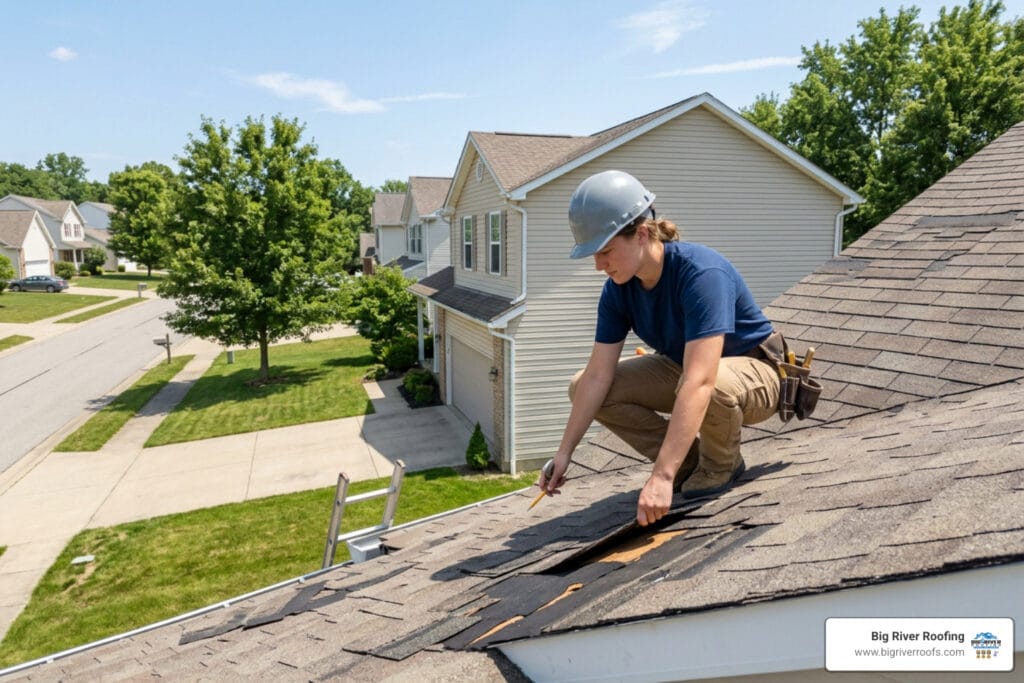
For Lawrence County roof repair, start with a professional inspection after any hail or high-wind storm, or when you see missing shingles, granules in gutters, ceiling stains, or a leak. Local repairs can protect a roof with isolated damage, but widespread wear, repeated leaks, soft decking, or a roof more than 20 to 25 years old often calls for replacement. Big River Roofing helps homeowners identify the real source of damage before recommending the next step.
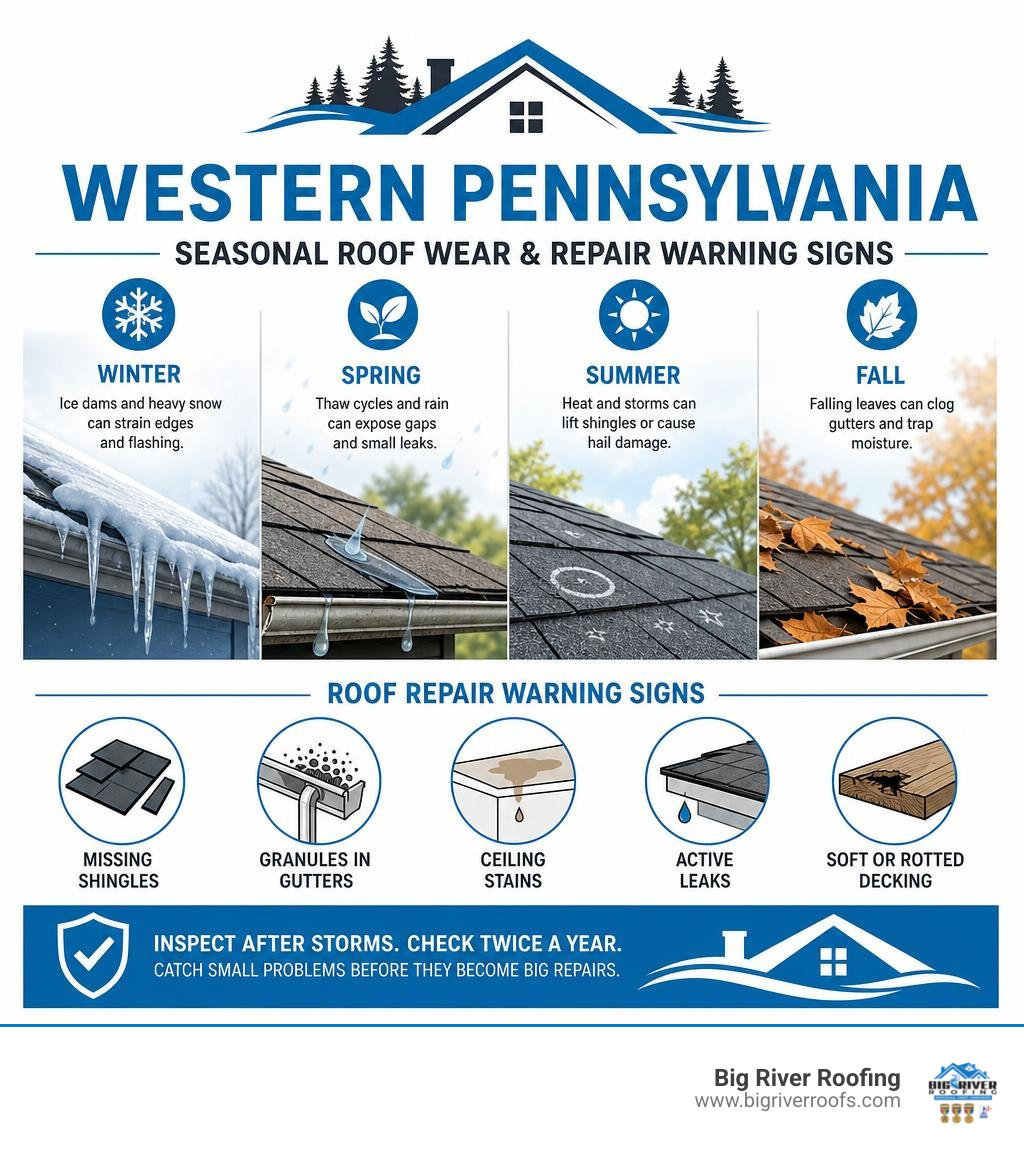
Western Pennsylvania roofs face year-round stress. Freeze-thaw cycles can open gaps around flashing, lake-effect snow can lead to ice dams, and storms can lift shingles or bruise them with hail. A spring and fall inspection, plus an inspection after severe weather, catches small problems before water reaches the attic, insulation, or roof decking.
I am Don Kovac, owner of Big River Roofing in Hermitage, Pennsylvania, and I lead a local team serving homeowners across Lawrence County with repairs, replacements, storm restoration, and exterior protection. Our experience with Lawrence County roof repair includes tracking leaks, repairing storm damage, and building roofing systems designed for Western Pennsylvania weather.
Simple lawrence county roof repair glossary:
Common Warning Signs Requiring Lawrence County Roof Repair
Western Pennsylvania microclimates place unique stress on residential building envelopes. Lawrence County sits directly in a transitional weather corridor where Great Lakes weather systems collide with the rolling topography of the Allegheny foothills. This geographical location creates severe seasonal shifts. Our region contends with 40 to 50 inches of annual snowfall, sharp sub-freezing temperatures, and rapid winter temperature swings that trigger intense freeze-thaw cycles.
When snow melts over a warm attic and refreezes at cold eaves, ice dams force liquid water backward under shingle courses. As spring arrives, convective storm systems moving northeast out of Ohio bring 50+ mph wind squalls and heavy downpours. Neglecting the early warning signs of exterior wear leaves your rafters, structural decking, and interior ceilings vulnerable to progressive water damage.
Identifying Storm Damage and Lawrence County Roof Repair Needs
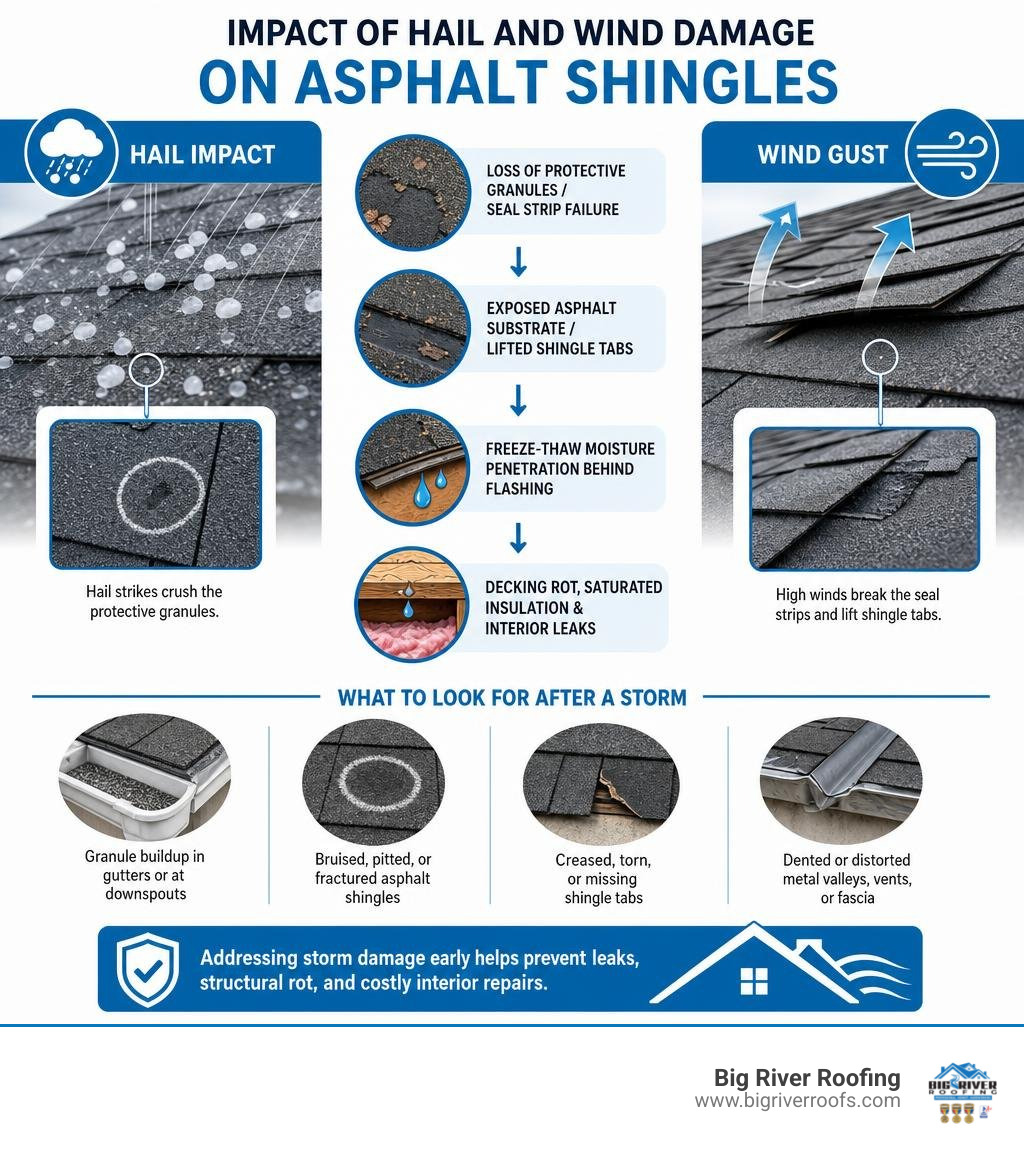
Severe convective weather causes immediate exterior degradation across Western PA. According to data from the National Oceanic and Atmospheric Administration (NOAA), Pennsylvania experiences over 100 hail events annually statewide, with storm corridors regularly tracking across Lawrence County communities like New Castle. Hail strikes crush the mineral granules embedded on asphalt shingles, exposing the underlying fiberglass matting to UV radiation and accelerating shingle decay.
High winds create negative pressure zones over roof ridges and eaves, breaking adhesive factory seal strips. Once shingles lift, wind-driven rain penetrates the underlayment. Property owners should look for:
- Heavy accumulation of mineral granules washed into gutters or downspout splash blocks.
- Bruised, pitted, or fractured asphalt shingles following thunderstorm activity.
- Creased, torn, or completely displaced shingle tabs.
- Distorted, dented metal valley liners, ridge vents, or aluminum fascia trim.
When wind tears away tabs or hail breaks the shingle substrate, isolated missing shingle replacement prevents water from reaching the bare plywood deck.
Flashing Failures and Hidden Leak Detection
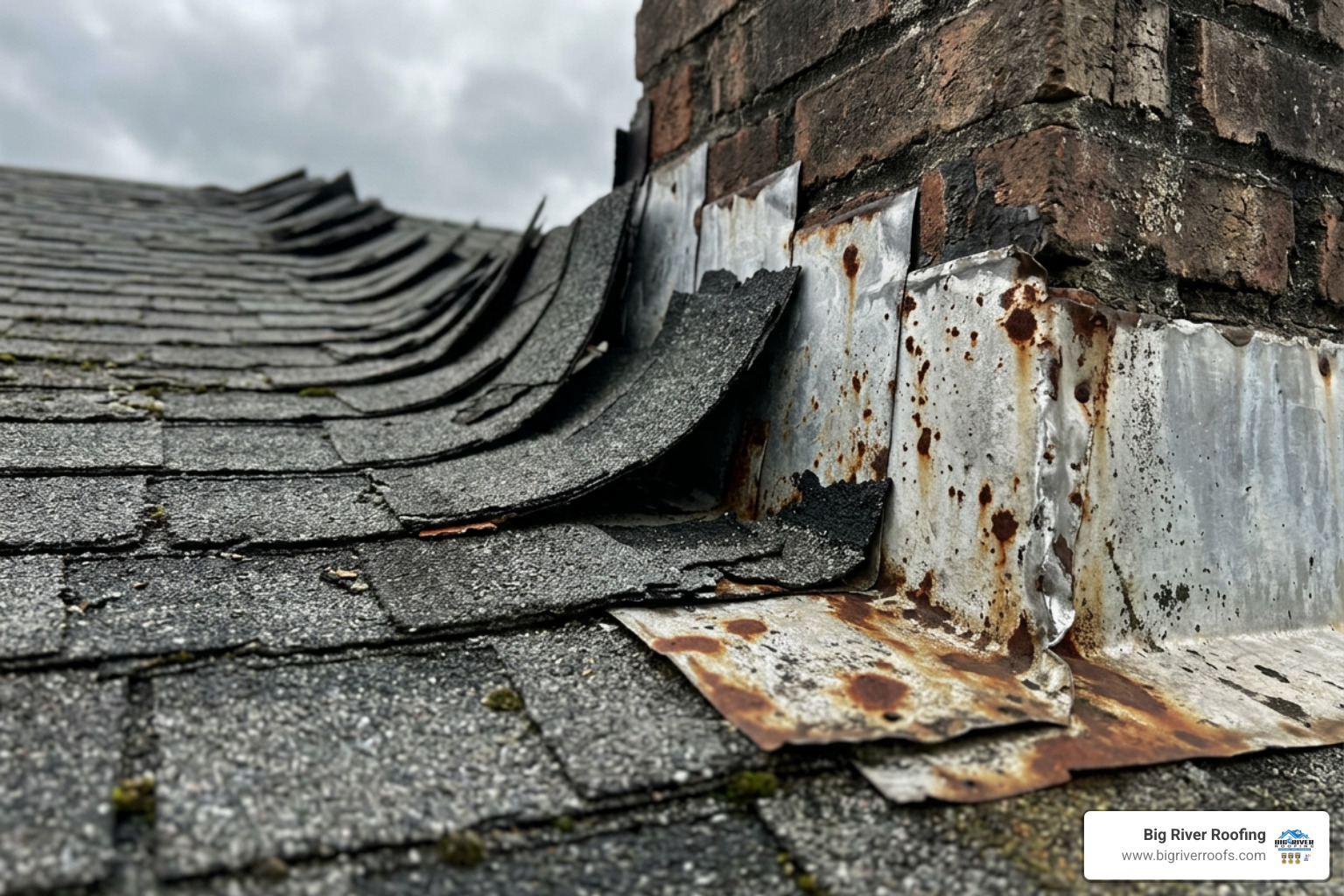
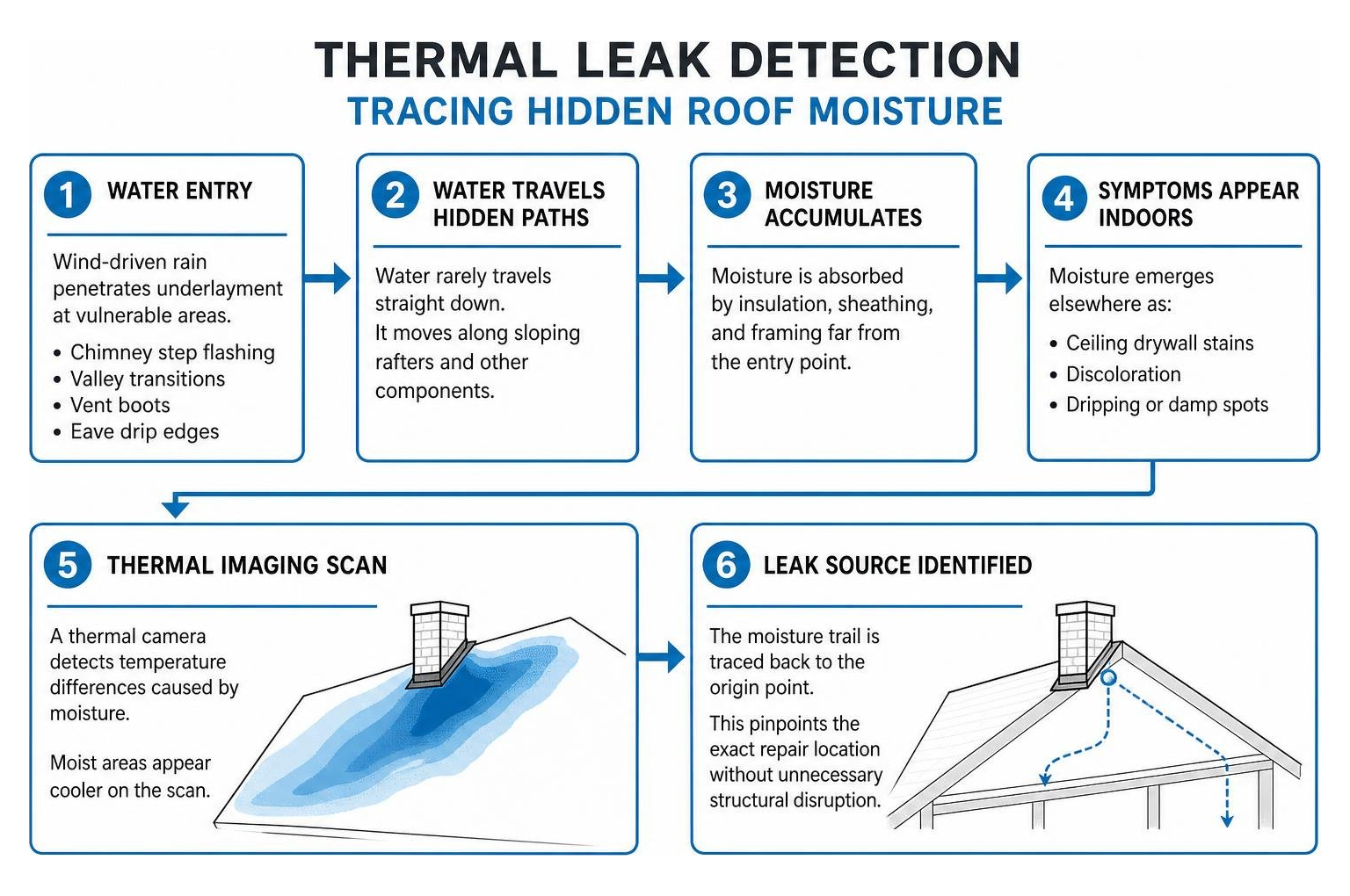
Roof penetrations and directional transitions represent the most vulnerable areas on any home. Step flashing along brick chimneys, dormers, and sidewalls expands and contracts constantly during freeze-thaw cycles. Over time, dried sealants and rusted sheet metal pull away from masonry mortar joints, creating clear channels for water intrusion.
Water rarely travels straight down. A leak entering a chimney flashing transition often travels along sloping rafters before dripping through ceiling drywall several feet away. We deploy non-invasive diagnostic tools, including thermal imaging moisture cameras, to trace moisture trails back to their origin point without causing unnecessary structural disruption.
Evaluating Your Options: Roof Repair vs. Full Replacement
Determining whether your property requires a targeted repair or a comprehensive roof tear-off depends on several measurable factors, including the age of the roofing assembly, the percentage of damaged area, and the condition of the wooden substrate.
| Assessment Factor | Candidate for Targeted Roof Repair | Candidate for Complete Roof Replacement |
|---|---|---|
| Roof Age | Under 12–15 years old with intact shingle flexibility | Over 20–25 years old; brittle, curling shingle field |
| Damage Scope | Isolated storm damage affecting under 20% of surface | Widespread granule loss, widespread hail bruising |
| Leak History | First-time leak isolated to a single flashing or vent | Multiple recurring leaks across separate roof planes |
| Decking Condition | Firm, dry plywood or oriented strand board (OSB) | Spongy, sagging, or moisture-rotted roof decking |
| System Layers | Single existing layer of asphalt shingles | Multiple shingle layers installed over old roofing |
| Ventilation Setup | Functional ridge and soffit air intake pathways | Trapped attic heat causing shingle baking/blistering |
Critical Factors in Lawrence County Roof Repair Decisions
When damage is confined to a distinct section—such as lifted ridge shingles from a sudden squall or a cracked plumbing vent collar—a focused roof repair provides durable protection without the expense of an unneeded installation.
However, if an aging roof exhibits widespread curling, bare fiberglass patches, or brittle shingles that crack during tab manipulation, patching becomes a short-term band-aid. We strongly advise homeowners against installing overlay roofs (nailing new shingles directly over old shingles). Overlays trap heat, add excess dead load weight that strains structural framing during heavy winter snowfalls, and conceal underlying decking rot. Performing a clean tear-off down to the structural deck is the only way to verify the condition of the wood and install modern ice-and-water protection to current building standards. Homeowners evaluating their long-term project budget can review everything you need to know about roof replacement cost for detailed financial expectations.
Material Longevity and Structural Decking Integrity
Roof systems rely entirely on the structural deck beneath them. Persistent moisture penetration from seasonal ice dams degrades CDX plywood and oriented strand board, causing localized delamination and sagging. During an evaluation, technicians assess decking deflection from inside the attic and along exterior planes.
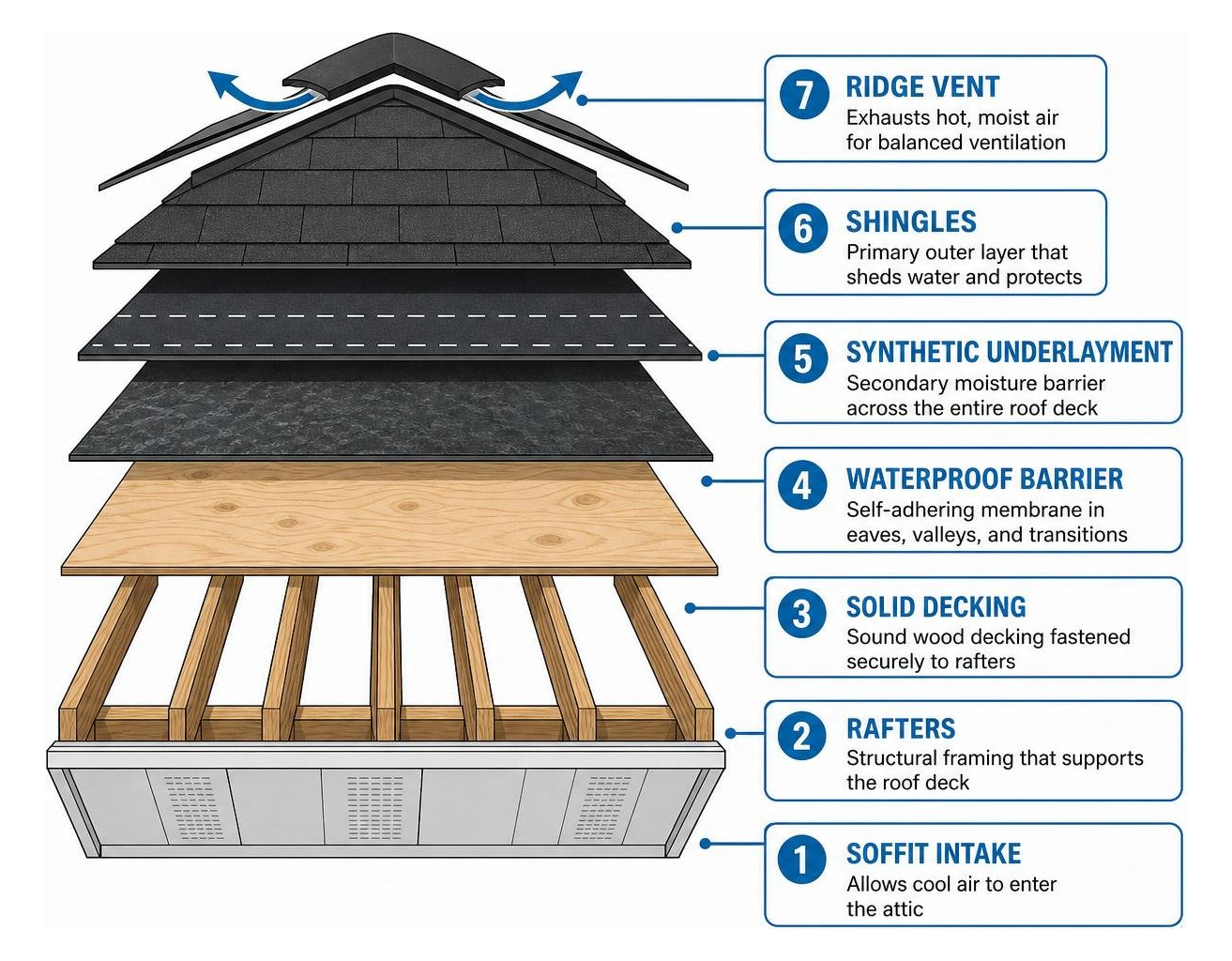
When soft spots appear around eaves or valleys, our team replaces rotted wood with new decking before installing self-adhering ice-and-water barriers. A complete roofing assembly requires four integrated elements:
- Solid Decking Foundation: Sound wood decking fastened securely to rafters.
- Waterproof Barrier: Self-adhering modified bitumen membrane along all eaves, valleys, and wall transitions to resist ice dam backup.
- Synthetic Underlayment: High-traction synthetic felt providing secondary moisture defense across the entire roof deck.
- Balanced Ventilation: Continuous soffit intake and ridge exhaust vents that regulate attic temperatures and prevent winter moisture accumulation.
Best Roofing Materials for Western Pennsylvania Weather
Selecting the right roofing material requires balancing upfront cost, aesthetic preferences, and long-term durability against Western Pennsylvania’s harsh seasonal changes.

- Architectural Asphalt Shingles: The most common residential choice across Western PA. Built with multi-layer laminated fiberglass, architectural shingles provide wind resistance ratings up to 110–130 mph and withstand heavy freeze-thaw cycles far better than older 3-tab products. Premium Class 4 impact-resistant lines protect against severe hail strikes.
- Standing Seam Metal Roofing: Metal roofing systems feature concealed fasteners and raised vertical seams that shed heavy snow loads efficiently. According to the Metal Roofing Alliance, reflective cool-roof coatings applied to metal panels can reduce summer household cooling costs by up to 25%. Metal systems offer superior longevity of 40 to 50+ years, making them ideal for high-exposure rural properties and riverfront locations.
- Engineered Composite Tile: Advanced synthetic composites recreate the appearance of natural slate or cedar shake without the extreme structural weight. These products carry Class 4 impact ratings and Class A fire ratings, providing outstanding resistance against high winds and flying debris.
Navigating Storm Damage and Insurance Claims
When severe convective storms produce wind damage or widespread hail bruising, managing insurance paperwork can feel overwhelming. Following a structured storm response process protects your property from secondary damage and ensures your claim is properly documented.
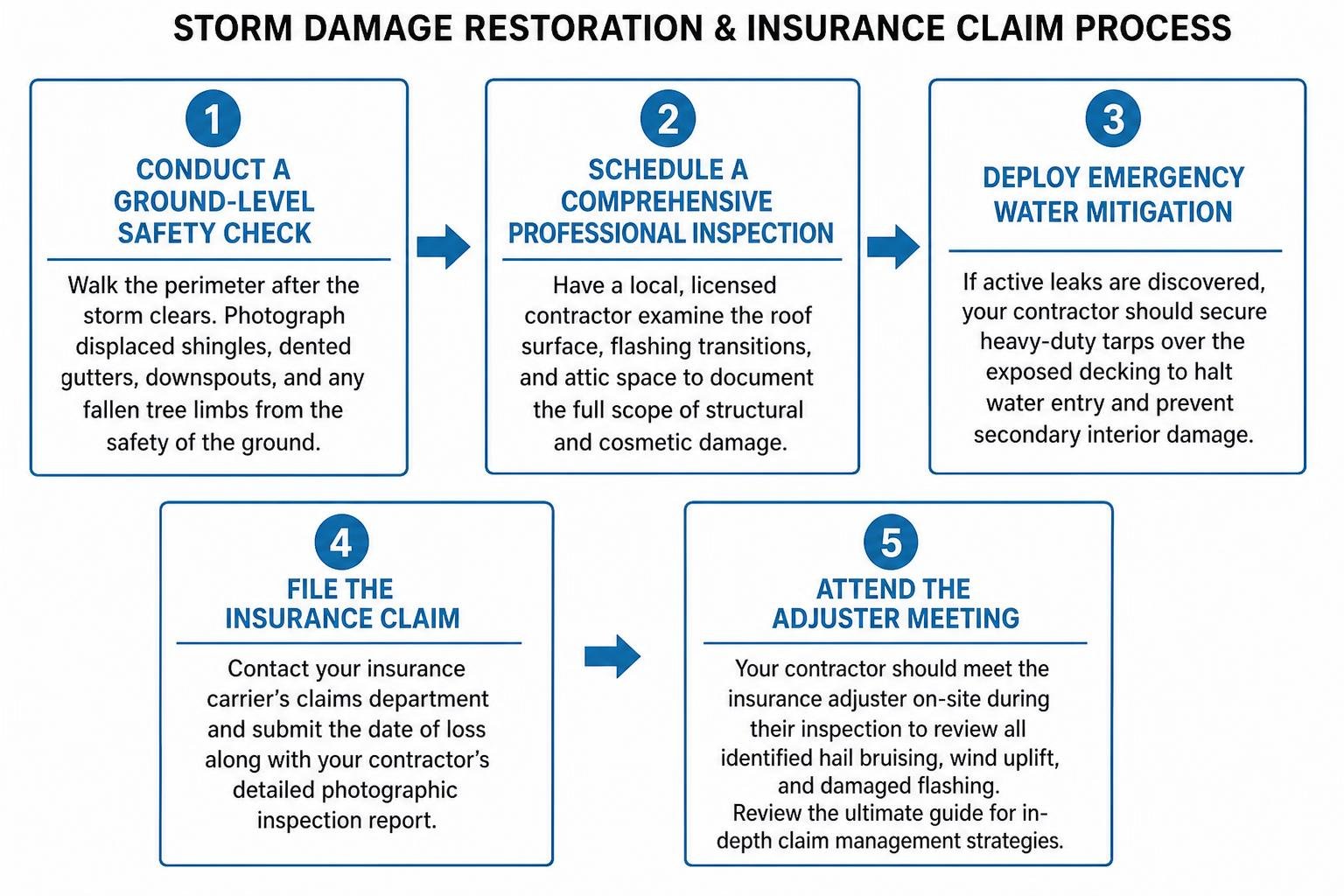
- Step 1: Conduct a Ground-Level Safety Check: Walk the perimeter of your home after the storm clears. Photograph displaced shingles, dented gutters, downspouts, and any fallen tree limbs from the safety of the ground.
- Step 2: Schedule a Comprehensive Professional Inspection: Have a local, licensed contractor examine the roof surface, flashing transitions, and attic space to document the full scope of structural and cosmetic damage.
- Step 3: Deploy Emergency Water Mitigation: If active leaks are discovered, your contractor should secure heavy-duty tarps over the exposed decking to halt water entry. Standard homeowner insurance policies require policyholders to take reasonable steps to prevent secondary interior water damage.
- Step 4: File the Insurance Claim: Contact your insurance carrier’s claims department and submit the date of loss along with your contractor’s detailed photographic inspection report.
- Step 5: Attend the Adjuster Meeting: Your contractor should meet the insurance adjuster on-site during their inspection to review all identified hail bruising, wind uplift, and damaged flashing. Homeowners navigating this process can read the ultimate guide to navigating a storm damage roof replacement for in-depth claim management strategies.
Frequently Asked Questions About Lawrence County Roofing
How much does roof repair typically cost in Lawrence County, PA?
Targeted repairs for minor issues—such as replacing a few blown-off shingles, resealing a leaking pipe boot, or securing loose flashing—generally range from $300 to $1,500 depending on roof pitch, accessibility, and material type. Major structural repairs involving rotted plywood replacement, extensive valley rebuilding, or ice dam mitigation typically range between $1,500 and $3,500. Comprehensive full roof replacements across Western Pennsylvania vary based on square footage, architectural complexity, and whether you choose architectural asphalt shingles or standing seam metal. Homeowners can request a free roof quote to receive an accurate, itemized written estimate tailored to their specific roof geometry.
How often should a roof be inspected in Western Pennsylvania?
The National Roofing Contractors Association (NRCA) recommends that residential roofs receive a professional inspection twice per year—once in the spring following the winter freeze-thaw thaw, and once in late autumn before heavy snow arrives. Additional inspections should be scheduled immediately following any severe weather event involving winds above 50 mph or hail activity. A complete inspection examines shingles for granule loss, evaluates metal flashing seals around chimneys and dormers, checks gutters for proper drainage, and inspects attic decking for signs of hidden moisture intrusion or inadequate airflow.
What state licensing and contractor standards apply in Lawrence County?
In the Commonwealth of Pennsylvania, all residential home improvement contractors must register with the Pennsylvania Office of the Attorney General under the Home Improvement Consumer Protection Act (HICPA). Homeowners should always verify a contractor’s active HIC registration number, request valid certificates of general liability insurance ($1,000,000 minimum recommended) and workers’ compensation coverage, and ensure the contractor adheres to all local township codes, borough guidelines, and Mercer County permit requirements. For a step-by-step contractor evaluation framework, review our ultimate checklist for finding a western pa roofer and guide on roofing companies near my location what to look for before you hire.
Conclusion
Protecting your residential property against Western Pennsylvania’s harsh climate demands durable materials, precise workmanship, and honest diagnostic assessments. Whether you are dealing with minor wind uplift after a summer thunderstorm, recurring chimney flashing leaks, or an aging roof reaching the end of its useful lifespan, our team delivers dependable solutions tailored to the weather challenges of Lawrence County.
Big River Roofing provides manufacturer-certified installations backed by industry-leading warranties from Owens Corning, CertainTeed, and IKO to keep your home fully protected throughout every season.