What to Know Before Hiring a Western PA Roofer
If you need a western PA roofer, here is what matters most:
- Local experience — Choose a contractor who knows Western Pennsylvania’s freeze-thaw cycles, heavy snowfall, and wind patterns.
- Proper credentials — Look for manufacturer certifications (IKO, Owens Corning, CertainTeed) and verify PA contractor registration.
- Honest assessment — A trustworthy roofer tells you whether you need a repair or a full replacement — not the more expensive option by default.
- Warranties — Expect both a manufacturer material warranty and a workmanship warranty from your contractor.
- Avoid storm chasers — Out-of-state contractors who appear after a hail event and vanish are a serious risk.
Western Pennsylvania is not easy on roofs. The region averages around 40 inches of snow per year, and the relentless freeze-thaw cycles that follow can quietly destroy flashing, rot decking, and turn a small leak into a major structural problem. If your home is more than 20 years old — as many are across Cranberry Township, Butler, Beaver, and the surrounding counties — there is a real chance your roof is already showing signs of serious wear, even if it is not obvious from the ground.
Finding the right contractor in this region is not just about price. It is about finding someone who understands your specific neighborhood, your home’s age, and the climate conditions your roof faces every single year.
I’m Don Kovac, owner of Big River Roofing and a Hermitage native who has spent years working with homeowners and commercial property owners across Western Pennsylvania as a trusted western PA roofer. Everything in this guide reflects what I have seen on real roofs in this region — and what I wish every homeowner knew before picking up the phone.
Why You Need a Local Western PA Roofer
When it comes to protecting your single largest investment, hiring a local western PA roofer is not just about supporting the local economy—it is about structural survival. Western Pennsylvania features a highly unique combination of older historical boroughs, rapidly growing suburban developments, and harsh, unpredictable weather. A contractor based in a different state or even a different part of Pennsylvania simply will not understand the micro-climates and regional building styles that define our area.
At Big River Roofing, we live and work in the same communities we serve. This local connection means we are familiar with local municipal building codes, permit processes, and the specific architectural styles of homes in our region. When you work with a truly local company, you are getting a partner who will be here to honor workmanship warranties years down the road. You can learn more about our commitment to our neighbors on our About page.
Weather Challenges Only a Western PA Roofer Understands
The weather in Western Pennsylvania is notoriously tough on building materials. We do not just get cold winters; we experience rapid temperature swings that wreak havoc on residential and commercial structures alike.
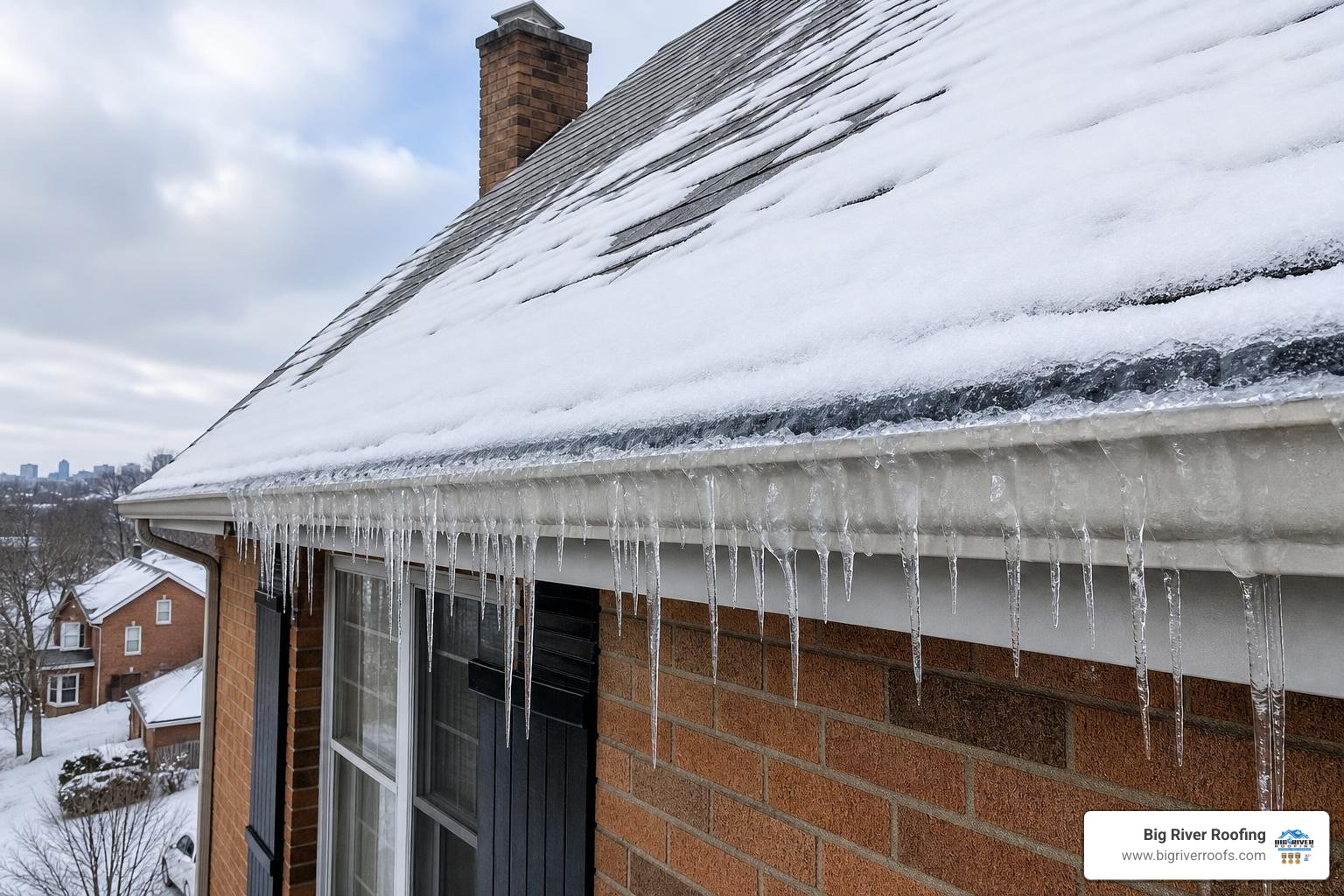
According to data tracked by the National Weather Service, our region averages around 40 inches of snow per year. When that heavy snow sits on a roof, it does not just present a weight hazard; it creates the perfect environment for ice dams. As heat escapes from poorly insulated or under-ventilated attics, it melts the bottom layer of snow. This water runs down to the cold eaves, where it refreezes, forming a solid block of ice. Behind this ice dam, standing water pools and backs up under the shingles, leading to severe interior water damage.

Additionally, our intense freeze-thaw cycles cause roofing materials to expand and contract constantly. Standard roof flashing that might last 25 years in a milder climate often pulls loose by year 15 in Western PA due to this movement. High-wind corridors—such as the open terrains around West Middlesex near the I-80 corridor—subject shingles to uplift forces that require specialized, reinforced nailing patterns. If your roof has suffered from these localized climate issues, timely Roof Repair is critical to prevent structural rot.
Regional Counties and Communities Served
The roofing needs of Western Pennsylvania vary dramatically from one town to the next. We regularly serve a wide range of counties and communities, each with its own unique housing stock:
- Mercer County & Hermitage: Our home base, where we see a mix of mid-century ranches, historic farmhouses, and modern suburban homes.
- Butler County & Slippery Rock: Butler County features a wide variety of properties. In Slippery Rock, we often work with rental property owners who need durable, cost-effective roofing solutions that meet strict local codes without unnecessary, expensive upgrades.
- Cranberry Township & Wexford: These rapidly growing suburban hubs feature many homes built in the late 1990s and early 2000s.
- Beaver County & Lawrence County: From Beaver Falls to New Castle, these historic river valley communities are filled with older homes that require specialized care and preservation.
Key Signs Your Roof Needs Repair vs. Replacement
Determining whether your roof requires a simple patch job or a complete tear-off is one of the most important decisions you will face. A dishonest contractor might push for a full replacement when a repair is perfectly sufficient, while an inexperienced one might patch a roof that is structurally compromised.
| Symptom | Roof Repair | Roof Replacement |
|---|---|---|
| Age of Roof | Under 15 years old | 20 to 25+ years old |
| Shingle Condition | A few loose or cracked shingles from wind | Widespread curling, buckling, or bald shingles |
| Granule Loss | Minor shedding in gutters | Heavy bald spots; gutters filled with shingle sand |
| Active Leaks | Single, isolated leak near a chimney or vent | Multiple recurring leaks across different rooms |
| Decking Status | Solid, dry plywood sheathing | Soft, spongy spots; widespread water staining or rot |
If you notice active water spots on your ceiling, missing shingles after a storm, or heavy granule accumulation in your downspouts, you need a professional assessment. For homes with widespread wear, planning a complete Roof Replacement is the safest way to protect your property’s interior.
How to Choose the Right Western PA Roofer for Older Homes
Older homes built before 1960—which are incredibly common in historic boroughs like Butler, Beaver, Mercer, and Sharon—present unique structural challenges.
Many of these historic homes were originally roofed with slate or wood shakes. Their rafters and supportive structures may not be designed to handle the concentrated weight of modern, heavy architectural shingles without reinforcement. Furthermore, older homes often utilize spaced board sheathing (tongue-and-groove planks) rather than modern plywood. If a contractor tries to nail new shingles directly into gapped historic planks, the nails will not hold, and the shingles will blow off in the next storm.
When performing a historic Roof Installation, we carefully inspect the integrity of the decking, repair any hidden rot caused by decades of poor ventilation, and install a solid plywood or OSB deck over older planks where necessary to guarantee a secure hold.
Suburban Roof Lifespans and Architectural Shingles
On the other end of the architectural spectrum are the master-planned subdivisions of Cranberry Township and Wexford. Many of these beautiful homes were built during the suburban expansion of the late 1990s and early 2000s.
As of July 2026, most Cranberry homes have original roofs that are now 20 to 25 years old. This is the exact window when standard builder-grade architectural shingle roofs reach the end of their functional lifespan. Even if these roofs look fine from the driveway, the asphalt binders inside the shingles have dried out due to twenty-five years of summer heat and freezing winters. The protective granules have washed away, leaving the fiberglass mat exposed to UV damage and moisture intrusion. If you live in one of these established neighborhoods, proactively inspecting your roof now can prevent a sudden, catastrophic failure during a winter blizzard.
Choosing the Right Roofing System for Your Property
Choosing the right material is a balance of aesthetics, budget, local climate demands, and structural compatibility.

Modern homeowners have more choices than ever before. Whether you are looking for the classic, textured appearance of heavy shingles or the sleek, lifetime durability of standing-seam metal, selecting a material designed to withstand Western PA’s unique weather cycles is essential. You can explore our full range of home solutions on our Residential Roofing service page.
Residential Roofing Materials
- Architectural Shingles: The most popular choice for Western PA homes. These multi-layered asphalt shingles provide excellent wind resistance, depth of character, and a reliable 20-to-30-year lifespan when properly ventilated.
- Metal Roofing: Standing-seam and metal tile systems are highly durable, shed heavy snow effortlessly, and can last 50 years or more. They are highly recommended for steep-slope homes and properties in high-wind zones.
- Traditional Slate: Commonly found on historical estates in Allegheny and Mercer counties. While incredibly beautiful and capable of lasting a century, slate is extremely heavy and requires specialized, highly trained artisans for repair and installation.
Commercial Roofing Solutions
For commercial properties in Western Pennsylvania, the demands are entirely different. Commercial roofs are typically flat or low-slope, meaning they must handle standing water, heavy snow loads, and thermal expansion over massive surface areas. Reliable commercial solutions require specialized systems:
- TPO (Thermoplastic Polyolefin): A highly reflective, single-ply membrane that offers excellent energy efficiency and resistance to tears and punctures.
- EPDM (Ethylene Propylene Diene Terpolymer): A synthetic rubber membrane known for its extreme durability and versatility in cold climates.
- Built-Up Roofing (BUR): A traditional, multi-layered flat roof system composed of alternating layers of bitumen and reinforcing fabrics, offering superb redundancy and puncture resistance.
- Commercial Waterproofing & Cladding: Protecting a commercial building envelope requires more than just a roof. Integrating professional waterproofing for foundations and parking structures, alongside modern exterior cladding, ensures complete building protection.
The Ultimate Western PA Roofer Checklist
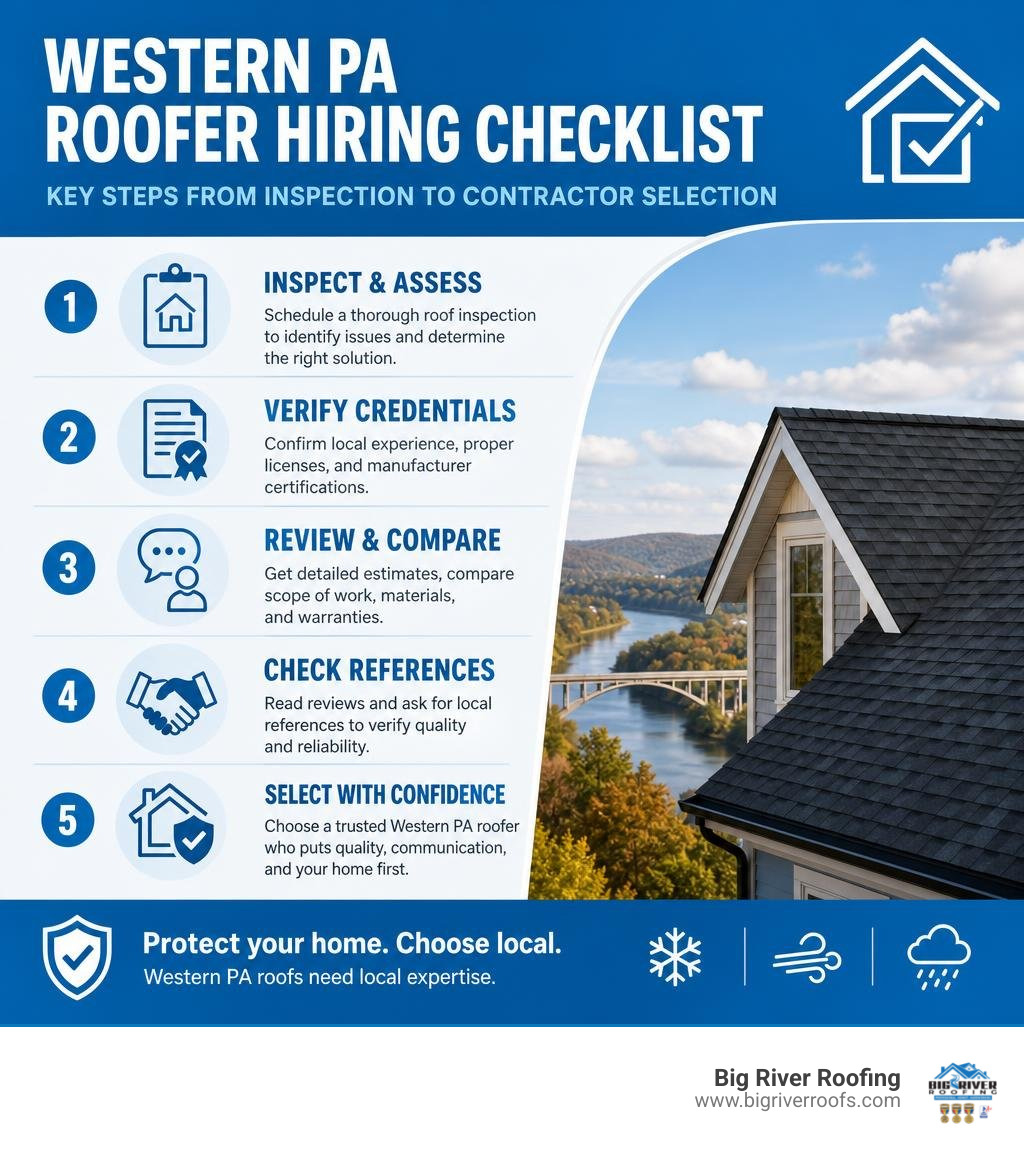
To protect your home and your wallet, use this checklist when evaluating any roofing contractor in our region:
- [ ] PA Home Improvement Contractor (HIC) Registration: Is the contractor registered with the Pennsylvania Attorney General’s office? (This is legally required for any residential contractor in PA).
- [ ] Local Physical Address: Can they provide a physical address of a local office, or is their address a P.O. Box or an out-of-state location?
- [ ] Comprehensive Insurance: Do they carry both General Liability and Workers’ Compensation insurance to protect you from liability in case of an accident?
- [ ] Manufacturer Certifications: Are they certified by major brands like IKO, Owens Corning, or CertainTeed to offer extended system warranties?
- [ ] Detailed, Written Estimate: Does the quote break down material costs, labor, disposal fees, permit costs, and flashing replacement?
Before signing any contract, we recommend getting a professional, transparent assessment of your roof’s current state. You can request a Free Roof Quote from our local team today.
Storm Chasers vs. Local Contractors
After a major hail or wind storm sweeps through Western Pennsylvania, neighborhoods are often flooded with out-of-state “storm-chasing” contractors. These companies travel from state to state, following weather radar maps. They knock on doors, offer “free roofs” through insurance loopholes, and use high-pressure sales tactics to get homeowners to sign over their insurance rights.
While they may install a roof quickly, they often use cheap labor, skip critical steps like replacing flashing, and ignore local building codes. Once the storm season ends, they pack up and move to the next state. If your roof begins to leak six months later, their phone numbers are disconnected, and you are left to pay another contractor to fix their mistakes. Choosing a local contractor with a deep-rooted community reputation ensures you have someone to call if you ever experience an issue.
Warranties, Certifications, and Estimates
A roof is only as good as the hands that install it and the warranties that back it. Reputable contractors hold prestigious manufacturer certifications. Because of our strict adherence to installation standards, Big River Roofing is certified by the industry’s leading manufacturers:
- IKO
- Owens Corning
- CertainTeed
These certifications allow us to offer extended manufacturer warranties that cover both materials and labor for up to 50 years. When reviewing estimates, always ensure your western PA roofer provides a clear breakdown of the work. A professional estimate should always include the cost of tearing off the old roof, replacing damaged sheathing, installing ice and water shields in valleys and along eaves, and replacing all transition flashing.
Frequently Asked Questions About Western PA Roofing
How much does a new roof cost in Western Pennsylvania?
Roofing costs in our region depend heavily on the square footage of your home, the pitch (steepness) of your roof, the number of valleys and chimneys, and the materials you select. On average, a standard residential architectural shingle roof replacement in Western PA ranges from $8,000 to $18,000. Premium materials like standing-seam metal or historical slate will cost significantly more due to higher material costs and specialized labor.
How do I handle a roofing emergency or storm damage?
If a tree falls on your roof or a severe storm tears away a large section of shingles, your immediate priority is minimizing water damage inside your home.
- Safety First: Never climb onto a wet, damaged roof yourself during or immediately after a storm.
- Mitigate Damage: Place buckets under active leaks and move valuables away from affected areas.
- Professional Tarping: Call a local roofer to perform emergency tarping to secure the structure.
- Document Everything: Take photos of the interior damage and any visible roof damage from the ground for insurance purposes.
If you are facing an active leak or storm damage, please reach out directly through our Contact page so we can dispatch a team to secure your home.
What is the average lifespan of an architectural shingle roof in PA?
In our harsh climate, a professionally installed architectural shingle roof typically lasts 20 to 25 years. While the shingles themselves may carry a “lifetime” manufacturer warranty, the real-world lifespan is dictated by attic ventilation, winter snow loads, and the quality of the original installation. Regular maintenance and annual inspections can help extend this lifespan.
Conclusion
Your roof is your home’s primary defense against everything the Western Pennsylvania climate can throw at it. From the heavy winter snows of Mercer County to the older, delicate historic structures of Butler and Beaver, keeping your home safe requires a contractor who understands our local architecture and weather patterns.
At Big River Roofing, we have spent over five years serving Hermitage and Western Pennsylvania homeowners, earning four-time Best of the Best recognition along the way. We specialize in manufacturer-certified installations using premium materials from IKO, Owens Corning, and CertainTeed. We believe in honest communication, transparent estimates, and standing behind every single nail we drive.
If you want to work with a local western PA roofer who treats your home like their own, we are here to help. Visit our Roofers Near Me page to find your local service representative and schedule your free, no-obligation roof inspection today!