How to Vet Roofing Companies Near My Location
#
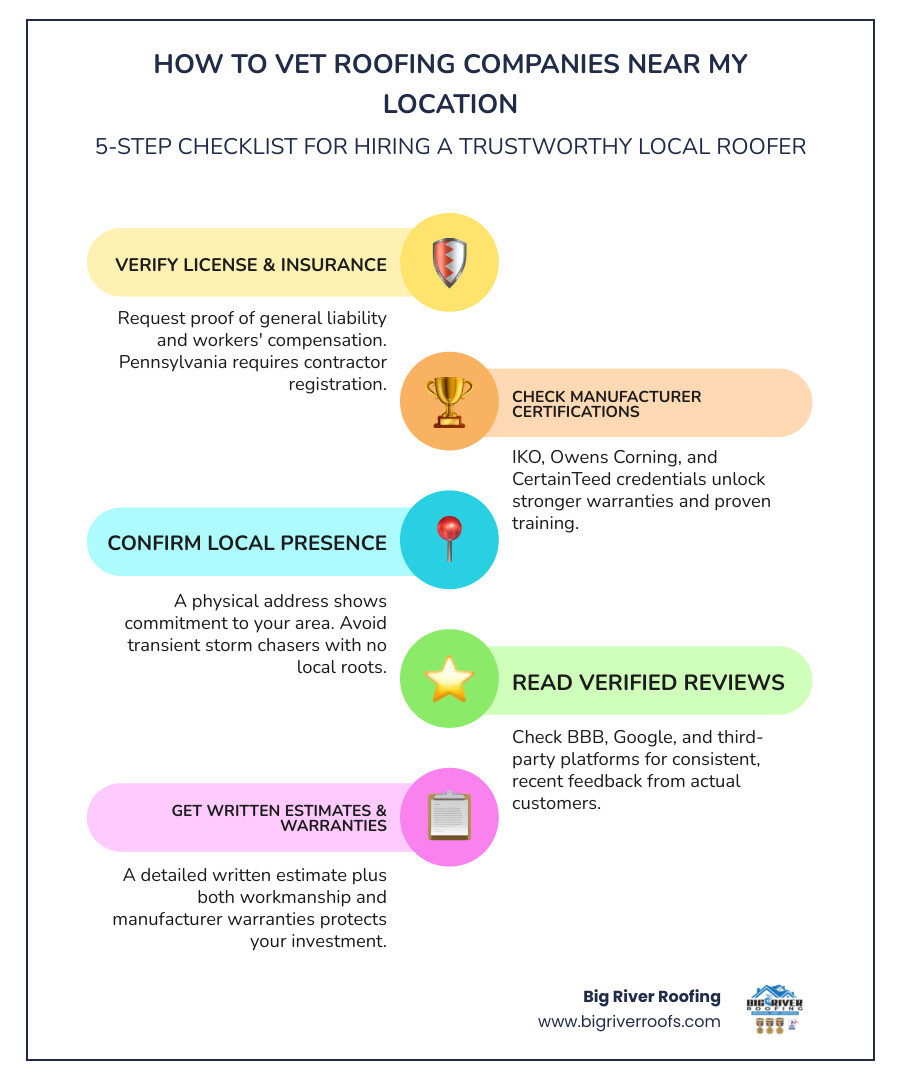
If you’re trying to find roofing companies near my location, here’s a quick-start checklist to help you hire with confidence:
- Verify licensing and insurance — Ask for proof of general liability and workers’ compensation coverage.
- Check manufacturer certifications — Look for credentials like IKO, Owens Corning, or CertainTeed, which unlock stronger warranties.
- Confirm a local physical address — Avoid contractors who can’t prove a permanent presence in your area.
- Read verified reviews — Check BBB, Google, and other third-party platforms for consistent, recent feedback.
- Get everything in writing — A reliable contractor will provide a detailed written estimate before any work begins.
- Ask about warranties — Look for both a workmanship warranty and a manufacturer product warranty.
Your roof is one of the most important parts of your home — and one of the most expensive to fix if something goes wrong. A roof that’s 20 years or older, showing curling shingles, water stains, or storm damage, isn’t something you want to hand off to just anyone.
The problem? After a bad storm, contractors flood local neighborhoods fast. Some are legitimate. Some are not. Knowing how to tell the difference before you sign anything can save you thousands of dollars and a lot of frustration.
This guide walks you through everything you need to know — from vetting credentials to understanding costs, warranties, and insurance claims — so you can hire with confidence.
I’m Don Kovac, owner of Big River Roofing in Hermitage, Pennsylvania, where I’ve spent years helping Western PA homeowners navigate the process of finding trustworthy roofing companies near my location — and building a company I’d be comfortable recommending to my own neighbors. With credentials from IKO, Owens Corning, and CertainTeed, and a BBB Accredited business with Pennsylvania contractor registration PA169326, my team and I have earned a reputation for honest assessments and work that lasts.
Vetting a contractor is about more than just looking at a price tag. It is about protecting your home, your family, and your wallet. When searching for roofing companies near my location, you need a systematic way to separate the true professionals from the average “chuck-in-a-truck” operations.
Reviewing Contracts and Business Credentials
Before you sign any contract, read the fine print. A professional roofing contract should clearly outline the scope of work, materials to be used (including brand names and specific lines), disposal fees, payment schedules, and exact project timelines.
One of the most reliable ways to verify a contractor’s reputation is through their Better Business Bureau (BBB) status. Look for a business that is actively BBB Accredited. If a directory search returns no results or suspicious business profiles, you can broaden your search terms or use the BBB Scam Tracker to see if the contractor has been flagged for fraudulent activity.
Licensing, General Liability, and Workers’ Compensation
In Pennsylvania, professional roofers should be registered with the state (such as our registration, PA169326). However, registration is only the baseline. You must verify that the company carries two critical types of insurance:
- General Liability Insurance: This protects your property. If a heavy bundle of shingles is dropped and cracks your driveway, or if a sudden rainstorm occurs while your roof is exposed and ruins your ceiling, general liability covers the damage.
- Workers’ Compensation: This protects you from lawsuits. Roofing is dangerous work. If an uninsured worker falls on your property, you could be held liable for their medical expenses. Always ask the contractor to have their insurance agency send certificates of insurance directly to you.
Verify Manufacturer Certifications
The absolute best way to ensure a flawless installation is to hire a contractor with manufacturer-backed certifications. Major brands like IKO, Owens Corning, and CertainTeed do not hand these out to just anyone.
For example, GAF Master Elite contractors represent the top 3% of roofing contractors in the country. Similarly, Owens Corning Platinum Preferred and CertainTeed ShingleMaster credentials require rigorous training, testing, financial stability checks, and high-quality installation standards. When you hire a certified installer, you gain access to extended warranties—such as 50-year material and 25-year workmanship coverage—that uncertified roofers simply cannot offer.
Check Local Contractor Standards
Different areas have unique building codes. A contractor based in another state won’t understand the specific ice damming regulations or wind load requirements of Western Pennsylvania. Always verify that your chosen roofer is thoroughly familiar with regional building codes and local permitting processes.
Why Local Expertise Matters for Roofing Companies Near My Location
Why should you focus on local expertise? Because Western Pennsylvania weather is tough on roofs. From heavy lake-effect snow in Mercer County to humid summers and freeze-thaw cycles in Butler and Allegheny counties, our climate demands specialized roofing knowledge.
While companies in coastal climates design systems for hurricane-force winds, or Southern California crews focus on Title 24 cool-roof compliance, a Western PA roofer must focus heavily on ice dam prevention, snow load capacity, and thermal expansion.
When you hire a local neighbor, you get someone who:
- Knows local building codes inside and out.
- Maintains a physical office you can visit if you ever have an issue.
- Stands by their work long-term instead of moving on to the next storm-damaged state.
If you are ready to work with a team that has deep roots in our community, you can Find local roofers near me today.
Red Flags When Researching Roofing Companies Near My Location
When a major storm hits, “storm chasers” often flood our neighborhoods. These are out-of-town companies that travel from state to state following severe weather. They use high-pressure sales tactics to get you to sign over your insurance check, install a subpar roof using cheap materials, and disappear before you notice the leaks.
Watch out for these warning signs:
- Door-to-door solicitation: Reputable local roofers rarely knock on doors offering “free roofs” or immediate inspections after a storm.
- High-pressure tactics: If they push you to sign a contract on the spot or claim a special discount is “only valid for today,” walk away.
- No physical address: Avoid companies that only operate out of P.O. boxes, unmarked trucks, or out-of-state phone numbers.
- Demanding cash upfront: A reputable contractor will never ask for a 100% upfront payment. A standard progress payment schedule is normal, but avoid anyone demanding the full amount before materials are delivered.
Key Questions to Ask Before Hiring a Contractor
Before you sign on the dotted line, sit down with your prospective roofer and ask these direct questions. Their answers will tell you everything you need to know about their professionalism.
- Do you offer free on-site inspections and written estimates?
- What to look for: Yes. A reputable company should provide a detailed, itemized written estimate after a physical inspection. Avoid companies that give vague verbal estimates.
- Are you licensed, bonded, and insured in Pennsylvania?
- What to look for: They should immediately provide their PA registration number and offer to have their insurance certificate sent to you. You can also verify a contractor’s Pennsylvania Home Improvement Contractor registration through the state’s official PA HIC contractor search.
- Will you use subcontractors or your own in-house crew?
- What to look for: In-house crews usually ensure better quality control, but if they use subcontractors, they must verify that those workers are fully covered under their worker’s compensation insurance.
- What manufacturer certifications do you hold?
- What to look for: Look for partnerships with trusted brands like Owens Corning, IKO, or CertainTeed.
- What is the estimated project timeline, and how do you handle weather delays?
- What to look for: Most residential roofs take 1 to 3 days. They should have a clear plan for protecting your home with heavy tarping if sudden rain occurs.
- Do you handle the cleanup and nail removal?
- What to look for: They should explicitly state that they will run a magnetic sweep over your yard and driveway to collect loose nails and debris.
If you want a detailed, transparent breakdown of your roof’s condition with no hidden fees, you can Schedule a free roof quote with our local team.
Roof Repair vs. Roof Replacement: Making the Right Choice
One of the most common dilemmas homeowners face is deciding whether to patch a leak or replace the entire system. An honest contractor will always give you a realistic recommendation based on the age and condition of your roof.
When to Repair Your Roof
If your roof is relatively new (under 15 years old) and the damage is localized, a professional repair is often the smartest, most cost-effective path. Common scenarios for repairs include:
- Minor leaks: A small leak around a chimney, skylight, or valley can usually be resealed or re-flashed.
- Punctures or single broken tiles/shingles: If a tree branch falls and damages a small area, replacing a few shingles is a quick fix.
- Exposed nails: Sealing exposed backing nails can prevent water from slowly seeping into the roof deck.
When to Replace Your Roof
If your roof is approaching the end of its natural lifespan, ongoing repairs are simply throwing money away. You should opt for a full replacement if you notice:
- Curling, cupping, or warping shingles: This indicates the asphalt has dried out and the shingles are no longer protecting your home.
- Bald spots and missing granules: If you see piles of dark, sand-like granules in your gutters, your shingles have lost their protective UV coating.
- Active, widespread leaks: Multiple leaks across different rooms indicate systemic underlayment failure.
- A sagging roof deck: This is a serious structural issue caused by long-term water damage rotting the wood rafters or decking underneath.
To explore your options in detail, you can Learn about roof repair services or dive deeper into the process when you Learn about roof replacement services.
Roofing Materials, Lifespans, and Climate Suitability
The material you choose plays a massive role in your roof’s lifespan, aesthetic appeal, and overall cost. In Western Pennsylvania, we need materials that can withstand freezing winters, hot summers, and heavy rain.
Asphalt Shingles
Asphalt shingles remain the most popular choice for residential homes. Modern architectural (or dimensional) shingles offer excellent wind resistance, a beautiful textured look, and a realistic lifespan of about 20 years. They are highly cost-effective and come in a wide variety of colors to boost your home’s curb appeal.
Metal Roofing
Metal roofing has exploded in popularity. Whether you choose standard metal panels or high-end standing seam metal roofing, this material is incredibly durable, fire-resistant, and capable of lasting 40 to 80 years. It sheds snow easily, making it perfect for our cold winters.
Slate and Clay Tile
For historic or luxury homes, natural slate is the gold standard. It is virtually fireproof and can easily last 100+ years. However, slate is incredibly heavy and expensive, requiring a structural inspection of your home’s framing before installation.
| Roofing Material | Average Lifespan | Climate Suitability | Cost Range (National Average) |
|---|---|---|---|
| Asphalt Shingles | 15 – 25 Years | Good for all climates; requires ice/water shield in cold zones | $5,000 – $12,000 |
| Standing Seam Metal | 40 – 80 Years | Excellent for snow shedding and high winds | $9,000 – $25,000+ |
| Natural Slate | 100+ Years | Excellent durability; highly resistant to freeze-thaw cycles | $20,000 – $50,000+ |
To see which material fits your budget and home design, you can Explore residential roofing options.
Understanding Roofing Costs, Timelines, and Warranties
Let’s talk numbers. Roofing costs can vary wildly based on the size of your home, the pitch (slope) of your roof, the material selected, and whether the old roof needs to be torn off.
Average Costs
Nationally, a standard asphalt shingle roof replacement ranges from $5,000 to $12,000, while metal roofing installations typically range from $6,000 to $20,000. If you are looking at a premium standing seam metal roof, expect costs to start around $300 per square (a “square” is a 100-square-foot area) just for materials, leading to higher overall project costs. Additionally, removing an old roof to prepare for a new one costs an average of $45 to $75 per square.
Despite the upfront cost, a high-quality roof replacement is a fantastic investment. According to industry remodeling reports, homeowners can recover up to 107% of a new roof’s value when selling their home.
Project Timelines
A professional roofing crew is highly efficient. For a standard 1,500-to-2,000-square-foot home, a full replacement usually takes 2 to 3 days of active work, weather permitting. This timeline includes tearing off the old shingles, repairing any damaged plywood decking, installing underlayment, laying down the new shingles, and completing a thorough cleanup.
Warranties: Material vs. Workmanship
Do not overlook your warranty coverage. You need to understand the difference between the two types of protection:
- Manufacturer Product Warranty: This covers defects in the shingles or metal panels themselves. Standard shingle warranties last 20 to 30 years, while certified installations can extend this to 50 years.
- Workmanship Warranty: This covers installation errors. Even the best shingles will fail if they are nailed down incorrectly. A professional local contractor should offer a workmanship warranty (typically ranging from 10 to 25 years) to guarantee their labor.
To learn more about what goes into a professional installation, you can Learn about roof installation.
Handling Storm Damage, Emergency Repairs, and Insurance Claims
Severe storms, fallen trees, and hail can damage your roof in an instant. If you experience storm damage, acting quickly can prevent thousands of dollars in secondary water damage to your home’s interior.
Emergency Tarping and Mitigation
If a storm punches a hole in your roof or tears away a large section of shingles, your first step is emergency mitigation. Contact a local roofer who offers emergency services to install heavy-duty tarps over the damaged areas. This stops water from pouring into your attic and living spaces while you wait for the insurance process to begin.
Navigating the Insurance Claims Process
Filing an insurance claim can feel overwhelming, but a seasoned local contractor can make the process seamless. Here is how to handle it:
- Document everything: Take clear photos of the damage from the ground. Many modern roofers use drone-assisted photography to capture high-resolution images of hard-to-reach areas.
- Contact your insurance provider: File a claim immediately after a storm event.
- Meet with the adjuster: Your insurance company will send an adjuster to inspect the damage. It is highly beneficial to have your roofing contractor present during this inspection. A professional roofer can point out hidden damage, dented gutters, or compromised flashing that the adjuster might overlook.
- Avoid “free roof” scams: Never sign a contract with a company that promises to “pay your deductible” or “get you a free roof” through legal loopholes. This is insurance fraud.
To see how we’ve helped your neighbors navigate tough storm damage restorations and insurance claims, you can Read customer testimonials.
Frequently Asked Questions about Roofing Services
Do roofing companies handle gutters, siding, and skylights?
Yes, many comprehensive exterior contractors do. At Big River Roofing, we understand that your roof is a complete system. That is why we provide professional gutter installation, siding replacement, and skylight repairs alongside our core roofing services. Coordinating these upgrades at the same time often saves you money on labor and ensures a cohesive look for your home. You can Explore our full range of services to see how we can transform your home’s exterior.
How long does a typical roof replacement take?
For most standard residential homes, a full roof replacement takes between 2 to 3 days. However, extreme roof pitches, complex designs, or unexpected structural repairs to the wood decking can extend the project. Weather is also a major factor—professional roofers will never tear off a roof if heavy rain or snow is in the immediate forecast.
Can a new metal roof be installed over existing shingles?
Yes, it is physically possible, and some building codes allow up to two layers of roofing. However, we rarely recommend it. Installing metal over old shingles can trap condensation between the layers, leading to hidden wood rot and rusted metal panels over time. Additionally, tearing off the old shingles allows us to inspect the wood decking underneath and replace any rotted boards, ensuring a solid foundation for your new roof.
Conclusion
Finding the right team when searching for roofing companies near my location doesn’t have to be a stressful experience. By focusing on local expertise, verifying manufacturer certifications, checking licensing and insurance, and avoiding high-pressure storm chasers, you can protect your home and ensure your roof lasts for decades.
At Big River Roofing, we are proud to serve Western Pennsylvania—including Hermitage, Mercer County, Lawrence County, Butler County, Beaver County, and Allegheny County. We build our reputation on honest communication, fair pricing, and manufacturer-certified installations with strong, dependable warranties.
Don’t wait for the next heavy storm to test your roof’s limits. Contact Big River Roofing for your local roofing needs today to schedule your free, no-obligation roof inspection.