Key Signs to Evaluate When Comparing Roofing Companies Close to Me
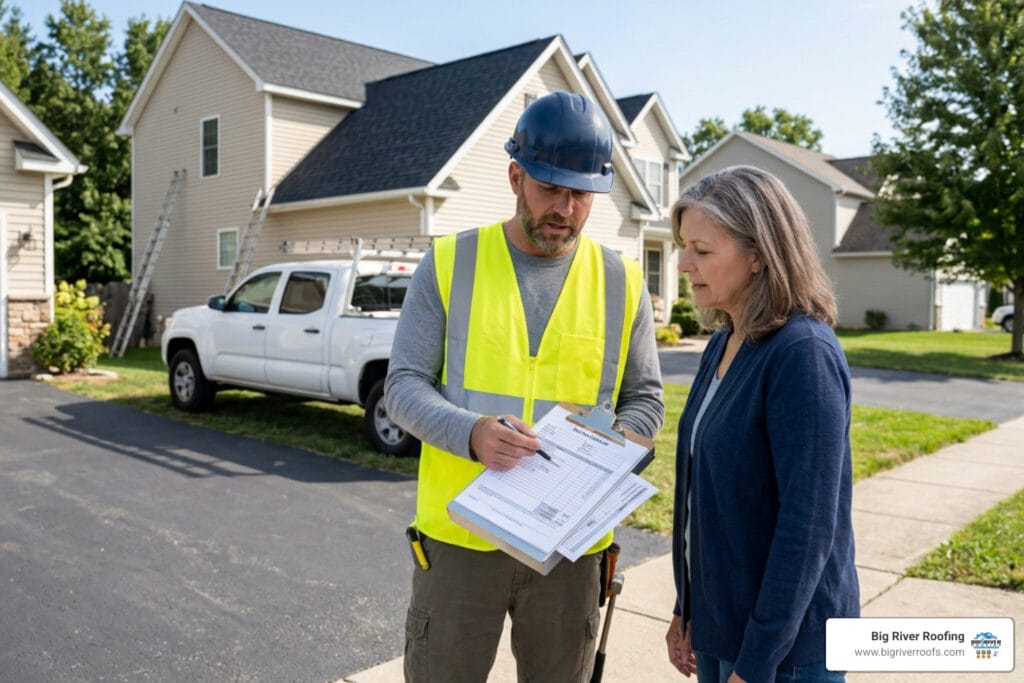
Evaluating local contractors requires a structured approach when comparing roofing companies close to me for your residential property. Selecting the right team protects your investment against moisture intrusion, roof deck rot, and unexpected financial loss. Before signing any binding project agreement, property owners should verify that a prospective company demonstrates a verifiable physical presence in the community, manufacturer-backed credentials, and upfront pricing transparency.
Maintaining an established physical presence throughout our Western Pennsylvania communities confirms that the contractor remains accountable long after completing installation. Choosing a trusted Western Pennsylvania roofing contractor ensures established supplier relationships, strict adherence to municipal building codes, and prompt responses to emergency service calls. Reviewing roofing companies near my location what to look for before you hire provides a clear framework for reviewing licensing and local business standing.
Verifying Factory Certifications and Workmanship Warranties
Manufacturer designations separate standard installers from certified professionals. Major shingle manufacturers—including CertainTeed, Owens Corning, and IKO—offer tiered certification programs. These designations require contractors to maintain high insurance coverage, undergo continuous installation training, and demonstrate proven financial stability.
Factory certification allows contractors to register enhanced system warranties. Standard manufacturer warranties cover material defects, leaving the homeowner responsible for tear-off and labor costs if failure occurs due to installation errors. Certified installations unlock 50-year non-prorated manufacturer warranty coverage combined with dedicated contractor workmanship warranties of up to 10 years. Consulting the ultimate guide to certainteed certified roofers near me outlines how these credentials protect your investment.
Assessing Transparent Pricing and Itemized Written Estimates
A comprehensive roofing estimate must break down project specifications into distinct line items. Trustworthy contractors calculate pricing using standardized units called “squares” (one square equals 100 square feet of roof surface area).
A proper written estimate specifies:
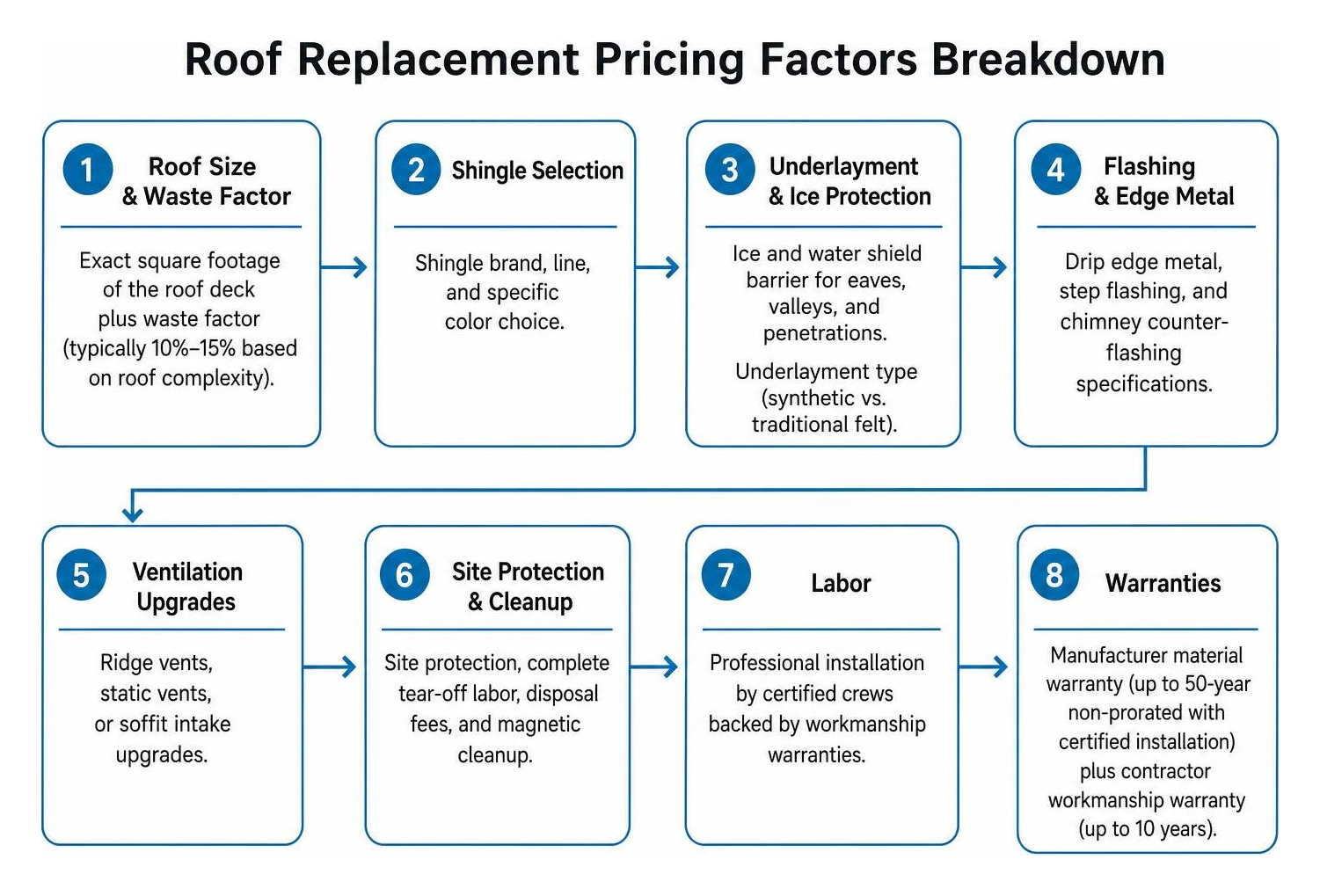
- Exact square footage of the roof deck plus a calculated waste factor (typically 10% to 15% depending on valleys, hips, and dormers).
- Shingle brand, line, and specific color choice.
- Ice and water shield barrier installation details for eaves, valleys, and penetrations.
- Underlayment type (synthetic vs. traditional felt).
- Drip edge metal, step flashing, and chimney counter-flashing specifications.
- Ventilation upgrades (ridge vents, static vents, or soffit intake).
- Site protection, complete tear-off labor, disposal fees, and magnetic cleanup.
How to Vet Reliability and Local Reputation
Validating a contractor requires reviewing active credentials, insurance policies, and jobsite safety practices. Pennsylvania requires home improvement contractors to maintain active registration through the Pennsylvania Attorney General’s Office.
In addition to state registration, confirm that the contractor holds minimum general liability coverage ($1,000,000 standard) and active workers’ compensation insurance for all crew members on your property. Failing to verify workers’ compensation exposes the property owner to liability if an installer gets injured on site. Using the ultimate checklist for finding a western pa roofer ensures no critical verification steps are missed.
Questions to Ask Roofing Companies Close to Me Before Signing
Direct questions clarify operating standards and communication expectations. Review all about finding a local roofer near me and ask these questions during the estimate:
- Who manages the municipal permitting process? A legitimate contractor pulls all required building permits, including specific Mercer County permit requirements, rather than asking the homeowner to secure them.
- Are your installation crews dedicated employees or sub-crews? Consistent crews guarantee uniform craftsmanship and adherence to safety protocols.
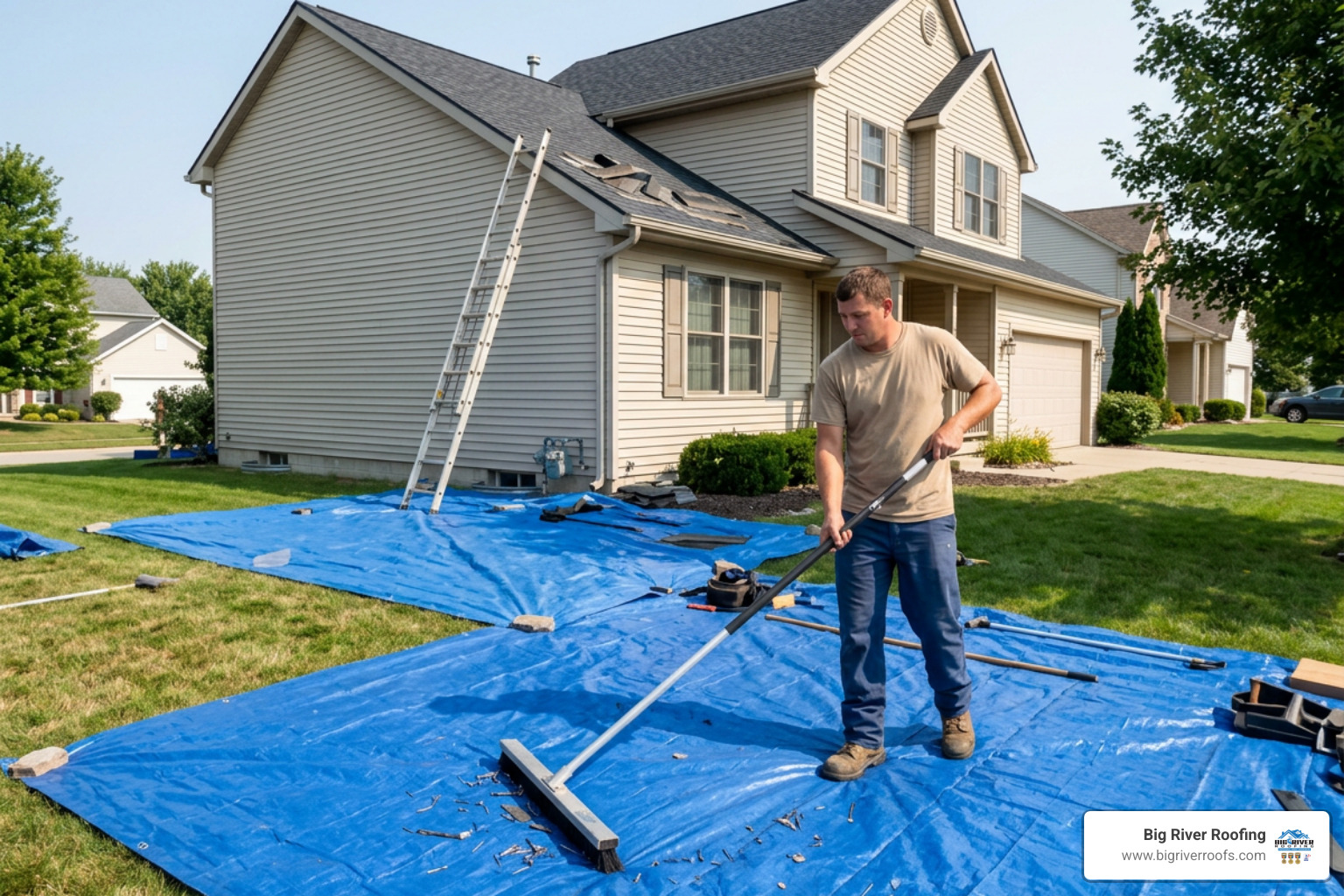
- What specific site protection measures do you execute? Professional teams shield siding, air conditioning units, windows, and landscaping with heavy-duty tarps and plywood catch-boards.
- How do you handle post-job metal removal? Reliable contractors perform multiple passes with heavy-duty magnetic sweepers across grass, driveways, and flowerbeds to eliminate loose nails.
- What is the protocol if rotted decking is uncovered? Your contract should outline a pre-agreed per-sheet price for replacing compromised CDX plywood or OSB sub-decking.
Red Flags When Screening Roofing Companies Close to Me
Certain sales tactics and operational habits signal high risk. Avoid contractors who exhibit the following warning signs:
- Unsolicited door-to-door canvassing after severe weather: Out-of-state “storm chasers” descend on damaged neighborhoods, collect initial insurance checks, perform substandard work, and leave the region.
- Demands for complete cash payment upfront: Established contractors do not require full upfront payment. Legitimate arrangements utilize structured milestones or payment upon complete project satisfaction.
- Refusal to provide written contracts: Verbal guarantees do not protect homeowners. Every detail regarding scope, materials, and cleanup must exist in writing.
- Pressure to sign immediate insurance contingency agreements: Never sign paperwork granting a contractor direct control over your insurance claim payout before your insurer approves the estimate.
- Unmarked vehicles and lack of physical business address: A lack of verifiable local infrastructure makes future warranty service enforcement impossible.
Navigating Storm Damage and Insurance Claims
Western Pennsylvania weather presents significant risks to residential roof structures. Heavy winter snow load creates structural stress, while recurring freeze-thaw cycling expands minor flashing gaps into active leak pathways. In spring and summer, severe wind gusts and hail compromise asphalt shingle integrity by stripping protective granules and tearing adhesive seal strips.
When storm damage strikes, immediate emergency mitigation prevents interior secondary water damage. A professional inspection involves:
- Comprehensive ground and rooftop evaluations to catalog impact indentations, missing tabs, and lifted shingles.
- Photographic documentation of exterior collateral damage across gutters, downspouts, siding, and fascia.
- Interior attic inspection to identify active moisture intrusion, saturated insulation, and compromised rafters.
- Direct collaboration with your insurance adjuster to ensure all scope items match local building code standards.
For properties in northern Allegheny County, working with dedicated professionals in Wexford PA ensures fast, compliant restoration after severe weather.
Identifying Signs of Roof Repair vs Full Replacement
Determining whether your roof requires targeted repairs or complete replacement depends on material age, structural integrity, and the extent of damage. A targeted repair resolves isolated issues, while widespread system failure necessitates full replacement.
| Roofing Condition | Recommended Action | Underlying Risk Factor |
|---|---|---|
| Isolated pipe boot cracking or single leak | Professional Roof Repair | Localized water staining on drywall if neglected. |
| Wind-blown shingles across less than 25% of roof | Professional Roof Repair | Water infiltration under adjacent shingle tabs. |
| Widespread granule loss and bald asphalt spots | Full Roof Replacement | Accelerated UV degradation and severe substrate rot. |
| Pervasive shingle curling, cupping, and brittleness | Full Roof Replacement | Systemic failure across aging shingle mats (20+ years old). |
| Extensive interior sagging or soft decking panels | Full Roof Replacement | Structural compromise from chronic ice dams or wood decay. |
If you notice active water spots, contact our team immediately at tel:724-426-1755 to schedule a prompt inspection and stop water intrusion.
Integrating Siding and Gutters for Complete Exterior Protection
A functional roof cannot protect a home without an effective water management system. Roof runoff must travel smoothly off the drip edge into correctly sized gutters. When gutters clog or pull away from the fascia, water backs up beneath the eaves, causing fascia board rot, soffit decay, and foundation erosion.
Upgrading to custom seamless gutters prevents these failure points. Standard 5-inch gutters accommodate average residential surface runoff, but 6-inch seamless gutters provide 40% more water-carrying capacity. This increased capacity is essential for steep-pitch roofs or properties surrounded by heavy tree canopies. Discover the specifics of water diversion in 5-star service how to choose the best seamless gutters near me to protect your siding and structural foundation.
Frequently Asked Questions About Local Roofing Contractors
How Much Does a Typical Roof Replacement Cost Locally?
Residential roof replacement pricing depends on exterior roof square footage, slope, architectural complexity, and material grade. For standard architectural shingles, baseline installations typically range between $3.50 and $5.50 per square foot of effective roof surface area. A complex roof with steep slopes, multiple dormers, and chimney flashings increases total labor and waste factor calculations.
How Long Does a Standard Residential Roof Replacement Take?
A standard single-family residential roof replacement takes 1 to 3 business days under normal weather conditions. Day one involves property protection setup, complete tear-off of old layers, inspection of the wood decking, and installation of ice and water barriers. Shingle installation, ventilation placement, and magnetic site cleanup conclude on day two or three, followed by final quality control inspections.
What Warranties Should Homeowners Expect on a New Roof?
Homeowners should receive two distinct warranties:
- Manufacturer Product Warranty: Covers factory material defects, ranging from 25 years on baseline products to 50 years on certified lifetime architectural shingles.
- Contractor Workmanship Warranty: Covers installation craftsmanship and labor, typically spanning 5 to 10 years when provided by certified professionals.
Conclusion
Finding a dependable roofing contractor requires verifying credentials, local business standing, and transparent communication. Evaluating factory certifications, validating state registrations, and insisting on comprehensive written estimates protects your property and your wallet.
Big River Roofing delivers high-performance exterior protection throughout Western Pennsylvania. Our factory-certified installations with IKO, Owens Corning, and CertainTeed ensure your roof withstands regional snow loads, ice dams, and severe storms. Contact our team at roofers near me to schedule your comprehensive, free roof inspection today.