When Storm Hits Your Roof in Western Pennsylvania, Every Hour Counts
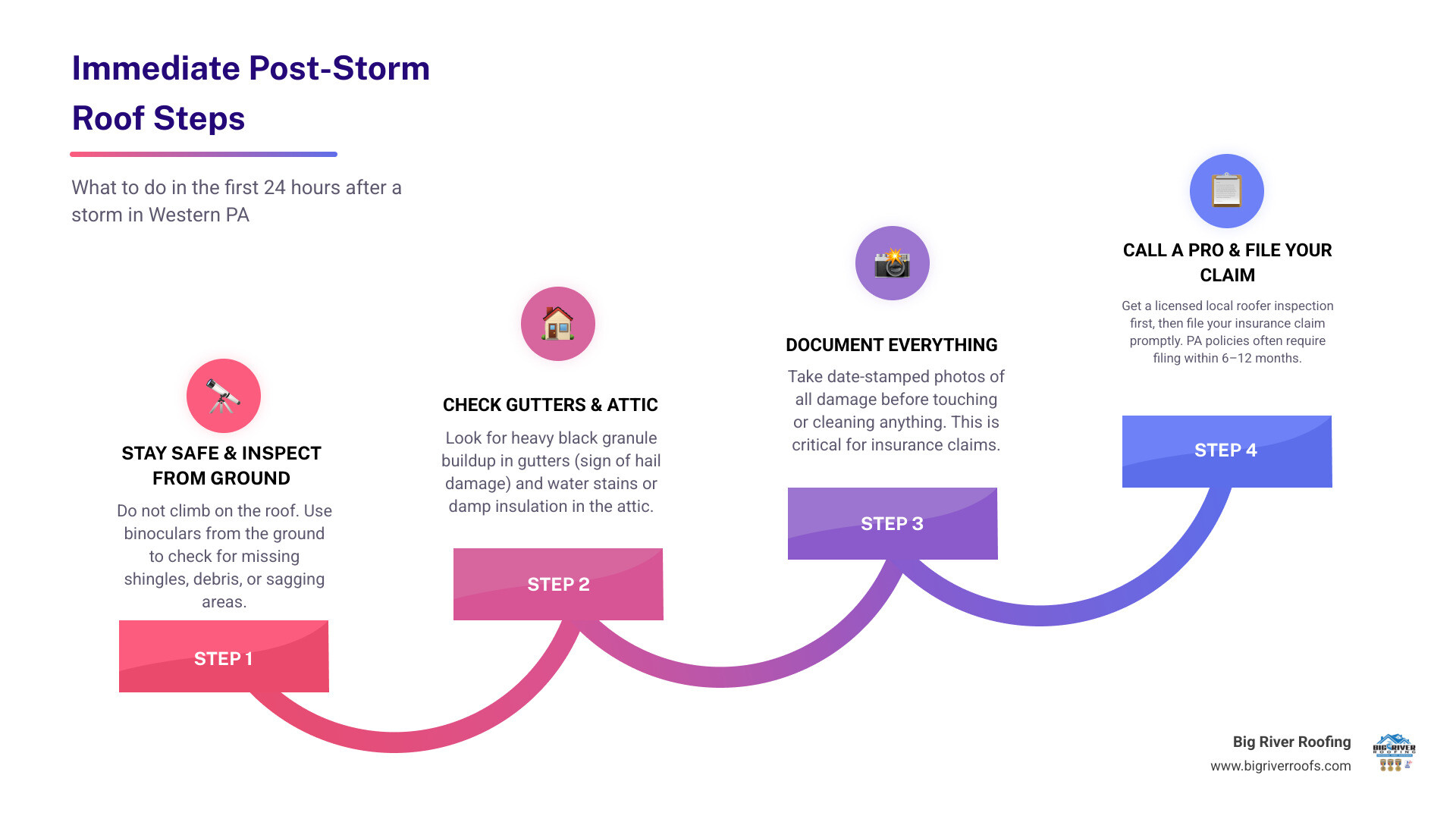
If you need storm damage roof repair in Western Pennsylvania, here’s what to do right now:
- Stay safe — do not climb onto your roof after a storm.
- Do a ground-level inspection — look for missing shingles, debris, or sagging areas using binoculars.
- Check your gutters — heavy black granule buildup is a clear sign of hail or wind damage.
- Check your attic — look for water stains, damp insulation, or daylight coming through.
- Document everything — take date-stamped photos before touching or cleaning anything.
- Call a licensed local roofer — get a professional inspection before contacting your insurance company.
- File your claim promptly — most Pennsylvania policies require you to file within 12 months, but some carriers cut that window to just 6 months for wind and hail events.
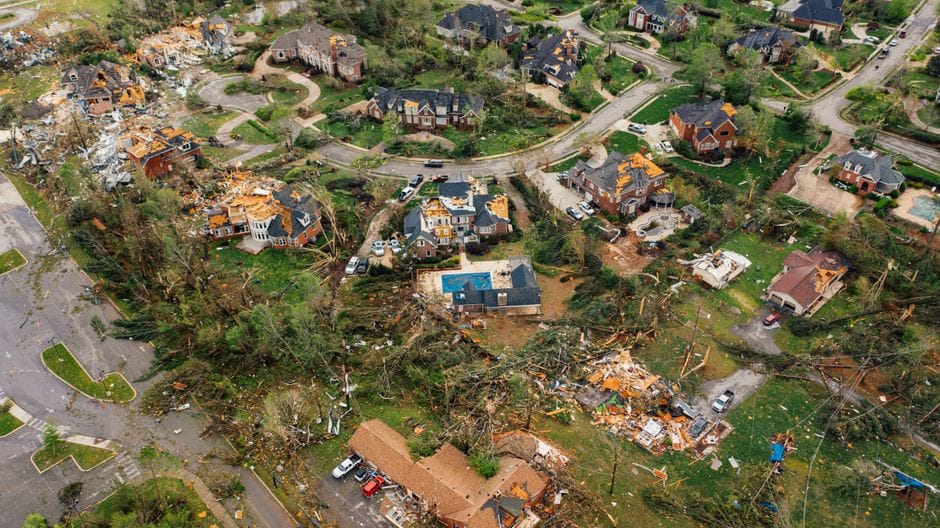
When a severe storm rolls through Mercer, Lawrence, Butler, or Beaver County, your roof takes the first hit — and the damage isn’t always obvious from the ground. Western Pennsylvania averages 30 to 40 thunderstorm days every year. Summer derechos, hail-producing supercells, and winter nor’easters all take a toll on roofs in this region. Many homeowners don’t realize their roof is compromised until a leak shows up weeks later — long after the storm has passed and memories have faded.
That delay can cost you. It can mean a denied insurance claim, worsening structural damage, and a much larger repair bill.
I’m Don Kovac, owner of Big River Roofing in Hermitage, Pennsylvania, and I’ve spent years helping Western PA homeowners navigate storm damage roof repair in Western Pennsylvania — from the initial inspection all the way through the insurance claims process. In this guide, I’ll walk you through exactly what to look for, what to do, and how to protect yourself from costly mistakes.
Your Guide to Storm Damage Roof Repair Western Pennsylvania
Western Pennsylvania has some of the most unpredictable weather in the country. Our region sits in a unique transition zone where Great Lakes moisture, Appalachian cold fronts, and warm Gulf air collide. This atmospheric mixing bowl gives us beautiful seasons, but it also brings 30 to 40 thunderstorm days each year, along with sudden winter nor’easters and the remnants of tropical systems.
When a storm rolls through, wind and hail account for the largest share of homeowners insurance losses across the country. Your roof is designed to shed water and resist wind, but extreme weather pushes materials past their limits.
For instance, a 60 mph wind gust—which is common during our summer thunderstorm season—generates roughly 18 pounds of uplift force per square foot on a typical roof slope. If your shingles are older or already slightly loose, that uplift force acts like a crowbar, lifting the shingles and breaking the adhesive seals holding them down.
When you suspect your home has been hit, securing a professional Storm Damage Roofing inspection is the most critical step you can take to preserve your property’s value and structural integrity.
Identifying Common Types of Roof Storm Damage
Before you can fix the problem, you need to understand what you are dealing with. Storm damage doesn’t always look like a fallen tree trunk in your living room. More often, it is a quiet, slow-moving issue that slowly rots your decking from the inside out.
The four primary culprits behind roof damage in Western PA are wind, hail, debris impact, and water intrusion.
Wind Damage and the Shingle Chain Reaction
Wind damage rarely happens all at once across an entire roof. Instead, it starts with a “chain reaction.”
Your shingles are secured with nails and a thermal sealant strip that bonds them to the course below. When a strong gust of wind gets underneath the edge of a single shingle, it can break that sealant bond. Once the bond is broken, the shingle flutters in the wind.
This motion weakens the surrounding shingles. On the next gust, the wind peels back the next shingle, and then the next. Before you know it, a single lifted shingle has allowed subsequent wind gusts to peel back entire courses of shingles, exposing the underlayment and wooden decking below to direct rainfall.
If you notice creased, lifted, or entirely missing shingles on your property, you need targeted Wind Damage Roof Repair to stop the chain reaction before it spreads.
Hail Damage and Shingle Degradation
Hail is a particularly deceptive threat because you often cannot see the damage from the ground. While a giant 2-inch hailstone will obviously smash things, hailstones as small as 1 inch can cause severe, permanent damage to an asphalt shingle roof.
When hail strikes an asphalt shingle, it acts like a hammer. The impact fractures the underlying fiberglass mat and dislodges the protective mineral granules on the surface. These granules are not just for color; they protect the asphalt core from harmful UV degradation.
Once the granules are knocked away, the sun’s rays quickly dry out and crack the exposed asphalt. Over the next few months, water will find these cracks and seep into your home.
To prove this damage to insurance adjusters, professional roofers often use “chalk-testing.” By gently rubbing sidewalk chalk over a suspected impact area, the chalk fills in the microscopic depressions and fractures, making the circular hail bruises instantly visible and undeniable to insurance carriers. If your area recently experienced a hailstorm, scheduling a professional Hail Damage Roof Repair assessment is vital.
How to Safely Inspect Your Roof After a Storm
We cannot stress this enough: never climb onto your roof to inspect it yourself after a storm. Roofs can be incredibly slippery, shingles may be loose, and structural decking could be compromised. Leave the high-wire acts to the pros. You can conduct a highly thorough and safe inspection right from the ground.
- Step 1: Grab Binoculars. Walk around the perimeter of your home and use a pair of binoculars to inspect the roof. Look for missing shingles, exposed underlayment, cracked ridge caps, or shingles that look “puffed up” or lifted.
- Step 2: Check the Gutters and Downspouts. Walk along your gutters and look at the splash blocks where your downspouts discharge. Do you see piles of dark, sand-like granules? Heavy granule loss after a storm is a primary indicator of hail impact or wind scouring.
- Step 3: Look for Siding and Trim Damage. Storms don’t just hit roofs. Check your siding, window screens, and metal fascia for dents or dings. If your vinyl siding is cracked or your metal trim is dented, your roof likely took a beating too.
- Step 4: Go into the Attic. Grab a flashlight and head up to your attic.
Look closely at the underside of your roof deck and rafters. Are there active drips, dark water stains, or damp insulation? Do you see any daylight shining through the roof boards? If you see light, water will follow.
Navigating the Insurance Claims Process in Pennsylvania
Dealing with insurance companies can feel like trying to solve a Rubik’s cube in the dark. However, understanding how the claims process works in Pennsylvania can save you thousands of dollars and hours of frustration.
When you file a claim, your insurance company will send out an adjuster to inspect the damage. To get a fair payout, you must present clear, indisputable proof that the damage was caused by a specific storm event. This is where having a local roofing partner who provides comprehensive Insurance Claims Assistance is invaluable.
To validate your claim, we cross-reference the exact date of the storm with official weather records from the NOAA Storm Events Database. This proves to the insurer that high winds or hail occurred at your exact coordinates on the day you specified.
Documenting Your Storm Damage Roof Repair Western Pennsylvania Claim
Incomplete or poorly structured documentation is the single biggest reason insurance adjusters underpay or deny legitimate storm damage claims. To build an airtight case, you need a combination of three key elements:
- Date-Stamped Photos: Clear, high-resolution photos of the damage taken immediately after the storm.
- Drone Imagery: High-resolution aerial photos that capture the entire roofscape and show patterns of wind uplift or hail impact that are invisible from the ground.
- A Professional Inspection Report: A detailed write-up from a licensed local contractor outlining the scope of damage and the necessary repairs.
For a deeper dive into managing this process, check out The Ultimate Guide to Navigating a Storm Damage Roof Replacement.
Understanding the Pennsylvania Insurance Claim Timeline
Time is your enemy after a storm. Most standard Pennsylvania homeowners insurance policies allow a 12-month window from the date of the loss to file a claim. However, some private carriers shorten this window to just 6 months for wind and hail events. If you wait too long, the insurance company can legally deny your claim, leaving you to pay for the entire repair out of pocket.
To help you understand what to expect, here is a breakdown of typical costs and claim windows for storm damage in Western PA:
| Damage Type | Typical PA Claim Window | Minor Repair Cost Range | Full Replacement Cost Range |
|---|---|---|---|
| Wind Damage | 6 to 12 Months | $400 – $1,500 | $8,000 – $20,000 |
| Hail Damage | 6 to 12 Months | N/A (Usually widespread) | $8,000 – $20,000 |
| Debris Impact | 12 Months | $500 – $2,500 | $8,000 – $20,000+ (If decking is broken) |
Repair vs. Replacement: Making the Right Decision
One of the most common questions we get is: “Do I need a whole new roof, or can you just patch it up?”
The answer depends on the extent of the damage, the age of your roof, and the specific guidelines used by your insurance carrier.
When to Choose Storm Damage Roof Repair Western Pennsylvania
If your roof is relatively young (under 10 years old) and the storm damage is isolated to one specific area—such as a few blown-off shingles on a single slope—a targeted Roof Repair is usually the smartest and most cost-effective path. Minor shingle replacement after a wind event in our service area typically runs between $400 and $1,500.
However, if your roof is older, has widespread shingle loss, or has suffered structural damage to the plywood decking underneath, a complete Roof Replacement is the safest and most logical choice. Widespread hail bruising across multiple slopes almost always warrants a full replacement, as the integrity of the entire roof has been compromised.
In Pennsylvania, insurance carriers often use an internal threshold similar to the “25% rule” used in other states. If more than 25% of a roof slope or the entire roof surface is damaged, they will typically approve a complete replacement rather than attempting piecemeal repairs.
Frequently Asked Questions about Western PA Storm Damage
Should homeowners insurance cover roof repairs from a storm in Western Pennsylvania?
Yes. Most standard homeowners insurance policies in Pennsylvania cover sudden, accidental damage caused by wind, hail, lightning, and falling objects (like tree limbs). However, coverage typically excludes damage caused by general wear-and-tear, lack of maintenance, or pre-existing neglect. This is why having regular inspections and documenting your roof’s condition is so important.
What is the 25% rule in roofing?
While Pennsylvania does not enforce a statewide, legislated “25% rule” like some coastal states do, many local insurance carriers apply this threshold as an internal standard. If more than 25% of a roof slope is damaged by a storm, or if matching shingles are no longer manufactured, the carrier will often pay to replace the entire slope or the entire roof to ensure structural uniformity and code compliance.
What should I not say to a roof insurance adjuster?
When speaking with an insurance adjuster, stick strictly to the facts. Avoid speculating about how old the damage is (e.g., don’t say, “I think those shingles have been loose for years”). Do not decline a professional roof inspection, and never admit fault for delayed reporting. Simply describe what you observed, when the storm occurred, and let your professional roofing contractor’s inspection report do the talking.
Conclusion
When severe weather strikes Western Pennsylvania, you don’t have to navigate the aftermath alone. Out-of-state “storm chasers” often flock to our neighborhoods after major storms, offering cheap fixes and leaving town as soon as the check clears.
At Big River Roofing, we are proud to be your trusted, local roofing partner. Based in Hermitage, we serve Mercer, Lawrence, Butler, Beaver, and Allegheny Counties with honest communication, manufacturer-certified installations (using top-tier materials from IKO, Owens Corning, and CertainTeed), and industry-leading warranties.
Whether you need a minor patch job or a complete storm restoration, our team is here to help. Explore our full range of Services or learn more about our Residential Roofing options, including our premium asphalt shingle roofing systems.
Don’t wait for a small leak to turn into a major headache. Schedule your free, no-obligation storm damage roof inspection today. Request your Free Roof Quote online to secure your home and protect your family.