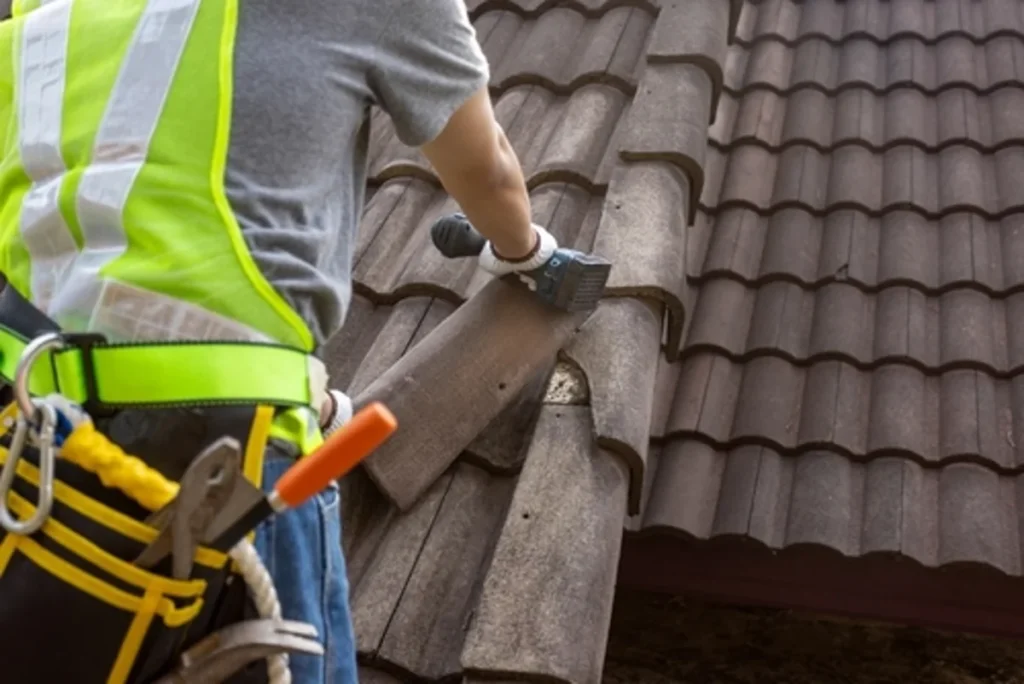
A roof is more than just a collection of shingles; it is a complex, engineered system designed to shed water, regulate temperature, and protect your home’s structural integrity. In the Tri-State area, where we face everything from lake-effect snow to humid, sweltering summers, your roof works harder than almost anywhere else in the country.
At Big River Roofing, we see the difference between a roof that lasts 15 years and one that lasts 30. The difference isn’t just the quality of the roof installation; it’s the consistency of the maintenance. This guide breaks down exactly how to protect your investment.
I. Understanding the “Roofing System” Anatomy
Before you can maintain a roof, you have to understand what you’re looking at. Most homeowners see shingles, but a healthy roof relies on:
- The Decking: The wooden foundation of your roof.
- Underlayment: The water-resistant barrier between the shingles and the deck.
- Flashing: Metal transitions used around chimneys and valleys (the #1 spot for leak detection issues).
- Ventilation: Intake and exhaust vents that allow the roof to “breathe.”
Failure in any one of these components can lead to a premature roof replacement.
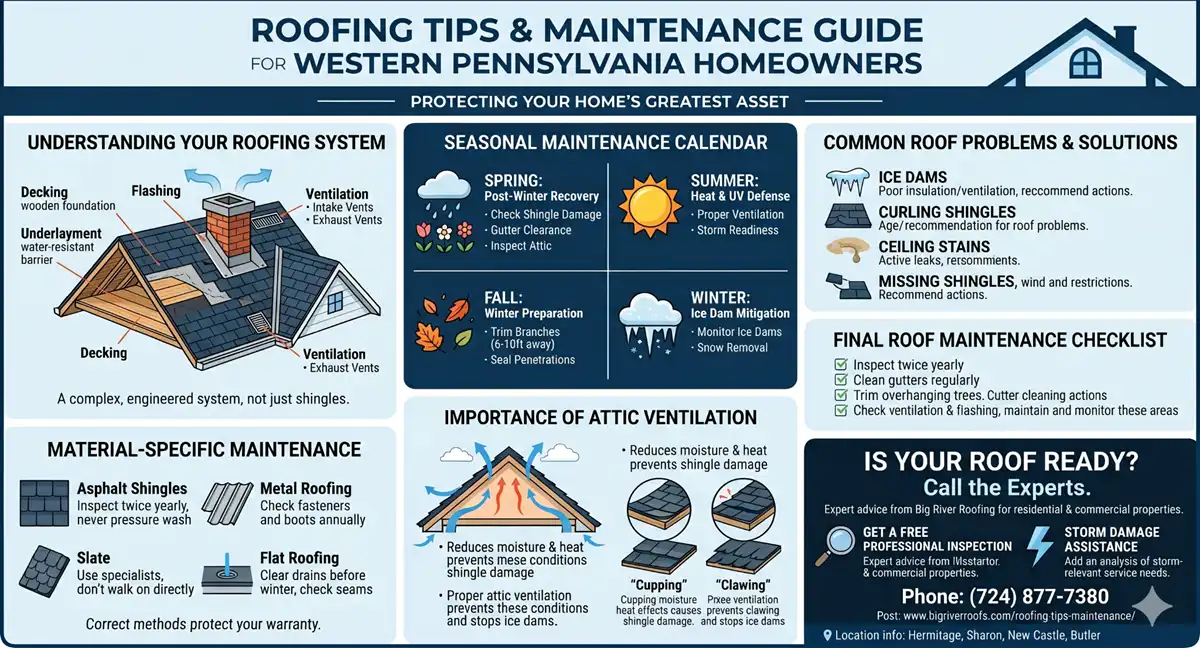
II. The Seasonal Maintenance Calendar: A Regional Approach
In Pennsylvania and Ohio, maintenance isn’t a “once a year” task. It changes with the seasons.
Spring: The Post-Winter Recovery
- Check for Shingle Damage: Winter ice can cause shingles to become brittle. Look for signs of missing shingle replacement needs.
- Gutter Clearance: Remove the “winter sludge” to ensure spring rains don’t overflow into your siding.
- Inspect the Attic: Look for sunlight peeking through or water stains on rafters, early signs of a leak.
Summer: Heat and UV Defense
- UV Protection: High heat can cause asphalt shingle roofing to “gas out” and lose flexibility. Ensure your attic isn’t reaching 150°F+ through proper ventilation.
- Storm Readiness: June and July bring high winds. If a storm hits, check for “creased” shingles which indicate wind damage roof repair is necessary.
Fall: The Winter Preparation (Crucial)
- The Tree Line: Trim branches back at least 6–10 feet. Overhanging branches drop moisture and debris that lead to moss growth.
- Seal the Penetrations: Check the sealant around vent pipes. Cold weather causes materials to contract; if the sealant is old, it will crack and leak.
Winter: Ice Dam Mitigation
- Snow Removal: In heavy snowfall areas like Slippery Rock or Mercer, excessive weight can cause structural roof repair issues.
- Monitor Ice Dams: If you see large icicles forming only on the eaves, you likely have a ventilation or insulation issue.
III. Material-Specific Maintenance Tips
Your maintenance strategy must match your material. What works for 3-tab shingles could be disastrous for slate roofing. Different roofing materials require different maintenance approaches, and using the wrong method can void a manufacturer warranty or cause premature failure. The table below outlines the primary threats, maintenance requirements, and key warnings for each roofing system installed by Big River Roofing across Western Pennsylvania.
| Material | Primary Threat | Maintenance Frequency | Expert Tip | What to Avoid |
| 3-Tab Asphalt Shingles | Granule loss and UV degradation | Inspect twice yearly | Replace missing tabs immediately to prevent deck exposure | Never pressure wash, strips protective granule coating |
| Architectural Shingles | Wind uplift and algae growth | Inspect twice yearly | Check adhesive seal strips after high wind events | Avoid walking on roof unnecessarily, breaks seal strips |
| Luxury Designer Shingles | Mechanical damage from foot traffic | Inspect twice yearly | Always use a certified installer for any repairs | Walking on luxury shingles can crack the heavy mat |
| Standing Seam Metal | Fastener back-out and sealant failure | Inspect annually | Check rubber boots around pipe penetrations every year | Avoid dissimilar metal contact which causes corrosion |
| Slate | Physical impact damage | Inspect every 3 to 5 years | Always use a slate specialist for repairs | Never walk directly on slate, tiles crack under point loads |
| EPDM Rubber Flat | Seam separation and ponding water | Inspect twice yearly | Ensure drains are clear before every winter season | Avoid petroleum-based products near membrane surface |
| TPO Flat Roofing | UV degradation and seam failure | Inspect twice yearly | Have seams heat-welded by a certified installer only | DIY patching with adhesive tape is a temporary fix only |
IV. The Science of Attic Ventilation and Insulation
According to the Federal Emergency Management Agency (FEMA), proper attic ventilation is one of the most overlooked aspects of home durability. FEMA states that “Properly balanced attic ventilation (intake and exhaust) reduces moisture buildup in the winter and heat buildup in the summer, preventing the deterioration of the roof structure and shingles.”
If your attic is too hot, your shingles are being baked from both sides. This leads to “cupping” and “clawing,” where the edges of the shingles curl upward. If you notice this, it’s time to call for roofers near me to evaluate your airflow.
V. When to DIY vs. When to Call Big River Roofing
We love proactive homeowners, but safety and warranty protection are paramount.
The DIY List:
- Cleaning gutters from a secured ladder.
- Visual inspections from the ground with binoculars.
- Clearing light debris with a leaf blower (if the pitch is low and you have safety gear).
The “Call the Pro” List:
- Any Leak: If you have an active drip, you need professional leak detection.
- Storm Damage: Navigating insurance claims assistance is tricky; having a pro document hail damage roof repair needs is vital for a successful claim.
- Steep Slopes: Any roof with a pitch over 4:12 should be handled by professionals with OSHA-compliant fall protection.
VI. Local Expertise for Local Homeowners
At Big River Roofing, we aren’t just a business; we are your neighbors. We understand the specific soil types in Butler County that lead to different tree debris, and the wind patterns in Beaver County that regularly test shingle wind ratings.
Whether you are in a historic home in New Castle, a new build in Cranberry Township, or a commercial property in Hermitage, we provide the residential roofing expertise required to keep your home dry for decades.
Common Roof Problems in Western Pennsylvania and How to Address Them
Western Pennsylvania’s climate creates specific roofing problems that homeowners in Hermitage, Sharon, New Castle, Butler, and surrounding communities see regularly. The table below identifies the most common issues, their likely causes, and the recommended response for each.
| Problem | Likely Cause | Urgency | Recommended Action |
| Ice dams at roof edges | Poor attic insulation and ventilation | High | Call professional for inspection and ventilation assessment |
| Granule loss in gutters | Shingles reaching end of lifespan | Moderate | Schedule inspection to assess replacement timeline |
| Curling or cupping shingles | Age, poor ventilation, or improper installation | Moderate to high | Schedule full roof inspection within 30 days |
| Ceiling water stains | Active leak, source may be distant from stain | High | Call for professional leak detection immediately |
| Missing shingles after wind | Wind uplift from improperly sealed or nailed tabs | High | Schedule missing shingle replacement within 48 hours |
| Moss or algae growth | Moisture retention and lack of direct sunlight | Low to moderate | Schedule cleaning and consider algae-resistant shingles at replacement |
| Sagging roof sections | Long-term moisture damage to decking or rafters | High | Call for structural roof repair assessment immediately |
| Lifted or separated flashing | Age, freeze-thaw movement, or improper original install | High | Schedule professional flashing repair before next rain event |
| Gutters pulling from fascia | Gutter weight, ice loading, or rotted fascia board | Moderate | Schedule gutter and fascia inspection |
| Cracked pipe boot collar | UV degradation of rubber over time | High | Schedule repair before next rain season |
| Shingle bruising after hail | Hail impact damage to shingle mat | High | Schedule professional hail damage inspection for insurance documentation |
Final Roof Maintenance Checklist for Western Pennsylvania Homeowners
Staying ahead of roofing problems in Mercer County and across Western Pennsylvania comes down to consistent habits and catching small issues before they become expensive ones. Use this checklist as your seasonal reference guide:
- Inspect your roof twice a year — Schedule professional inspections every spring and fall to catch winter damage and prepare for the next storm season. Big River Roofing offers free roof inspections across Western Pennsylvania.
- Clean your gutters regularly — Clear debris from gutters and downspouts at least twice a year to prevent water backup, fascia damage, and foundation moisture problems common in Western Pennsylvania’s heavy rain and snow seasons.
- Trim overhanging trees — Branches that hang over your roof create physical damage risk during wind events and accelerate moss and algae growth by keeping the roof surface damp and shaded.
- Check attic ventilation — Confirm your ridge vents and soffit intakes are clear and functioning. Poor attic ventilation is one of the leading causes of premature shingle failure and ice dam formation in Mercer County winters.
- Inspect flashing at all transitions — Check chimney, skylight, and sidewall flashing annually for lifting, cracking, or separation, especially after a hard winter season.
- Act fast on roof repair needs — A minor leak, a missing shingle, or a cracked pipe boot addressed promptly costs a fraction of what the same problem costs after water has reached the decking, insulation, or interior framing.
- Schedule a post-storm inspection — After any significant hail or wind event in Western Pennsylvania, have a professional assess the roof before filing a claim. Storm damage is not always visible from the ground.
Is Your Roof Ready for Next Season?
Every season in Mercer, Lawrence, Butler, and Beaver Counties brings a new set of challenges for your roof. If it has been more than a year since your last professional inspection, or a recent storm has passed through your area, now is the right time to get a certified local contractor on your roof before a small issue becomes a costly problem.
Browse our project gallery to see how Big River Roofing has helped homeowners across Western Pennsylvania protect their homes, check our FAQ page for answers to the most common roofing questions, or contact us directly to schedule your free roof inspection today.
Call (724) 877-7380 or request your free estimate online and let Big River Roofing give your home the protection it deserves.
Big River Roofing
Address: 2404 E State St, Hermitage, PA 16148, United States
Phone Number: (724) 877-7380
Google Maps: Find Us Here
Business Hours:
Monday: 9:00 AM To 5:00 PM
Tuesday: 9:00 AM To 5:00 PM
Wednesday: 9:00 AM To 5:00 PM
Thursday: 9:00 AM To 5:00 PM
Friday: 9:00 AM To 5:00 PM
Saturday: 9:00 AM To 1:00 PM
Sunday: Closed
FAQs About Roofing Tips & Maintenance
How often should I inspect my roof in Western Pennsylvania?
At least twice a year, once in spring after winter clears and once in fall before snow season. Also schedule an inspection after any significant hail or wind event, as storm damage is often not visible from the ground.
What are the signs my roof needs maintenance in Mercer County PA?
Granule loss in gutters, curling or cupping shingles, ceiling water stains, lifted flashing, and moss or algae growth are the most common warning signs. If your roof is over 15 years old and showing any of these, schedule a free inspection promptly.
How do I prevent ice dams on my roof in Western Pennsylvania?
Ice dams form when poor attic insulation or ventilation allows heat to escape and melt snow that refreezes at the eaves. Properly balanced ridge vent and soffit ventilation is the most effective long-term prevention.
Can I clean my own gutters in Western Pennsylvania?
Yes, from a properly secured ladder. Clean gutters at least twice a year, in late spring and after leaves drop in fall. If clogging is a recurring problem, Big River Roofing installs RainDrop Pro Gutter Guards to keep debris out year-round.
How do I know if storm damage is covered by my homeowner’s insurance in Pennsylvania?
Most Pennsylvania policies cover sudden wind and hail damage but exclude wear and neglected maintenance. Document visible damage after any storm and contact Big River Roofing for a professional inspection report before filing. The Pennsylvania Insurance Department has public resources on homeowner coverage.
What should I do immediately after a storm in Western Pennsylvania?
Do a safe ground-level visual check with binoculars for missing shingles and granule deposits. Do not access the roof yourself. Schedule a professional storm damage inspection quickly as insurance claim windows are time-limited.
How does attic ventilation affect my roof’s lifespan?
Poor ventilation allows attic temperatures to exceed 150°F in summer, accelerating shingle degradation. In winter, trapped moisture causes decking rot and mold. According to FEMA, balanced attic ventilation directly extends the life of the roof structure and shingles.
Is it safe to walk on my roof for maintenance?
Not recommended for most homeowners. Foot traffic damages shingles, and any pitch steeper than 4:12 presents a serious fall risk without proper equipment. Stick to ground-level inspections and leave roof access to a professional with OSHA-compliant fall protection.