Why Finding a Flat Roof Warranty Near Me Is More Important Than You Think
If you’re dealing with a leaking or aging flat roof, finding a flat roof warranty near me is one of the most important steps you can take to protect your home or building — and your wallet.
Here’s a quick answer to what you need to know:
| What You Want to Know | Quick Answer |
|---|---|
| What does a flat roof warranty cover? | Membrane defects, seam failures, and qualifying leaks |
| How long do flat roof warranties last? | Typically 10–30 years depending on membrane type |
| Who offers flat roof warranties? | Manufacturers, contractors, or both together (system warranty) |
| What can void a warranty? | Lack of maintenance, unauthorized repairs, or ponding water |
| How do I find a local warranty? | Hire a manufacturer-certified contractor in your area |
A flat roof is a serious investment. Replacement costs for commercial flat roofs can run from $5 to $35+ per square foot. A weak or poorly understood warranty can leave you paying for repairs that should have been covered.
The tricky part? Not all warranties are created equal. A 30-year warranty with a long list of exclusions may actually protect you less than a well-structured 20-year policy. Most property owners don’t find this out until they file a claim — and get denied.
I’m Don Kovac, owner of Big River Roofing in Hermitage, Pennsylvania, and over the past five years I’ve helped homeowners and commercial property owners across Western PA navigate flat roof warranty near me questions — from choosing the right membrane to making sure coverage stays valid long after installation. In this guide, I’ll walk you through everything you need to know before signing anything.
What is a Flat Roof Warranty and Why Does It Matter?
A flat roof warranty is a legally binding contract that outlines exactly what a manufacturer or a contractor will repair or replace if your roofing system fails within a specified timeframe. In the roofing industry, a warranty is your ultimate safety net against unexpected, budget-busting repair bills.
Unlike sloped roofs that shed water instantly using gravity, flat roofs (or low-slope roofs) must act as continuous, watertight seals. Water lingering on a flat surface puts immense pressure on seams, flashings, and drains. If a leak develops on a commercial flat roof or a residential flat roof, water can travel laterally through the insulation, rotting your wood decking or rusting your steel structure long before you ever see a drip on your ceiling.
For commercial property owners, a flat roof warranty is a critical asset management tool. It keeps your operating costs predictable. For homeowners, especially those utilizing flat roofs for outdoor living spaces like roof decks, gardens, or solar setups, a solid warranty protects the structural integrity of your home. If you want to explore how flat roofing can expand your living space or need specialized residential support, check out our residential roofing services.
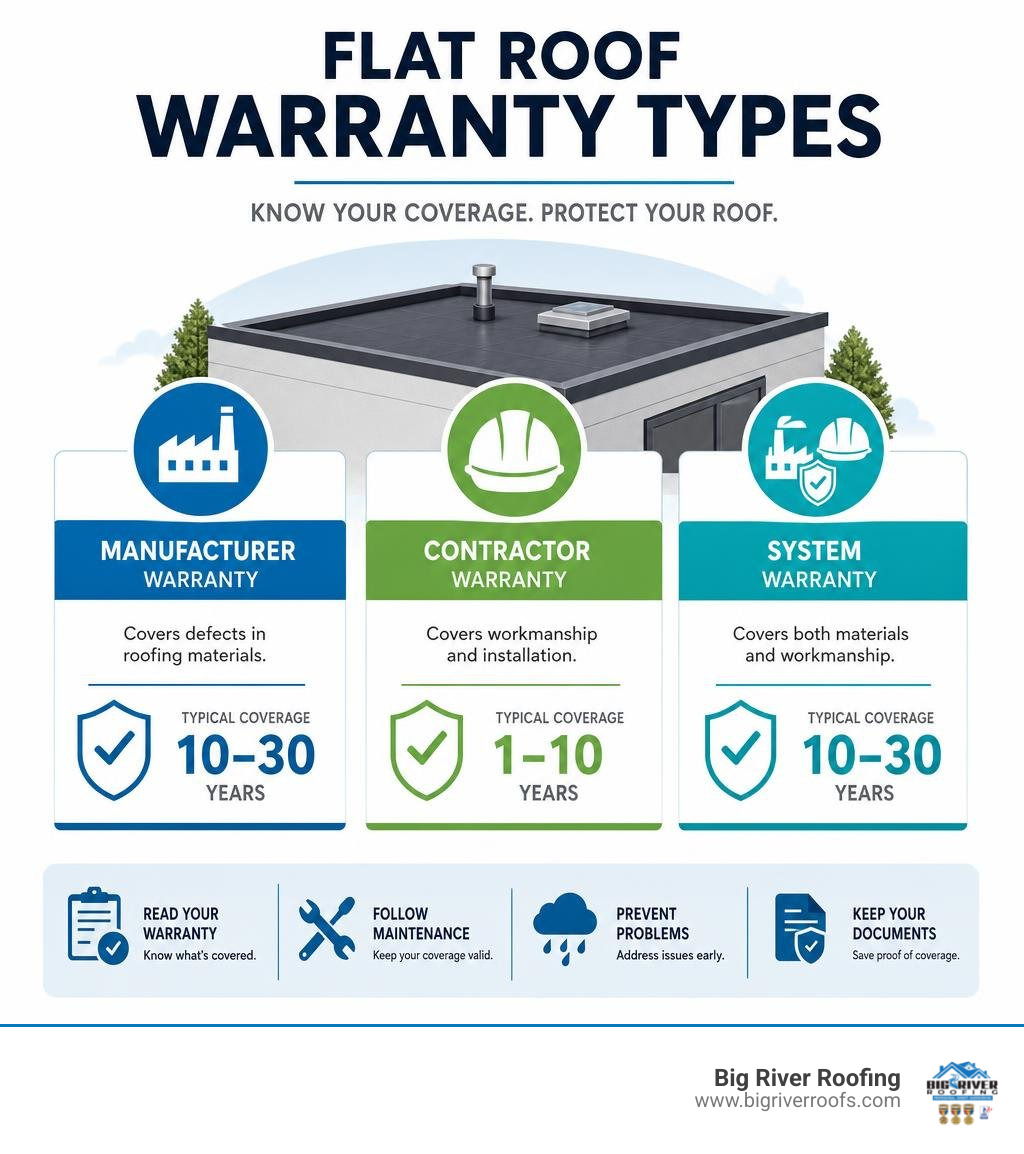
Understanding Manufacturer vs. Contractor vs. System Warranties
When searching for a flat roof warranty near me, you will encounter three primary types of warranties. Understanding the differences between them is the key to avoiding six-figure surprises down the road.
- Manufacturer Material Warranties: This is the most basic coverage. It is issued by the company that made the membrane (such as GAF Roofing). It covers only the cost of replacing the physical material if it is proven to have a factory defect. It does not cover the labor to tear off the old membrane, install the new one, or fix leaks caused by installation errors.
- Contractor Workmanship Warranties: This is issued directly by us, your local roofing contractor. It covers installation errors and leaks caused by poor craftsmanship. These typically range from 2 to 10 years. While highly valuable, this warranty is only as strong as the contractor’s business longevity; if the contractor goes out of business, your workmanship warranty vanishes.
- System Warranties (No-Dollar-Limit / NDL): This is the gold standard of flat roof protection. An NDL warranty is a single-source warranty backed by the manufacturer that covers both material defects and the labor required to repair them. Because the manufacturer takes on the risk of both the product and the installation quality, they require the roof to be installed by certified contractors and thoroughly inspected upon completion.
Comparing TPO, EPDM, and PVC Flat Roof Warranty Near Me
Modern single-ply membranes are incredibly durable, but they carry different warranty terms, strengths, and vulnerabilities. When selecting a membrane, you should let your building’s specific risks and the warranty fine print guide your decision.
Here is how the three most common flat roof single-ply membranes compare:
| Membrane Type | Standard Warranty Length | Key Warranty Strengths | Common Warranty Exclusions | Best Local Use Case |
|---|---|---|---|---|
| TPO (Thermoplastic Polyolefin) | 15–30 Years | Highly reflective, heat-welded seam strength | Ponding water limits, puncture damage from foot traffic | Retail spaces and homes looking to reduce summer cooling loads |
| EPDM (Synthetic Rubber) | 15–30 Years | Exceptional freeze-thaw tolerance, highly flexible | Petroleum/oil exposure, seam adhesive degradation | Industrial buildings in Western PA exposed to freezing winters |
| PVC (Polyvinyl Chloride) | 20–30 Years | Superior chemical, grease, and fire resistance | High-traffic punctures without walk pads | Restaurants with commercial kitchens discharging grease |
How Long Do Flat Roof Warranties Last?
The length of your flat roof warranty is heavily tied to the thickness of the membrane you choose. Single-ply membranes are measured in mils (thousandths of an inch). Common thicknesses include 45-mil, 60-mil, and 80-mil.
- 45-Mil Membranes: Typically carry a 10-year to 15-year warranty. They are thinner, less puncture-resistant, and are best suited for low-traffic, budget-conscious projects.
- 60-Mil Membranes: Usually qualify for 20-year warranties. This is the industry standard for both residential and commercial flat roofs, balancing cost with long-term protection.
- 80-Mil Membranes: Can unlock premium 25-year to 30-year warranties. These heavy-duty membranes offer maximum puncture and weather resistance.
Another critical factor to check is proration. A prorated warranty loses value every year. If your 20-year prorated roof fails in year 15, the manufacturer may only cover 25% of the material costs. A non-prorated warranty, on the other hand, provides 100% coverage for material (and sometimes labor, depending on the tier) for the entire duration of the warranty. If you are trying to decide which membrane thickness and warranty structure fits your budget, read more about our roof replacement services.
Wind, Hail, and Ponding Water Ratings in a Flat Roof Warranty Near Me
Western Pennsylvania weather can be brutal. From heavy winter snow loads in Mercer and Lawrence counties to severe spring windstorms and hail in Allegheny and Beaver counties, your flat roof warranty must match our local climate.
- Wind Ratings: Standard warranties cover wind speeds up to 55 mph or 72 mph. If you live in an exposed, high-wind area, you may need to request enhanced wind coverage (up to 90 mph or higher), which requires specific fastening patterns during installation.
- Hail Ratings: Most basic warranties exclude hail damage entirely. If you want protection against hail punctures, you will need to install a thicker membrane combined with a heavy-duty cover board (like high-density polyiso or gypsum fiber) to absorb the impact.
- Ponding Water: This is the silent killer of flat roofs. Many standard warranties explicitly state that any damage caused by water that ponds on the roof for more than 48 hours is excluded from coverage. To keep your warranty valid, your roof must be designed with a proper slope (at least 1/4 inch per foot) using tapered insulation to direct water toward the drains. If you suspect your flat roof has drainage issues, don’t wait for a collapse — learn more about our roof repair services.
What Do Flat Roof Warranties Cover and Exclude?
To avoid getting drenched by repair bills, you must understand the boundary line between covered defects and excluded maintenance issues.
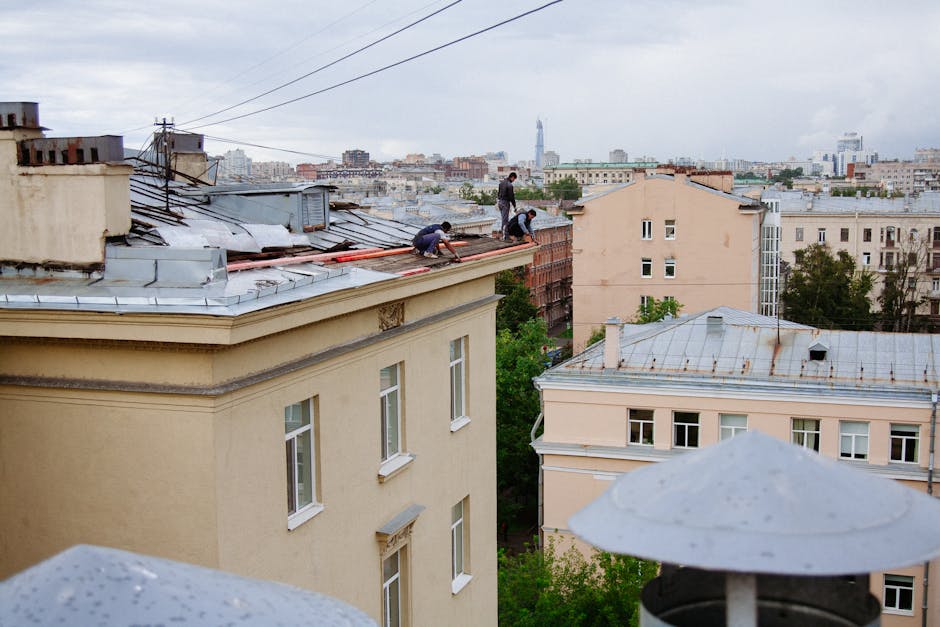
Typical Flat Roof Warranty Coverage:
- Manufacturing Defects: Premature cracking, splitting, or blistering of the membrane.
- Seam Failures: If heat-welded seams pull apart under normal weathering conditions (usually covered under workmanship or system warranties).
- Qualifying Leaks: Water intrusion caused directly by covered material failures.
Common Flat Roof Warranty Exclusions:
- Acts of God: Severe weather exceeding rated limits (tornadoes, microbursts, extreme hail).
- Standing/Ponding Water: Damage in areas where water sits for more than 48 hours.
- Improper Design/Ventilation: Condensation and moisture buildup caused by poor structural design.
- Third-Party Damage: Punctures from HVAC technicians, plumbers, or window washers dropping tools on the membrane.
- Installation Errors: If a non-certified contractor fails to follow the manufacturer’s exact installation specifications.
Common Factors That Can Void Your Flat Roof Warranty Near Me
A flat roof warranty is not a “set-it-and-forget-it” insurance policy. It is a conditional contract. Several common actions — or lack thereof — can instantly void your coverage:
- Unauthorized Modifications: Adding solar panels, satellite dishes, or new HVAC units without coordinating with a certified roofing contractor to flash the penetrations properly.
- Using Unapproved Materials: Performing DIY repairs using hardware-store caulk or asphalt-based roof cement on a TPO or rubber roof. These chemicals can chemically melt single-ply membranes, immediately voiding your warranty.
- Neglecting Professional Maintenance: Nearly every major manufacturer requires documented professional maintenance. If you cannot produce proof of regular inspections when filing a claim, your claim will likely be denied. For professional maintenance that keeps your warranty intact, you can utilize certified roof maintenance services in Allegheny County and surrounding areas.
Strict Maintenance Requirements to Keep Your Warranty Valid
According to the National Roofing Contractors Association (NRCA), up to 80% of flat roofs are replaced prematurely due to a lack of maintenance. To protect your investment and keep your warranty valid, you should follow this proactive maintenance protocol:
- Biannual Inspections: Have a professional inspect your roof every spring (to check for winter freeze-thaw damage) and fall (to prepare for snow loads).
- Clear the Drains: Keep scuppers, gutters, and drain bowls free of leaves, twigs, and debris. Clogged drains lead directly to ponding water.
- Keep a Maintenance Log: Document every inspection, cleaning, and minor repair with dates, photos, and invoices. This log is your shield if a manufacturer tries to deny a claim based on “neglect.”
How to Compare Local Contractors and Protect Your Investment
When searching for a flat roof warranty near me, the contractor you choose is just as important as the membrane itself. Because the best warranties (System and NDL warranties) are only available through manufacturer-certified contractors, you should vet local bids carefully.
When comparing proposals in Western PA, use this checklist:
- Are they manufacturer-certified? Ask if they are certified by major brands like GAF, Owens Corning, or CertainTeed. Only certified installers can offer enhanced, long-term system warranties.
- Do they use in-house crews? Contractors who use their own trained, in-house crews generally deliver more consistent installation quality than those relying entirely on third-party subcontractors.
- What is the workmanship warranty duration? A quality local contractor should offer at least a 5-year workmanship warranty to back up their labor.
- Is the bid detailed? Watch out for vague proposals. A professional bid should specify the exact membrane brand, thickness (e.g., 60-mil TPO), insulation R-value, drainage plan, and warranty tier. If you want to see how top-rated local roofers compare, you can search for certified professionals on Yelp in Butler County, PA.
To make sure your roof is installed to these strict standards from day one, explore our roof installation services.
Essential Documentation to Keep for Future Warranty Claims
If you ever need to file a warranty claim, the manufacturer will ask for proof. Do not rely on paper files that can get lost in a drawer. Store digital copies of these essential documents in the cloud:
- The Original Contract and Invoice: Proving when the roof was installed and what materials were used.
- The Registered Warranty Certificate: Make sure your contractor actually registers the warranty with the manufacturer and hands you the official certificate.
- As-Built Drawings: Showing the layout of your roof, drains, and penetrations.
- Before-and-After Photos: Documenting the pristine condition of the roof at installation.
- Biannual Inspection Reports and Maintenance Logs: Proving you fulfilled your contractual duty to care for the roof.
Having these documents ready makes the process smooth and painless. If you ever face storm damage and need help organizing your documentation for a claim, we offer professional insurance claims assistance to guide you through the process.
Frequently Asked Questions about Flat Roof Warranties
How much does a flat roof replacement cost compared to sloped roofs?
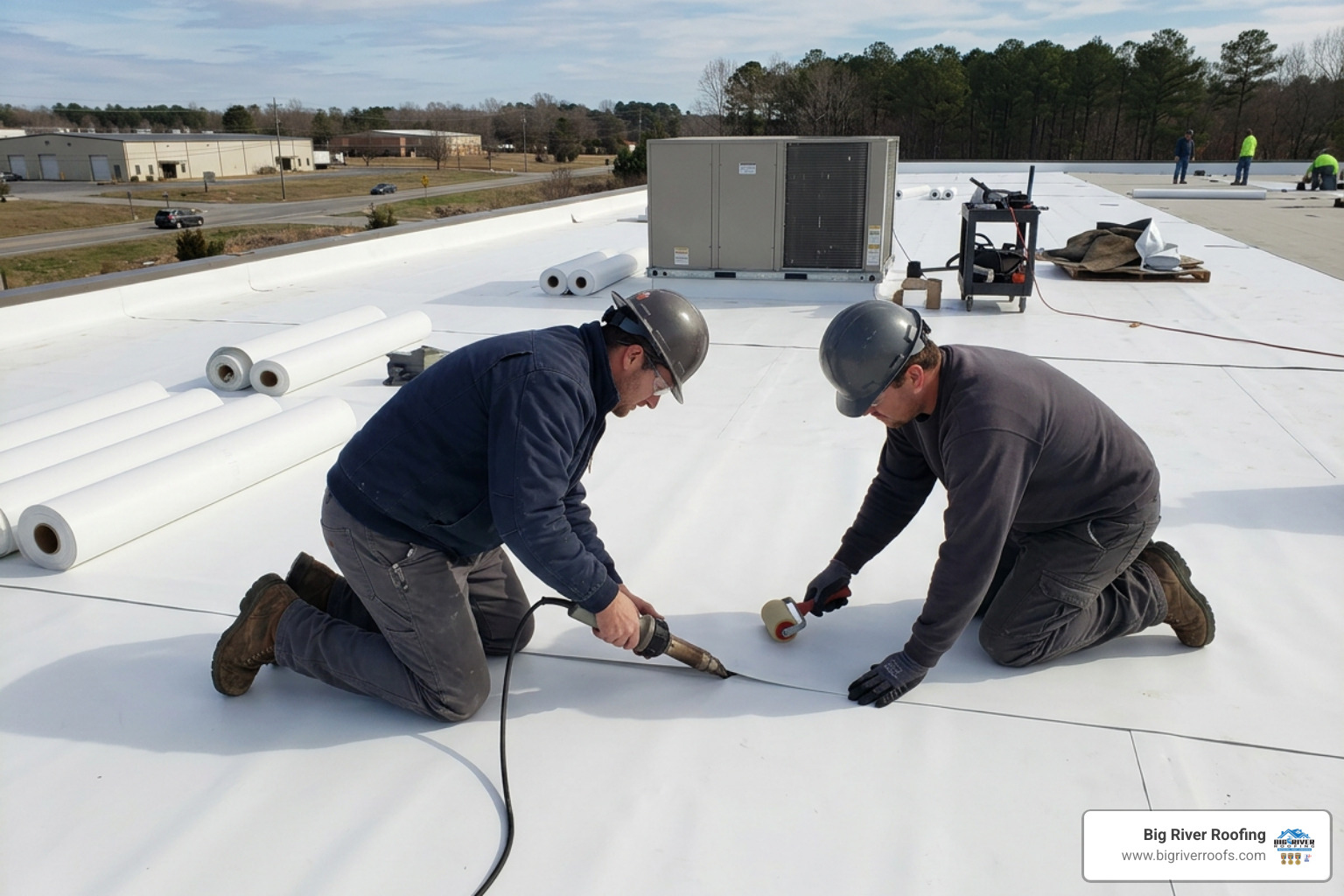
In general, flat roofs are more expensive to install than traditional sloped asphalt shingle roofs. This is because flat roof membranes (like TPO, EPDM, and PVC) require specialized hot-air welding or heavy-duty adhesives, and the structural drainage requirements are more complex. While a residential shingle roof replacement might cost less upfront, flat roofs offer unique functional advantages, such as the ability to house HVAC units, roof decks, or solar arrays.
Can I install solar panels on a warranted flat roof?
Yes, but you must proceed with caution. Installing solar racking requires either penetrating the membrane or using heavy ballasted blocks. If a solar contractor punctures your roof membrane without using manufacturer-approved flashing details and slip sheets, your flat roof warranty will be voided. Always coordinate with your certified roofing contractor before allowing a solar company onto your roof.
Do flat roofs require specialized ventilation systems?
Yes! Proper roof ventilation is critical for flat roofs. Because flat roofs have very little slope, moisture and condensation can easily build up beneath the membrane if the roof deck isn’t ventilated properly. This moisture can rot the wood decking, cause mold, and lead to premature adhesive failure. If you have more questions about flat roof ventilation or general roofing concerns, check out our roofing FAQs.
Conclusion
Protecting your flat roof investment in Western Pennsylvania doesn’t have to be stressful. By choosing the right membrane thickness, keeping up with biannual maintenance, and working with a certified local contractor, you can secure a warranty that keeps you dry and worry-free for decades.
At Big River Roofing, we serve homeowners and business owners throughout Hermitage, Mercer County, Lawrence County, Butler County, Beaver County, and Allegheny County. We pride ourselves on honest communication, manufacturer-certified installations, and helping our neighbors find the perfect flat roof warranty near me.
Don’t wait for the next heavy rainstorm to find out if your roof is protected. Contact us today to schedule your free inspection and get professional guidance tailored to your property. Get a free quote on metal roofing and flat roof systems today!