What You Need to Know About Flat Roofing Before You Call a Contractor
Flat roofing is one of the most common systems used on commercial buildings — and it’s increasingly popular on residential properties too. But it works very differently from a sloped roof, and the wrong material or a bad installation can lead to leaks, water damage, and expensive repairs.
Here’s a quick overview of what most people want to know:
| Question | Short Answer |
|---|---|
| What is a flat roof? | A roof with a slope of 3 in 12 or less (nearly level) |
| How long does it last? | 15 to 50 years depending on material |
| What materials are used? | TPO, EPDM, PVC, modified bitumen, BUR, metal |
| What does replacement cost? | $4,000 to $19,000, averaging around $10,000 |
| Biggest risk? | Ponding water and poor drainage leading to leaks |
| Is it right for my building? | Yes — if properly installed and maintained |
Most people assume flat roofs leak more than sloped roofs. That’s not quite right. A properly installed flat roof — using modern membranes and correct drainage — performs just as well. The problems usually come from aging materials, blocked drains, or installation shortcuts.
This guide covers everything: materials, costs, maintenance, leak causes, and how to know when repair isn’t enough and replacement is the smarter call.
I’m Don Kovac, owner of Big River Roofing, a family-run contractor serving Western Pennsylvania across Mercer, Lawrence, Butler, and Beaver Counties. Our team works across residential and commercial flat roofing systems every day — from targeted repairs to full replacements — and I built this guide to give you the honest, straightforward information you need before making any decisions.
Understanding Flat Roofing: Pros, Cons, and Climate Performance

When people think of roofing, they usually picture the classic, steep-gabled residential roof. However, flat roofing—technically defined by the National Roofing Contractors Association as a low-slope roof with a pitch of 3 in 12 (or about 10 degrees) or less—has been a staple of commercial and modern residential architecture for generations.
Historically, flat roofs have a bit of a reputation for being finicky. If you look at architectural history, even masterpieces like Le Corbusier’s Villa Savoye suffered from notorious leaks shortly after completion. Fortunately, material science has come a long way since the early 20th century. Modern membrane systems are highly engineered, durable, and capable of rivaling sloped roofs in both longevity and energy efficiency. You can read more about the historical context and engineering of these systems on the Flat roof – Wikipedia page.
Flat Roofing Systems vs. Sloped Roofs
Choosing between a flat roof and a sloped roof comes down to understanding their distinct structural and functional differences:
- Space Utilization: This is where flat roofs shine. They provide a highly versatile, level surface that can support heavy HVAC units, solar panels, green rooftop gardens, or even outdoor living spaces. Sloped roofs offer none of this flexibility.
- Wind Resistance: Flat roofs do not have the steep profiles that catch heavy winds. This makes them incredibly stable during severe storms, reducing the risk of shingles blowing off.
- Structural Load: Because flat roofs don’t shed snow and ice instantly, their structural decks must be engineered to support heavier loads. This is a critical factor here in Pennsylvania.
- Drainage Challenges: While a sloped roof relies on simple gravity to shed water instantly, a flat roof actually has a very slight pitch—typically 1/4 to 1/2 inch per foot—to direct water toward drains, scuppers, or gutters. If this pitch is designed incorrectly, water will pool, leading to accelerated material degradation.
- Cost Comparison: From an initial installation standpoint, flat roofs are often more cost-effective to construct because they require less structural framing and can be completed faster than complex, steep-slope systems.
Climate Performance of Modern Membranes
Here in Western Pennsylvania—from the lake-effect snows of Mercer County to the humid summers of Allegheny County—our roofs face intense weather swings. A flat roofing system must be chosen with our local climate in mind:
- Freeze-Thaw Cycles: Water expands when it freezes. If water pools on a flat roof and enters minor cracks or unsealed seams, the winter freeze-thaw cycles will rapidly tear the membrane apart.
- UV Degradation: Summer sun accelerates the aging of traditional asphalt-based roofs through photo-oxidation, which robs the material of its plasticizers and causes it to crack (often called “alligatoring”). Modern single-ply membranes are engineered with UV stabilizers to resist this breakdown.
- Thermal Shock: Temperatures in our region can swing dramatically in a single day. Materials like EPDM rubber handle this exceptionally well because they can stretch up to 300% and contract back without losing structural integrity.
Comparing Flat Roofing Materials: Cost, Lifespan, and Durability
Choosing the right material is the single most important decision you will make for your low-slope roof. Below is a breakdown of how the most common flat roofing materials stack up in terms of cost, durability, and lifespan.
| Material Type | Average Cost (per Sq. Ft.) | Expected Lifespan | Primary Benefit |
|---|---|---|---|
| EPDM (Rubber) | $4 – $13 | 30 – 50 Years | Longest lifespan, highly flexible in cold weather |
| TPO (Thermoplastic) | $4 – $14 | 20 – 30 Years | Highly reflective, heat-welded leak-resistant seams |
| PVC (Vinyl) | $4 – $7 | 20 – 30 Years | Excellent chemical, grease, and fire resistance |
| SBS Modified Bitumen | $4 – $8 | 15 – 20 Years | Cost-effective, highly durable multi-layer system |
| Built-Up Roof (BUR) | $4 – $10 | 20 – 30 Years | Tough, multi-layer redundant protection |
| Standing Seam Metal | $4 – $30 | 30 – 50 Years | 100% recyclable, extremely durable, low maintenance |
Single-Ply Membranes: TPO, EPDM, and PVC
Single-ply membranes are the absolute gold standard for modern commercial installations and are highly favored for flat-roofed residential additions. These are thin, flexible sheets of synthetic materials ranging from 30 to 90 mils (thousandths of an inch) thick.
- TPO (Thermoplastic Polyolefin): Since the mid-2010s, TPO has reigned as the single most popular commercial low-slope roofing material in the United States. It consists of a polymer base, a reinforcing scrim, and a compounded top ply. TPO seams are heat-welded rather than glued, creating a monolithic physical bond that is incredibly resistant to leaks. Its bright white surface is also highly reflective, keeping buildings cool.
- EPDM (Ethylene Propylene Diene Monomer): Often referred to simply as rubber roofing, EPDM is a synthetic rubber membrane that has been used in America for decades. It is highly favored in colder climates because its black color absorbs heat, helping to melt snow. EPDM is incredibly durable, with an expected lifespan of up to 50 years when properly applied. For detailed guidance on residential flat roof designs, the HHGuide2015b.indd is an excellent industry resource to review.
- PVC (Polyvinyl Chloride): PVC is highly resistant to chemicals, oils, animal fats, and fire. This makes it the go-to choice for restaurants with kitchen exhaust vents or industrial facilities. Like TPO, its seams are heat-welded for superior water tightness.
While these single-ply options are incredibly popular across the country, different climates require different material configurations. For example, while contractors in dry, hot regions like the Southwest focus heavily on reflective properties to combat extreme heat, our focus in Western Pennsylvania and similar northern climates must balance reflectivity with freeze-thaw durability and snow load capacity.
Traditional and Multi-Layer Systems
If you prefer a heavier, multi-layered approach, traditional systems still offer incredible reliability:
- SBS Modified Bitumen: Developed in the 1960s as a modern replacement for traditional built-up roofs, modified bitumen uses asphalt blended with synthetic rubber modifiers (SBS) to give it rubber-like elasticity. It is typically applied in two or three layers using cold adhesives, self-adhering sheets, or heat-welded torch-down methods. SBS offers up to a 25-year warranty and remains one of the most cost-effective and common low-slope roofing options available.
- Built-Up Roofing (BUR): Often called “tar and gravel” roofs, BUR is the oldest flat roofing system still in use. It is built by alternating layers of asphalt-saturated organic or fiberglass felt with hot liquid asphalt, finished with a top layer of gravel. The gravel protects the underlying bitumen from UV degradation and physical impact. While heavy, BUR offers fantastic redundant protection because a puncture in the top layer won’t necessarily cause a leak.
- Standing Seam Metal: Though more expensive up front, metal flat roofs can last 30 to 50 years. They are 100% recyclable, highly durable, and provide a sleek, modern aesthetic.
Flat Roof Maintenance, Leak Prevention, and Repair
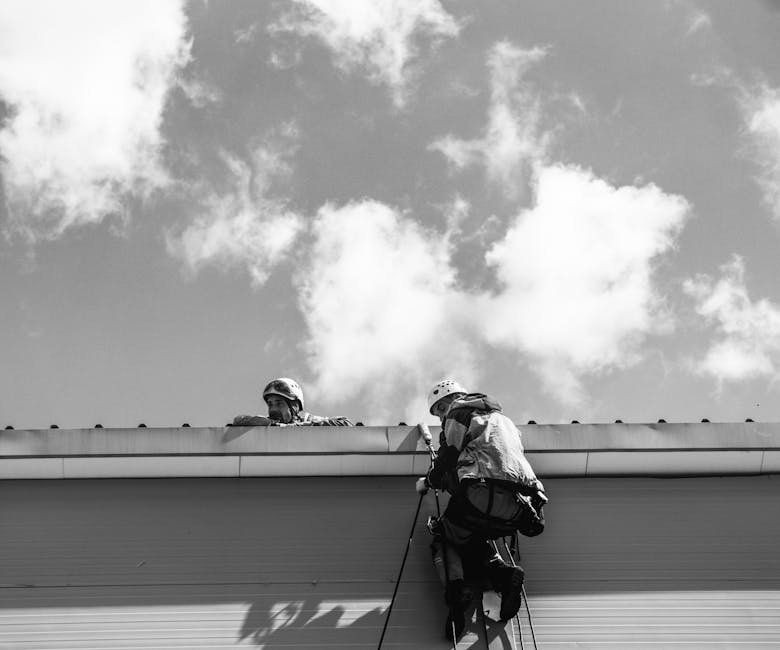
Because flat roofs lack the steep slope of traditional residential structures, they require active management to stay dry. Water doesn’t just run off; it must be guided off. If you suspect your roof has suffered from storm damage or general wear, scheduling a professional Roof Repair as early as possible is the best way to prevent catastrophic structural rot.
Common Causes of Flat Roof Leaks
Most flat roof leaks do not actually start in the middle of the membrane. Instead, they originate at the edges, transitions, and penetrations. Common culprits include:
- Ponding Water: Standing water that remains on a roof for more than 48 hours is defined as ponding water. This standing water puts continuous hydrostatic pressure on the seams, eventually finding any microscopic gap and leaking into the building.
- Membrane Punctures: Dropped tools, HVAC service doors left loose, tree branches, or heavy foot traffic can easily puncture thin single-ply membranes.
- Compromised Seams: Over time, glued seams on older EPDM roofs can dry out, curl, and pull apart.
- Blocked Drains and Gutters: Leaves, twigs, and dirt can easily clog roof drains. When a drain is blocked, the roof acts like a giant swimming pool, holding thousands of gallons of water it was never engineered to support.
Essential Maintenance Practices for Flat Roofing
To get the full lifespan out of your flat roof, we highly recommend implementing a proactive maintenance routine. You can learn more about our comprehensive maintenance options on our Services page.
- Bi-Annual Inspections: Inspect your roof twice a year—once in the spring and once in the autumn—to catch minor issues before they become major leaks.
- Clear Debris Regularly: Keep the roof surface clear of leaves, branches, and dirt that can trap moisture and accelerate membrane decay.
- Check Seams and Flashings: Pay close attention to the seals around chimneys, vents, skylights, and parapet walls. Flashings should extend at least 150mm (6 inches) up any vertical surface to ensure water cannot seep behind the membrane.
- Keep Drains Clear: Ensure all drain grates, scuppers, and downspouts are completely free of blockages.
If you are looking to evaluate your roof’s condition, you can check regional platforms like THE BEST 10 ROOFING IN BEAVER COUNTY, PA – Yelp or verify credentials through the Flat Roofing Contractors near Pittsburgh, PA | Better Business Bureau directory to find certified professionals in your area.
When to Repair vs. Fully Replace Your Flat Roof
One of the most common questions we get from building owners is: “Can I just patch this leak, or do I need to budget for a complete replacement?”
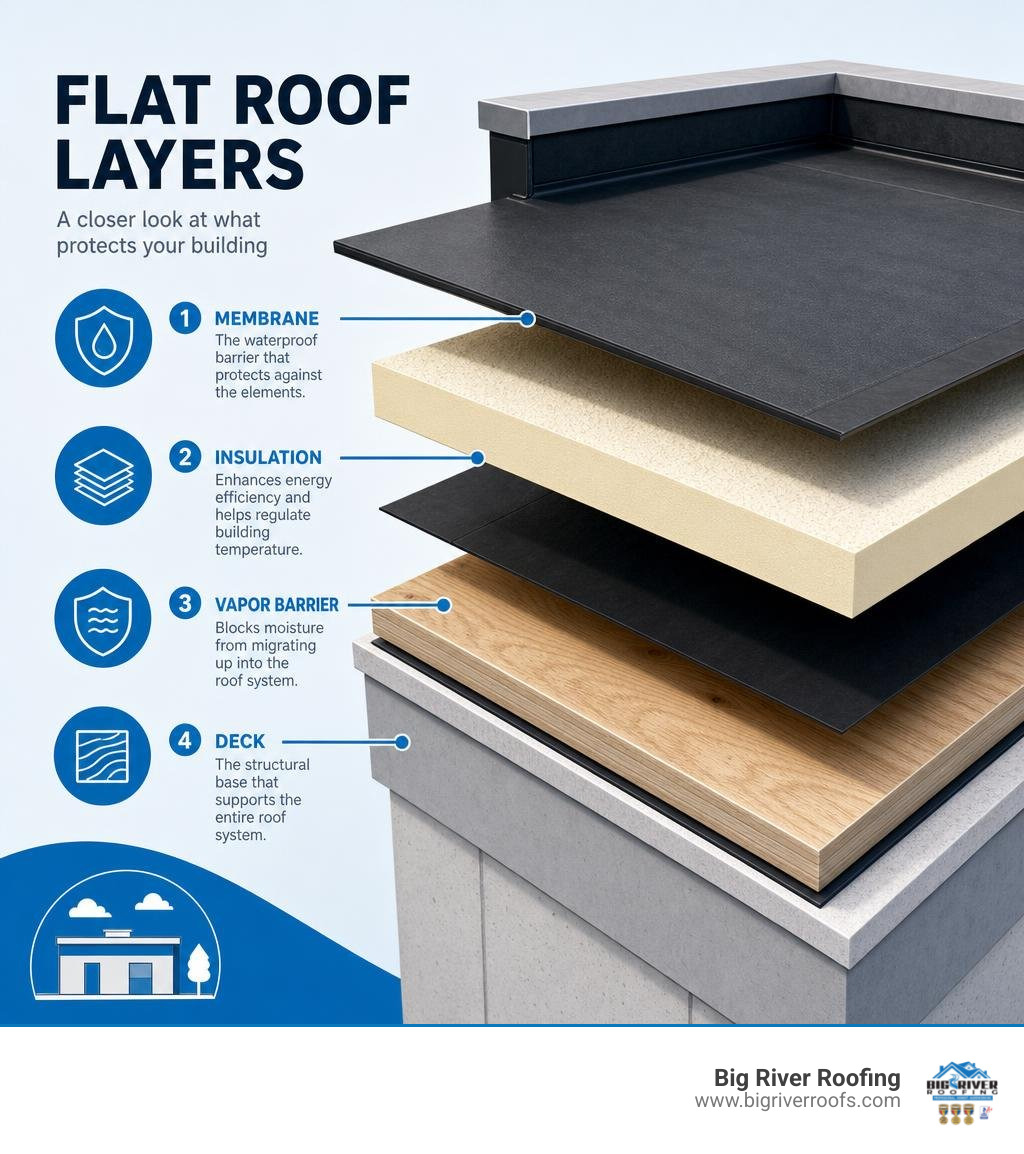
Making the wrong choice can be incredibly costly. If you patch a roof that has saturated insulation underneath, you are simply trapping moisture inside your building envelope, which will breed mold and rot your structural deck.
We recommend using this simple checklist to guide your decision:
- Age of the Roof: If your modified bitumen roof is 18 years old and starting to leak in multiple places, it has reached the end of its natural service life. Patching it is a temporary, expensive band-aid. It is time to plan for a Roof Replacement.
- Saturated Insulation: If a leak has gone unnoticed for months, the rigid foam insulation under the membrane may be completely waterlogged. Saturated insulation loses all R-value and must be torn out. In this scenario, a full Roof Installation is required to restore your building’s thermal efficiency.
- Extent of the Damage: If a fallen tree branch has caused a clean puncture in an otherwise healthy, 5-year-old TPO roof, a simple heat-welded patch is a perfect, long-term fix. However, if severe storms have compromised the structural integrity of the roof deck, you should look into professional Storm Damage Roofing restoration.
- Improper Original Installation: If the roof was installed without the proper slope, resulting in massive, deep pools of ponding water across the entire surface, repairs will not solve the underlying design flaw. The roof must be replaced and retrofitted with tapered insulation to establish correct drainage.
Frequently Asked Questions about Flat Roofs
What is the average cost of flat roof replacement?
On average, replacing a flat roof ranges from $4,000 to $19,000, with most property owners paying around $10,000. On a per-square-foot basis, you can expect to pay between $4 and $14 per square foot for materials and labor. The final price depends heavily on the material chosen (e.g., EPDM vs. standing seam metal), the thickness of the insulation required, jobsite accessibility, and whether the old roof needs to be torn off.
Are flat roofs more prone to leaks than sloped roofs?
No, not when they are designed and installed correctly. While sloped roofs shed water faster, modern flat roofing systems utilize highly advanced waterproofing membranes that act like a seamless pool liner. As long as the roof has a slight pitch (at least 1/4 inch per foot) to prevent permanent ponding water and the drainage systems are kept clean, a flat roof is incredibly watertight.
What are the benefits of cool and green roofs?
Cool roofs use highly reflective white membranes (like TPO or PVC) or specialized coatings. Under direct summer sun, a traditional black asphalt roof can reach temperatures up to 50 °C (90 °F) above ambient air. In contrast, a white reflective roof typically increases only 5 to 14 °C (9 to 25 °F) above ambient, drastically reducing cooling costs.
Green roofs take sustainability a step further by covering the membrane with soil and living plants. They provide outstanding thermal insulation, protect the underlying membrane from UV damage, and buffer rainwater runoff to prevent local storm sewer systems from overflowing during heavy downpours.
Conclusion
Whether you are managing a commercial facility in Beaver County or updating a modern home in Butler County, your flat roof is a major investment. Choosing the right material, ensuring proper drainage, and partnering with a trusted professional are the keys to a trouble-free system that lasts for decades.
At Big River Roofing, we pride ourselves on providing honest communication, detailed free inspections, and manufacturer-certified installations using high-quality materials from IKO, CertainTeed, and Owens Corning. We never cut corners, and we stand behind our workmanship with industry-leading warranties.
If you are ready to explore your options, including durable low-slope metal systems, visit our Big River Roofing Metal Roofing Services page or contact our team today to schedule your free, no-obligation roof inspection!